

The best materials for underwater bass habitat are high-tannin hardwoods such as oak, Osage orange, and black locust, combined with durable synthetics like PVC and inert minerals like granite or limestone. Hardwoods provide essential biological surface area for biofilm development and last for decades, while PVC offers permanent structural complexity. Strategic use of coarse gravel is required for spawning, and heavy stone ensures structural stability against currents and sedimentation.
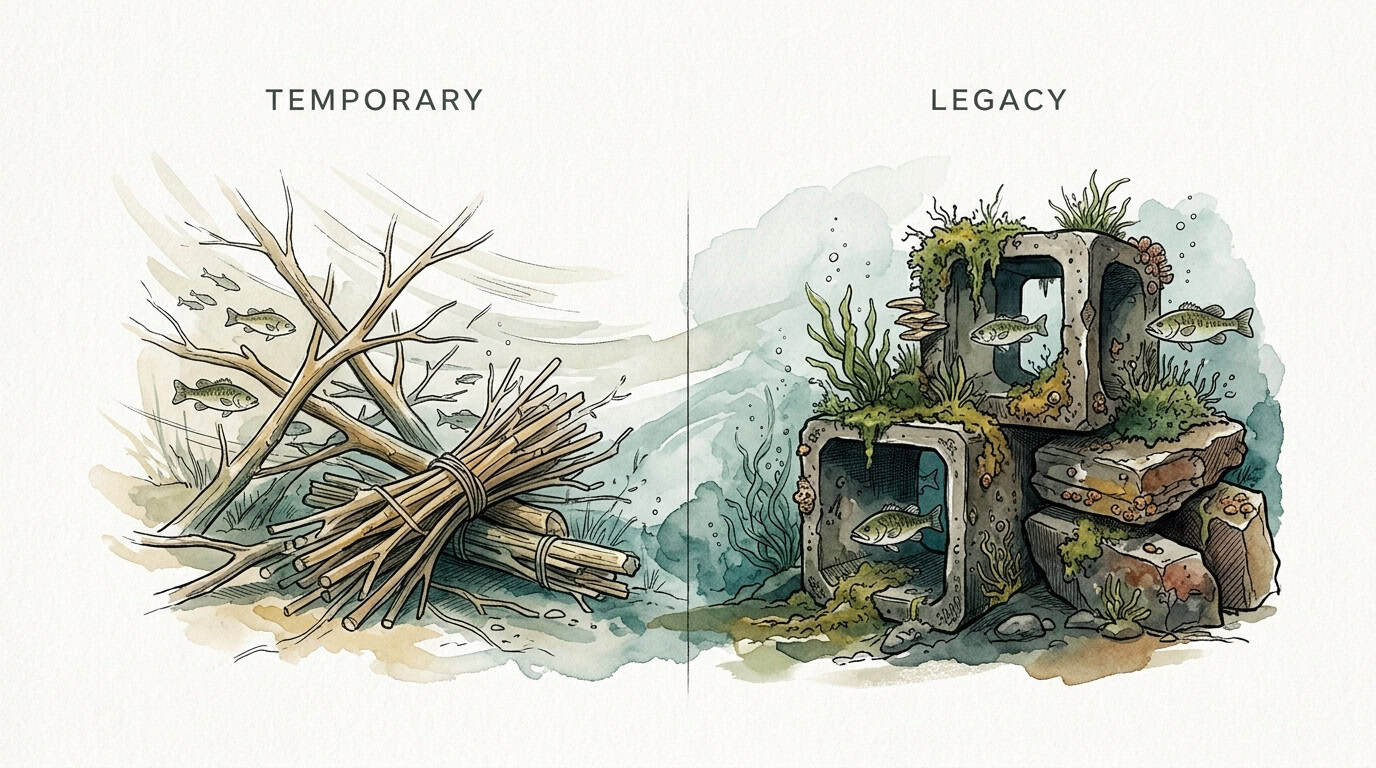
Will your fish habitat be gone in two seasons, or will your grandkids fish over it? Softwoods and thin plastics are ‘Temporary’ fixes that quickly rot or float away. If you want a ‘Legacy’ pond, you need high-tannin hardwoods and stone. Build once, and let the habitat evolve into a biological cornerstone for decades.
Constructing an effective underwater environment for Micropterus salmoides, the largemouth bass, requires a fundamental understanding of mechanical durability and biological succession. Most pond owners rely on materials that fail within 36 months, leading to a collapse of the local food web. Transitioning to high-density, rot-resistant materials ensures that the physical structure remains viable long enough to host complex periphyton communities.
The distinction between a fish attractor and a true fish habitat is critical for long-term management. Attractors simply congregate fish for the angler, whereas habitat provides the necessary requirements for spawning, nursery protection, and foraging. This article examines the engineering specifications of various materials to determine which provide the highest return on investment for a legacy fishery.

Best Materials For Underwater Bass Habitat
Selecting the correct material involves evaluating its specific gravity, decay resistance, and surface texture. Largemouth bass are apex predators that utilize structure for two primary purposes: thermoregulation and ambush positioning. High-density materials that provide dense shade and complex interstitial spaces are the most effective at fulfilling these needs.
Hardwoods represent the gold standard for natural habitat due to their lignin content and cellular density. Species like white oak and Osage orange (often called “hedge”) contain high concentrations of tannins, which act as natural preservatives against aquatic fungi and bacteria. These logs can remain structurally sound underwater for 50 to 100 years, providing a permanent foundation for the aquatic ecosystem.
Synthetic materials, specifically Schedule 40 PVC and high-density polyethylene (HDPE), offer a permanent alternative to organic matter. While they lack the immediate biological contribution of wood, they do not consume dissolved oxygen during decomposition. In deep-water applications where oxygen levels may be limited, these inert materials maintain their structural integrity without contributing to pond aging or siltation.
Inorganic materials like stone and concrete provide the essential “hard bottom” required for successful bass spawning. Large riprap and boulders create deep crevices that hold crayfish and smaller forage fish. When these materials are combined in a single “habitat complex,” they mimic the natural complexity of a flooded forest or a rocky riverbed, supporting all life stages of the bass.
How to Design and Install High-Performance Bass Structures
Efficiency in habitat design is measured by the ratio of surface area to volume. Bass require enough open space to maneuver but enough cover to remain hidden from prey. Effective designs often utilize a “hub and spoke” model, where a central heavy anchor supports radiating branches of wood or PVC.
Preparation of natural wood is a prerequisite for longevity. Removing small, thin twigs (anything under 0.5 inches in diameter) is recommended because these pieces decay rapidly and add unnecessary organic load to the water. Focusing on the “heartwood” of the tree ensures that the structure remains intact for the maximum possible duration.

Mechanical anchoring is the most common point of failure in DIY habitat projects. Wood has a natural buoyancy that must be offset by a factor of 1.5 to 2.0 times its weight to ensure it stays pinned to the bottom during high-flow events or seasonal turnovers. Cinder blocks, rebar-reinforced concrete buckets, and stainless steel cabling are the standard components for a secure installation.
Placement strategy must account for the thermocline. Largemouth bass typically avoid water below the thermocline during the summer months due to low dissolved oxygen levels. Strategic installation occurs in depths of 5 to 15 feet, where sunlight can still reach the structure to stimulate algae growth, which in turn attracts the forage base.
Biological and Mechanical Advantages
Long-term habitat stability provides a measurable increase in the carrying capacity of a pond. When materials like oak or cedar are introduced, they immediately begin to leach tannins and colonize with biofilm. This microscopic layer of algae and bacteria serves as the primary food source for small invertebrates, effectively “charging” the food web from the bottom up.
Shade is a frequently overlooked mechanical benefit of dense underwater structures. Water temperatures inside a dense brush pile or under a large log can be 5 to 10 degrees cooler than the surrounding open water. This thermal refuge allows bass to maintain a lower metabolic rate during the heat of summer, leading to better weight retention and overall health.
Structural complexity also reduces the energy expenditure of the fish. Bass are “sit-and-wait” predators; they prefer to hover behind a solid object that breaks the current or obscures their silhouette. Materials that provide sharp “edges” or “lines,” such as the square edges of a cinder block or the straight limbs of a PVC tree, allow bass to orient themselves precisely for an ambush.
Common Pitfalls in Habitat Construction
Using softwoods like pine, spruce, or fir is a common error that leads to rapid habitat collapse. These species have low density and high resin content that does not provide long-term rot resistance when submerged. A pine tree will typically lose its needles within three months and its smaller branches within 18 months, leaving only a bare trunk that offers little cover.
Overcrowding structures in a small area can lead to localized oxygen depletion. As organic materials like Christmas trees decay, the bacteria responsible for the decomposition process consume dissolved oxygen. In a pond with poor circulation, a massive influx of softwoods can create “dead zones” where fish cannot survive, defeating the purpose of the habitat installation.
Failure to rough up the surface of synthetic materials is another frequent mistake. Smooth PVC is highly resistant to periphyton attachment. Anglers should use heavy-grit sandpaper or a wire brush to scarify the surface of all plastic components. This increased surface area allows for better biological colonization, making the artificial structure more attractive to forage species.
Environmental and Budgetary Limitations
Material availability often dictates the scope of a habitat project. While exotic hardwoods like Ipe offer the best underwater performance, their cost is often prohibitive for large-scale applications. Pond managers must balance the need for longevity with the practicalities of their local environment and budget.
Siltation poses a major threat to the longevity of any bottom-dwelling structure. In ponds with high clay content or significant runoff, structures can become buried in mud over a decade. Selecting “high-profile” designs that stand 4 to 6 feet off the bottom ensures that the habitat remains functional even as the pond floor gradually rises.
Deep-water constraints must also be considered. Placing habitat in the deepest part of the lake (30+ feet) is often a waste of resources if that water becomes anoxic during the summer. Focus resources on the “littoral zone,” where the combination of light, oxygen, and structure creates the highest biological productivity.
Comparing Temporary vs. Legacy Materials
The following table summarizes the performance metrics of common habitat materials. These values are based on standard freshwater conditions in temperate climates.
| Material Type | Est. Lifespan | Bio-Colonization | Snag Risk | Primary Use |
|---|---|---|---|---|
| Christmas Trees (Pine) | 3–5 Years | Very High | High | Juvenile Nursery |
| Hardwoods (Oak/Hedge) | 30–60 Years | High | Moderate | Ambush Structure |
| PVC (Schedule 40) | 100+ Years | Low (unless sanded) | Low | Permanent Complexity |
| Boulders/Riprap | Indefinite | Moderate | Low | Spawning/Crayfish |
| Cypress/Cedar | 20–40 Years | Moderate | Moderate | Deep Water Cover |
Practical Tips for Immediate Application
Start by identifying the missing link in your current fishery. If you have plenty of adult bass but they are thin, you likely lack the nursery habitat required to produce enough forage. In this case, focus on “dense” materials like cedar branches or plastic mesh that protect small bluegill from over-predation.
Use a variety of materials in a single location to create a “habitat mosaic.” A pile of large rocks flanked by several hardwood logs and a few PVC “trees” provides a wider range of interstitial spaces. This diversity attracts multiple species of insects, crustaceans, and fish, creating a more stable and resilient ecosystem.
Secure all wood with non-corrosive fasteners. Standard steel nails or screws will rust and fail within a few years of submersion. Stainless steel screws or heavy-duty galvanized wire are required to maintain the structural integrity of complex wood assemblies over the decades.
Advanced Considerations for Trophy Bass
Trophy-class bass have specific volumetric requirements for their “home” structure. A large bass requires a cavity that is at least 1.5 times its body width to feel secure. When building structures specifically for giant fish, ensure that the design includes large “rooms” or overhangs created by heavy logs or concrete slabs.
Verticality is another advanced design principle. Bass often move up and down the water column as light levels change throughout the day. A structure that spans from the bottom up to within 3 feet of the surface allows the fish to adjust its depth without ever leaving the safety of the cover.
Strategic orientation relative to the sun can maximize the effectiveness of a structure. North-south oriented logs provide moving shade throughout the day, ensuring that there is always a “cool side” for the fish to occupy. This attention to detail separates a haphazard brush pile from a mechanically optimized habitat system.
Examples of Habitat Success
In a controlled study involving a five-acre pond, the introduction of 20 hardwood “log jams” resulted in a 40% increase in bass relative weight within two seasons. These structures were placed at the edges of secondary points in 8 feet of water. The dense oak limbs provided a permanent substrate for snails and freshwater shrimp, which significantly bolstered the forage base.
Another example involves the use of “PVC forests” in a large reservoir where natural wood was scarce. By roughing the surface of 2-inch PVC pipes and mounting them in concrete bases, managers created a permanent nursery area. Ten years later, these structures remained 100% intact, while nearby cedar piles had degraded into unrecognizable mounds of silt.

A final scenario utilizes stone “cribs”—rectangular frames made of locust logs filled with 6-inch limestone rocks. These structures provided the triple benefit of spawning substrate, crayfish habitat, and bass ambush cover. The heavy mass of the stone ensured the structures never shifted, even during record-breaking spring floods.
Final Thoughts
Building underwater habitat is a long-term investment in the biological infrastructure of your water. Choosing the right materials from the start prevents the cycle of “dump and replace” that plagues most pond management efforts. Hardwoods, stone, and high-quality synthetics provide the durability needed to create a legacy fishery.
Successful implementation requires a balance of mechanical stability and biological utility. By focusing on high-tannin woods and heavy mineral anchors, you ensure that your structures remain functional for decades. The resulting ecosystem will not only attract fish but will actually grow more of them by supporting every level of the food chain.
Experimentation is encouraged, but it should be grounded in the principles of aquatic engineering. Start with a few high-quality structures and monitor the results through angling or underwater cameras. As you see which designs the fish prefer, you can scale your efforts to create a truly world-class bass habitat.
Frequently Asked Questions About Best Materials For Underwater Bass Habitat
What is the longest-lasting wood for underwater fish habitat?
The most durable woods for underwater use are high-tannin hardwoods like Osage orange (hedge), black locust, and various species of white oak. These woods contain natural chemical compounds that inhibit the growth of aquatic fungi and bacteria, allowing them to remain structurally sound for 30 to 60 years. In contrast, softwoods like pine or spruce often decay within five years. For those with access to exotic lumber, species like Ipe or Teak offer even greater longevity, though they are rarely cost-effective for large-scale pond projects. Choosing heartwood over sapwood further increases the lifespan of any natural structure.
Can I use PVC pipe for bass habitat, and does it work as well as wood?
PVC is an excellent material for creating permanent structural complexity because it does not rot or degrade. However, it does not provide the same immediate biological benefits as wood. Wood naturally leaches tannins and provides a porous surface that is easily colonized by biofilm and periphyton, which are the foundation of the food web. To make PVC as effective as wood, you must mechanically scarify (rough up) the surface with sandpaper or a wire brush to allow algae to attach. Once colonized, PVC becomes a “legacy” material that can last for over a century without consuming dissolved oxygen during decomposition.
How much weight is needed to sink a large hardwood log?
Weighting requirements depend on the density and moisture content of the wood. Dry wood is significantly more buoyant than “green” or freshly cut wood. As a general engineering rule, you should aim for an anchor weight that is at least 50% to 100% of the dry weight of the wood. For a large oak log, this often means using multiple cinder blocks or a 5-gallon bucket filled with concrete. It is safer to over-weight the structure than to under-weight it; a structure that shifts during a storm can damage other habitat or become a hazard to navigation. Using stainless steel cables or heavy galvanized wire is essential to ensure the weight remains attached for the life of the structure.
Is it safe to use recycled materials like tires or treated lumber?
Modern fisheries management generally discourages the use of tires or pressure-treated lumber. Tires can trap silt and provide very little surface area for biological growth, and they may leach trace amounts of petroleum-based chemicals over decades. Pressure-treated lumber contains biocides like copper azole or ACQ, which are designed specifically to kill the fungi and organisms that form the base of the aquatic food web. While modern treatments are less toxic than older arsenic-based versions, they still inhibit the very “life” you are trying to encourage. It is always better to use natural hardwoods, inert stone, or food-grade plastics like HDPE and PVC.
Where is the best place to put habitat structures in a bass pond?
The most productive zone for bass habitat is typically between 5 and 15 feet of water. This depth usually stays above the summer thermocline, ensuring there is enough dissolved oxygen for the fish to remain active. Structures should be placed near natural “highways” such as points, submerged creek channels, or drop-offs. Largemouth bass prefer areas where they can easily move from shallow spawning flats to deeper refuge zones. Placing habitat in a “line” from shallow to deep water allows fish to transition seasonally while always having access to cover. Avoid placing structures in the very deepest holes if those areas become anoxic (oxygen-depleted) during the summer months.