

Pond Talk is an Amazon Associate. As an Amazon Associate we earn from qualifying purchases.
Optimizing Pond Ecosystems: A Technical Guide to Floating Bio-Islands
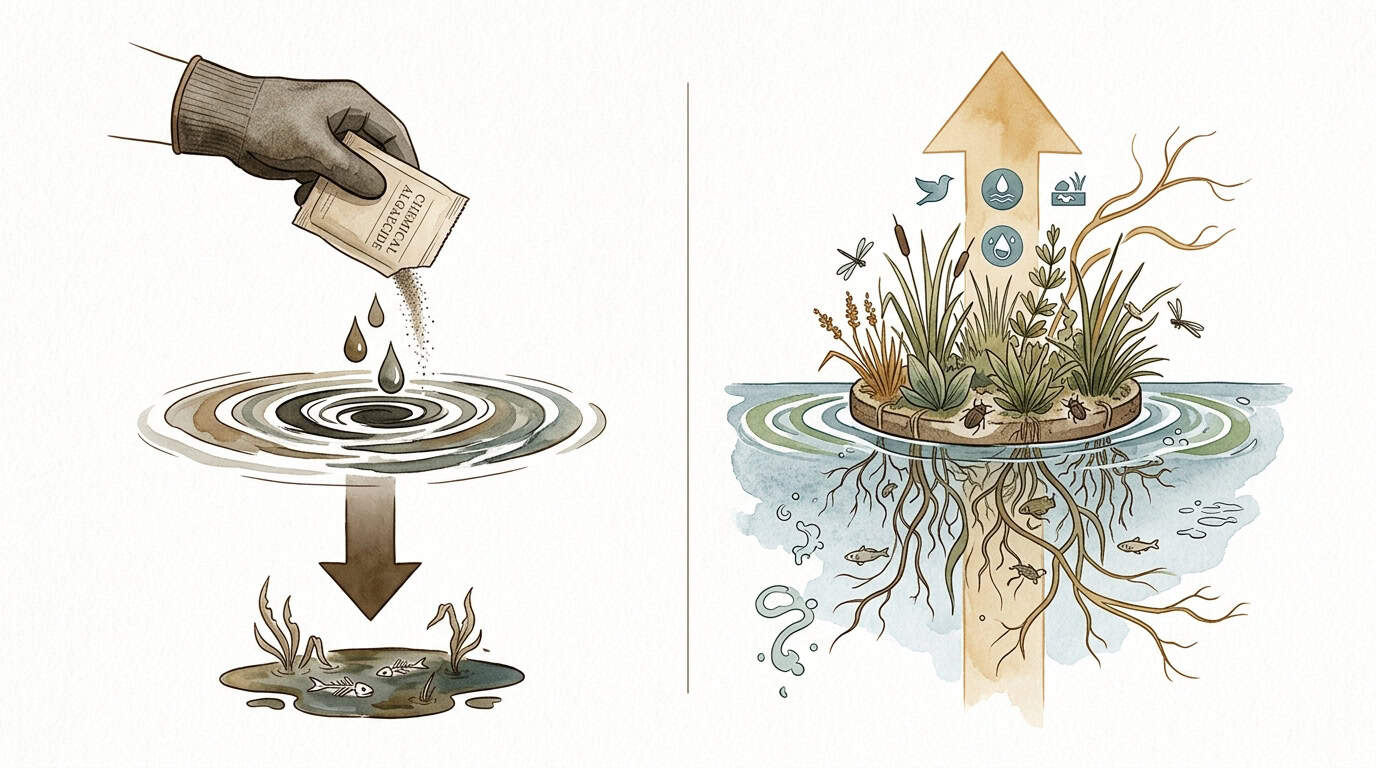
Why use a tool that only kills, when you can use a system that builds habitat, flowers, and clarity all at once? A chemical treat is a dead-end street. A floating bio-island is a highway of life. It starves the algae, feeds the pollinators, shades the water, and looks beautiful doing it. Master your resources and stop using single-use solutions for complex problems.
The management of closed-loop aquatic systems requires a fundamental understanding of nutrient cycling. Traditional pond maintenance often relies on reactive measures, such as the application of copper-based algaecides. These methods address the symptom—visible algal blooms—without mitigating the underlying cause: excessive phosphorus and nitrogen levels. This technical analysis explores the transition from chemical dependency to biological filtration using floating treatment wetlands (FTWs).
Nutrient loading, or eutrophication, is the primary driver of pond instability. When runoff introduces fertilizers or organic matter, the resulting nutrient spike triggers rapid cellular division in algae. A floating bio-island serves as a concentrated site for nutrient sequestration and microbial activity. This shift from a chemical-first approach to a biological-first approach represents a significant advancement in sustainable pond management.

Floating Island Benefits For Pond Algae
Floating bio-islands, or floating treatment wetlands, are engineered structures designed to support hydroponic plant growth on the water’s surface. These systems provide a multi-faceted defense against algal proliferation by directly competing for the same resources. In a standard pond environment, algae utilize dissolved nitrogen (N) and phosphorus (P) for metabolic processes. Floating islands intercept these nutrients before algae can utilize them.
One primary benefit is the significant reduction in photosynthetic active radiation (PAR) reaching the water column. Algae require light to drive photosynthesis. By deploying floating islands, a manager can create a physical light barrier. This shading effect lowers the temperature of the underlying water and inhibits the growth of submerged aquatic vegetation and benthic algae.
The subsurface structure of a floating island is where the most critical biological work occurs. The root systems of the plants extend directly into the water, creating a massive surface area for biofilm development. Biofilm consists of colonies of beneficial bacteria, including nitrifying and denitrifying strains. These microbes break down ammonia and nitrites, further stripping the water of the fuel sources that trigger algal blooms.
Real-world applications of this technology are found in municipal stormwater ponds, golf course water hazards, and private reservoirs. In these settings, the islands act as a continuous filtration system that operates without mechanical energy. Unlike bottom-rooted plants, floating islands are not limited by water depth. This allows for placement in the center of a pond where nutrient concentrations are often highest.
How Floating Treatment Wetlands Work
The operational efficiency of a floating bio-island is rooted in the “rhizosphere” effect. As plant roots penetrate the floating matrix, they secrete oxygen into the surrounding water. This creates an aerobic micro-zone in an otherwise potentially anaerobic environment. This oxygenation supports aerobic bacteria that are significantly more efficient at processing organic waste than their anaerobic counterparts.
Nutrient uptake occurs through two primary pathways: direct plant assimilation and microbial processing. The plants physically incorporate N and P into their cellular structure as they grow. Simultaneously, the microbial community living on the roots and the floating matrix converts dissolved solids into gasses or stable mineral forms. This dual-action process creates a relentless “nutrient sink” that persists throughout the growing season.
To implement this system, the floating matrix must be constructed from non-toxic, buoyant materials. Polyethylene or recycled plastic fibers are common choices. These materials provide the structural integrity needed to support the weight of mature vegetation while remaining porous enough for root penetration. The choice of vegetation is equally critical, as different species have varying rates of nutrient uptake and biomass production.
Hydraulic residence time also plays a role in system performance. In ponds with high flow rates, the bio-island must be positioned to maximize contact with the incoming water. Anchoring systems are utilized to keep the islands in high-nutrient “hot zones,” such as near inflow pipes or areas of high organic sediment accumulation. This targeted placement ensures the highest possible efficiency per square foot of island surface.
Benefits of Biological Filtration Over Chemical Control
The most immediate advantage of using floating bio-islands is the reduction in chemical input requirements. Chemical algaecides often cause a “rebound effect.” When algae are killed rapidly, they sink to the bottom and decompose, releasing all their stored nutrients back into the water. This creates a feedback loop where more algae grow to consume the newly released nutrients, necessitating another chemical application.
Floating islands break this cycle by permanently removing nutrients from the water column. When the plants are harvested or pruned, the sequestered nutrients are physically removed from the pond system. This results in a net decrease in the pond’s total nutrient load over time. This long-term reduction in “carrying capacity” for algae is a goal that chemicals simply cannot achieve.
Furthermore, bio-islands provide significant ecological value without the risk of toxicity. Copper-based products can accumulate in the sediment, potentially harming beneficial invertebrates and fish. In contrast, bio-islands create a sanctuary for zooplankton. Zooplankton are microscopic animals that graze on algae, providing a secondary layer of biological control. The islands protect these organisms from predators, allowing their populations to thrive.
From a maintenance perspective, bio-islands offer a “set and forget” utility once established. While chemicals require precise dosing and frequent re-application, a well-planted island maintains itself through the growing season. The mechanical simplicity of a floating mat reduces the labor hours required for pond management, allowing resources to be redirected elsewhere.
Challenges and Common Mistakes
One frequent error is the under-sizing of the floating island relative to the pond’s surface area. For a bio-island to have a measurable impact on water clarity, it must cover a sufficient percentage of the water. Managers often start with a small island that is insufficient for the total nutrient load, leading to the false conclusion that the technology is ineffective. Calculation of the required surface area must be based on the pond’s nutrient input and volume.
Incorrect plant selection is another common pitfall. Using terrestrial plants that cannot tolerate constant root saturation will lead to rot and plant death. Conversely, using invasive aquatic species can create a new set of environmental problems. It is essential to select native macrophytes with aggressive root systems and high metabolic rates. Species like Juncus (rushes) or Carex (sedges) are often preferred for their hardiness and filtration capacity.
Neglecting the anchoring system can lead to mechanical failure. Floating islands are subject to wind and wave action. If the anchor is too light or the tether is too short, the island may drift into the bank, where it can be damaged or become a bridge for terrestrial pests. The anchoring system must account for fluctuations in water level to prevent the island from becoming submerged during heavy rain or stranded during droughts.
Failure to manage the biomass is a long-term mistake. If plants are allowed to grow, die, and decay on the island, the nutrients they absorbed are returned to the pond. To achieve true nutrient removal, the vegetation should be trimmed periodically. This encourages new growth, which has a higher rate of nutrient uptake, and ensures that the N and P are physically exported from the ecosystem.
Limitations and Environmental Constraints
Floating bio-islands are not a universal solution for all water quality issues. In hyper-eutrophic ponds where nutrient levels are exceptionally high, an island alone may not be able to keep up with the influx of pollutants. In these cases, the island should be part of an Integrated Pest Management (IPM) strategy that includes aeration and source-control of runoff. They are tools for management, not magic bullets for total remediation.
Environmental conditions such as extreme cold can limit the effectiveness of FTWs. In climates with hard winters, the metabolic rate of the plants and the microbial community drops significantly. While the physical structure remains, the active bio-filtration slows down. Ice can also damage the floating matrix if it becomes encased. Managers in cold regions must select plants that can survive dormancy and ensure the island is positioned to avoid ice-crush zones.
Water chemistry also dictates success. Very high or very low pH levels can inhibit the growth of the necessary microbial biofilm. Similarly, the presence of high concentrations of heavy metals or industrial pollutants can kill the vegetation on the island. A baseline water test is necessary before deployment to ensure the environment is conducive to biological life. If the water is too toxic for plants, a bio-island is not the appropriate first step.
Finally, there is the factor of physical space. In very small decorative fountains or narrow channels, a floating island may obstruct flow or become a navigational hazard. The physical footprint of the island must be balanced against the functional needs of the water body. If the pond is used for recreational boating or swimming, the placement of islands must be carefully planned to avoid interference with these activities.
Comparison: One-Way Chemicals vs. Multi-Use Islands
Comparing these two methods requires looking at the “metabolic cost” of pond maintenance. Chemical interventions provide a rapid, temporary fix but require recurring investment. Biological interventions require an upfront investment but provide long-term, compounding returns. The following table highlights the technical differences between these two strategies.
| Feature | Chemical Algaecides (One-Way) | Floating Bio-Islands (Multi-Use) |
|---|---|---|
| Action Speed | Rapid (24–72 hours) | Slow/Incremental (Weeks/Months) |
| Nutrient Impact | Recycles nutrients back into water | Permanently removes/sequesters nutrients |
| Longevity | Transient; requires re-application | Permanent structure; grows over time |
| Maintenance Mode | Reactive (treating the symptoms) | Proactive (addressing the cause) |
| Ecological Impact | Potential toxicity to non-target species | Creates habitat and increases biodiversity |
| Operational Cost | High recurring material cost | Low recurring (occasional pruning) |
When analyzing efficiency metrics, the “cost per pound of nutrient removed” is significantly lower for floating islands over a five-year horizon. While copper sulfate is inexpensive per gallon, it fails to reduce the pond’s future nitrogen load. The bio-island acts as a passive filter that increases in efficiency as the root mass matures. This makes the island a superior choice for managers focused on long-term mechanical and biological optimization.
Practical Tips and Best Practices
To maximize the effectiveness of a floating bio-island, use a “high-density” planting strategy. Instead of spacing plants far apart, place them close together to ensure the entire matrix is colonized quickly. This prevents sunlight from reaching the water through the mat and forces the plants to compete for nutrients, driving faster root development. A fully covered island is more effective than a partially bare one.
Integrate aeration with your floating island whenever possible. Bubbles from a diffuser or the flow from a fountain can be directed toward the island’s root zone. This ensures that the water moving through the roots is highly oxygenated, which boosts the metabolic rate of the nitrifying bacteria. This synergy between mechanical aeration and biological filtration can double the nutrient processing speed of the system.
Select a diverse mix of plant species. Using a monoculture is risky; if a specific pest or disease hits that species, the entire island’s filtration capacity is lost. A diverse mix of grasses, flowering perennials, and sedges ensures that some species will be active in early spring while others peak in late summer. This provides a consistent nutrient-draw throughout the entire growing season.
Monitor the island’s buoyancy as it matures. Over several years, the accumulation of organic matter and large plant biomass can make an island heavy. Some high-quality mats are designed to allow for additional buoyancy foam to be injected or attached later in their lifecycle. Keeping the mat at the correct water level ensures that the plants’ crowns are not submerged, which prevents rot.
Advanced Considerations: Stoichiometry and Scaling
Serious practitioners should consider the stoichiometry of nutrient removal when scaling their systems. Phosphorus is often the limiting nutrient in freshwater systems. Research indicates that for every pound of phosphorus removed, a corresponding amount of nitrogen is also processed. By calculating the phosphorus loading from surrounding runoff (based on soil tests and drainage area), a manager can mathematically determine the square footage of island required to reach a “nutrient neutral” state.
The microbial community on a floating island can also be “seeded” for specific outcomes. Commercial bio-augmentation products containing specialized bacteria can be applied directly to the floating matrix. These bacteria colonize the fiber and roots faster than wild strains, providing an immediate boost to ammonia oxidation. This is particularly useful in ponds with high fish loads where nitrogen levels can spike rapidly.
Scaling considerations for large lakes involve “modular deployment.” Instead of one massive island, which is difficult to maneuver and anchor, use a series of smaller, linked modules. This creates a “filter curtain” effect. These modules can be arranged in various configurations to direct water flow or to create protected “no-wake” zones for sediment settling. Modular designs also allow for easier harvesting, as individual modules can be towed to the shore for maintenance.
Data-driven management involves regular water testing for Total Nitrogen (TN) and Total Phosphorus (TP). By tracking these metrics alongside the growth of the bio-island, you can quantify the system’s performance. If TN levels drop but TP remains high, it may indicate that more of a specific plant species is needed, or that the sediment is “leaking” phosphorus. This level of technical oversight transforms pond maintenance from guesswork into an engineering discipline.
Example Scenario: The Golf Course Irrigation Pond
Consider a 1-acre irrigation pond on a golf course that receives significant fertilizer runoff. The pond is prone to thick mats of filamentous algae every July. A traditional approach would involve spraying 5 to 10 gallons of algaecide four times a year. This costs approximately $800 annually in chemicals and 20 man-hours of labor, yet the problem recurs every season because the fertilizer continues to wash into the pond.
The alternative is the installation of 500 square feet of floating bio-islands (roughly 1% of the surface area). The initial cost for the matrix and native plants is approximately $3,000. In the first year, the islands begin to sequester N and P. By the second year, the root mass has extended three feet into the water column, creating a massive biological filter. The shade provided by the islands prevents algae from blooming in the shallow, high-heat zones near the banks.
By the third year, the need for algaecides is reduced by 80%. The manager only needs to prune the islands once in the fall, taking 4 hours of labor. The return on investment (ROI) is realized within four to five years through chemical savings alone. More importantly, the pond’s water quality is stabilized, reducing the risk of clogging the irrigation intake pipes with algae debris. The system has moved from a recurring expense to a fixed asset.
Final Thoughts
The transition toward floating bio-islands represents a shift from destructive to constructive management. While chemical treatments offer the allure of an immediate fix, they ignore the fundamental laws of nutrient conservation. A system that removes the fuel source—nitrogen and phosphorus—while providing secondary benefits like habitat and aesthetic value is objectively more efficient. This is the hallmark of sophisticated resource management.
Successful implementation requires a technical mindset focused on sizing, plant selection, and nutrient export. By understanding the rhizosphere and the microbial processes at play, a manager can create a self-sustaining ecosystem that resists algal blooms naturally. The complexity of a pond is not an obstacle to be overcome with harsh chemicals; it is a system to be optimized with biological tools.
As you move forward, consider the long-term health of your aquatic assets. Experiment with modular island designs and monitor your water chemistry to see the impact of biological filtration first-hand. Mastering the use of floating treatment wetlands is a critical step for anyone serious about high-performance water management and sustainable pond health.
Amazon and the Amazon logo are trademarks of Amazon.com, Inc, or its affiliates.