

Pond Talk is an Amazon Associate. As an Amazon Associate we earn from qualifying purchases.
That ‘messy’ algae you’re throwing away is actually the highest quality fertilizer you’ve never had to buy. Don’t see a pond cleanup as a chore; see it as a nutrient harvest. Pond algae is packed with nitrogen and minerals it scavenged from your water. When you move it to your garden, you are returning those nutrients to the soil. Your plants will thank you for the ‘green gold’.
Pond maintenance often results in the accumulation of significant amounts of biological waste. This biomass is frequently discarded, representing a lost opportunity for closed-loop nutrient cycling. Utilizing algae as a soil amendment is an efficient method to reclaim nitrogen, phosphorus, and potassium that would otherwise be lost.
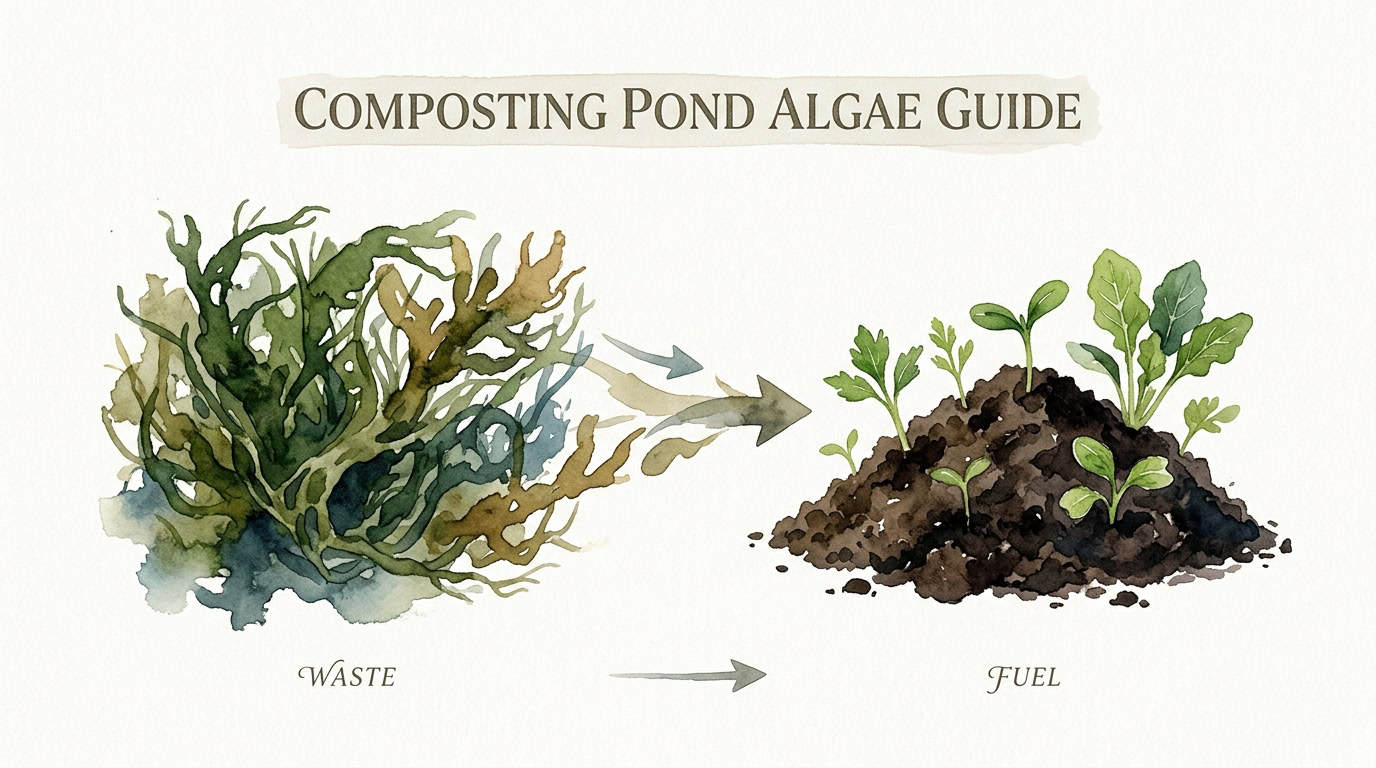
This guide provides a technical overview of how to process and utilize pond algae. It focuses on the chemical composition of the material and the mechanical steps required to integrate it into a garden system. Understanding the biological processes involved ensures that the transition from aquatic waste to terrestrial fuel is optimized for maximum plant uptake.

Composting Pond Algae Guide
Pond algae is a non-vascular photosynthetic organism that thrives in aquatic environments rich in dissolved nutrients. In most garden ponds or small lakes, algae species such as Spirogyra (filamentous algae) or Chlorella (planktonic algae) proliferate by absorbing excess nitrates and phosphates. These elements are the primary building blocks of plant growth.
When algae is harvested, it acts as a concentrated delivery system for these nutrients. Unlike synthetic fertilizers, which provide a rapid and often volatile burst of elements, algae-based compost offers a diverse range of micronutrients and organic matter. This organic matter improves soil structure and enhances moisture retention.
The practice of using aquatic biomass for soil improvement is common in coastal agriculture, where seaweed has been used for centuries. Fresh water algae functions similarly but generally lacks the high sodium content associated with marine species. This makes it a safer, more versatile amendment for a wide variety of soil types and plant species.
How It Works: The Mechanics of Algae Decomposition
The conversion of algae into fertilizer relies on the process of aerobic decomposition. Algae has a low carbon-to-nitrogen (C:N) ratio, typically ranging between 10:1 and 15:1. For effective composting, a pile requires a C:N ratio of approximately 30:1. This discrepancy means that algae must be managed correctly to avoid nitrogen loss and anaerobic conditions.
To begin the process, the harvested algae must be dewatered. Fresh algae is often 90% water by mass. Transporting and processing saturated biomass is inefficient and can lead to compaction in the compost pile. Spread the algae in a thin layer on a permeable surface for 24 to 48 hours to reduce moisture content to approximately 60%.
Once dewatered, the algae should be integrated with “brown” or carbon-rich materials. Dry leaves, straw, or shredded wood chips are ideal candidates. Layering the algae with these materials ensures that the nitrogen released during decomposition is captured by the carbon-rich substrates. This prevents the formation of ammonia gas, which represents a loss of valuable nitrogen.
The temperature of the compost pile should be monitored using a long-stem thermometer. Effective thermophilic composting occurs between 135°F and 160°F (57°C to 71°C). Maintaining these temperatures for several days ensures the destruction of any potential aquatic pathogens or weed seeds that may have been collected during the harvest.
Benefits: Nutrient Density and Soil Health
The primary benefit of pond algae is its impressive NPK (Nitrogen, Phosphorus, Potassium) profile. While the specific percentages vary based on the pond’s water chemistry, algae generally provides a balanced ratio of these macronutrients. Furthermore, these nutrients are bound in organic form, meaning they are released slowly as soil microbes break down the biomass.
Algae is a significant source of trace minerals that are often depleted in garden soils. It contains measurable amounts of magnesium, calcium, sulfur, and iron. These micronutrients are essential for enzymatic functions within plants and the production of chlorophyll.
Beyond elemental chemistry, algae contains natural plant growth regulators (PGRs) such as cytokinins, auxins, and gibberellins. These hormones stimulate cell division and root development. Incorporating algae into the soil can lead to increased stress tolerance in plants, particularly during periods of drought or temperature fluctuations.
Physical soil structure also improves through the addition of algae. The fibrous nature of filamentous algae contributes to the formation of soil aggregates. These aggregates increase pore space, which allows for better oxygen penetration and water infiltration. This is particularly beneficial in heavy clay soils that are prone to compaction.
Challenges: Overcoming Common Pitfalls
The most frequent error in composting algae is failing to account for its high moisture and nitrogen content. If algae is piled in a thick, wet mass, it will quickly become anaerobic. Anaerobic decomposition is characterized by a foul odor—similar to rotten eggs—due to the production of hydrogen sulfide gas. This indicates a loss of nutrients and a failure of the composting process.
Another challenge involves the presence of pond additives. If the pond has been treated with copper-based algaecides or synthetic dyes, the harvested algae may contain residual chemicals. These substances can inhibit the growth of beneficial soil microbes or, in the case of heavy metals, accumulate in the soil over time.
Salt accumulation is a minor risk in closed-system ponds where evaporation is high. If the water has high salinity, the algae may retain some of these salts. While usually not an issue in temperate climates with regular rainfall, it is a factor to consider in arid regions or when using the compost for salt-sensitive plants like strawberries or blueberries.
Limitations: When to Exercise Caution
Pond algae should not be used as a standalone mulch in its fresh state. Because of its low C:N ratio, it can actually “burn” plant stems if it comes into direct contact with them during the initial phase of rapid nitrogen release. Always incorporate it into a compost system or till it into the soil several weeks before planting to allow for stabilization.
In environments where the pond is located near industrial runoff or heavily treated lawns, the algae may act as a bio-accumulator for toxins. Heavy metals like lead or arsenic, or persistent herbicides, can be concentrated within the algae tissue. If the water source is of unknown or poor quality, it is advisable to have the algae tested before applying it to food crops.
The seasonal availability of algae is a logistical constraint. Algae blooms are most prevalent during the warm months of spring and summer. This timing may not always align with the garden’s primary fertilization schedule, requiring the gardener to store or process the material for later use.
Comparison: Algae vs. Standard Soil Amendments
When evaluating soil inputs, it is useful to compare pond algae against common alternatives. The following table illustrates the general characteristics of these materials based on nutrient availability and cost.
| Feature | Pond Algae (Composted) | Cow Manure (Aged) | Synthetic 10-10-10 |
|---|---|---|---|
| Cost | Zero (Labor only) | Low to Moderate | High |
| Nutrient Release | Slow to Moderate | Slow | Rapid |
| Trace Minerals | Very High | Moderate | Minimal |
| Organic Matter | High | High | None |
| Soil Structure Impact | Positive | Positive | None to Negative |
Algae outperforms synthetic fertilizers in terms of soil health and micronutrient diversity. While cow manure offers similar benefits regarding organic matter, algae is often “cleaner” in terms of weed seeds, provided the composting temperature is managed correctly.
Practical Tips: Optimization and Application
To maximize the efficiency of your nutrient harvest, use a fine-mesh rake or a specialized algae skimmer. This allows for the removal of the biomass while leaving the water behind. For large-scale pond systems, mechanical harvesters can be used to collect several hundred pounds of material in a single session.
If you do not have a formal compost bin, you can utilize “trench composting.” Dig a hole or a trench 12 inches deep in an unplanted area of the garden. Fill the bottom 4 inches with fresh algae, cover it with 8 inches of soil, and allow it to decompose in situ. By the following planting season, the nutrients will be fully integrated into the soil profile.
For liquid fertilization, you can create “algae tea.” Place a burlap sack filled with fresh algae into a barrel of water. Allow it to steep for two weeks, stirring occasionally. The resulting liquid is a nutrient-rich “tea” that can be used to water plants directly. This method provides a faster delivery of nutrients than traditional composting.
Advanced Considerations: Biochar and Microbial Inoculation
For those looking to optimize their soil system further, consider mixing algae with biochar. Biochar is a highly porous form of charcoal that acts as a permanent housing for soil microbes. When algae decomposes in the presence of biochar, the biochar absorbs the released nutrients, preventing leaching and creating a long-term reservoir of fertility.
Microbial inoculation can also accelerate the processing of algae. Adding a shovelful of active garden soil or a commercial compost starter to the algae/carbon mix introduces the specific bacteria and fungi needed to break down complex organic compounds. This can reduce the time required for the compost to reach maturity by up to 30%.
Monitoring the Cation Exchange Capacity (CEC) of your soil after applying algae compost can provide data on the effectiveness of the amendment. A higher CEC indicates that the soil has a better ability to hold onto essential nutrients like potassium and magnesium. Over several seasons of algae application, you should observe a measurable increase in CEC.
Example Scenario: The 1,000-Gallon Pond Harvest
Consider a standard 1,000-gallon garden pond that experiences a significant filamentous algae bloom in July. A thorough cleaning might yield approximately 50 pounds of wet algae. This mass contains roughly 45 pounds of water and 5 pounds of dry matter.
Within that 5 pounds of dry matter, there is a concentrated mix of nitrogen, phosphorus, and trace elements. If mixed with 15 pounds of dry straw (carbon), the resulting 20-pound mixture will eventually break down into roughly 10 pounds of high-quality finished compost. This is enough to top-dress a 20-square-foot vegetable bed with a half-inch layer of nutrient-dense material.
In this scenario, the gardener has removed an unsightly nuisance from the pond and converted it into a resource that would cost $15 to $25 if purchased as a premium organic amendment. The labor involved in harvesting and mixing is the only cost, resulting in a high return on investment (ROI).
Final Thoughts
Utilizing pond algae as a fertilizer is a technically sound method for improving garden productivity and pond health simultaneously. By harvesting this biomass, you are actively managing the nutrient load of your water feature while providing your soil with a diverse range of macro and micronutrients. This process exemplifies efficient resource management and closed-loop systems.
The key to success lies in managing the C:N ratio and moisture levels to ensure aerobic decomposition. When handled correctly, algae provides not just elemental nutrition, but also growth-promoting hormones and structural improvements to the soil. It is a potent tool for any practitioner focused on biological efficiency.
Experimenting with different ratios and application methods will allow you to fine-tune the process for your specific garden needs. Whether used in a traditional compost pile, a trench, or a liquid tea, the nutrients scavenged from your pond will serve as a high-performance fuel for your terrestrial plants. Stop viewing algae as a waste product and start treating it as the valuable resource it truly is.
Amazon and the Amazon logo are trademarks of Amazon.com, Inc, or its affiliates.