

The ‘cure’ for algae might be more dangerous than the problem itself. When you reach for the algaecide, you aren’t just killing the green stuff. You might be nuking the beneficial bacteria that keep your fish alive. Here is how to treat algae safely.
Chemical algae treatments often suppress or kill beneficial nitrifying bacteria by disrupting cellular membranes or inhibiting metabolic enzymes. Oxidizing agents like hydrogen peroxide are non-discriminatory, while copper-based treatments can reach toxic thresholds for bacteria. This often results in ammonia spikes and a collapse of the biological filter, requiring a restart of the nitrogen cycle and careful monitoring of water parameters during the recovery phase.
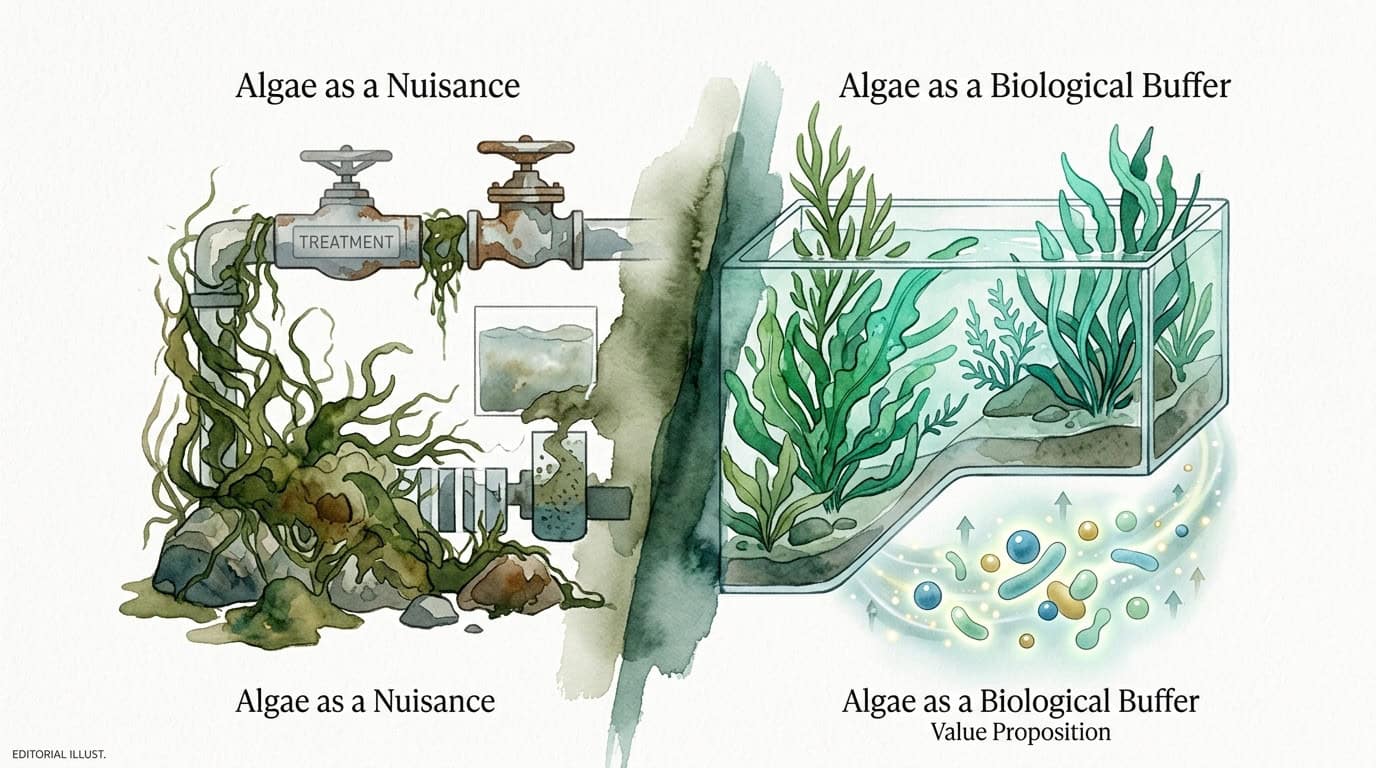
Understanding the intersection of chemical algaecides and microbial ecology is critical for maintaining a stable aquatic environment. Many hobbyists view algae as a purely aesthetic nuisance, but it functions as a secondary biological buffer. Removing this buffer while simultaneously damaging the primary bacterial filter creates a high-risk scenario for any aquatic livestock. This article examines the mechanical and biological impacts of various treatments on Nitrosomonas and Nitrobacter populations.
What Happens to Beneficial Bacteria During an Algae Treatment?
During an algae treatment, beneficial bacteria face two primary threats: direct chemical toxicity and indirect environmental stress. Most algaecides are designed to be biocides. While they are marketed to target specific plant-like organisms, their molecular mechanisms often overlap with the cellular structures of prokaryotic bacteria. For instance, surfactants and oxidizing agents do not distinguish between the cell wall of a hair algae strand and the cell membrane of a nitrifying bacterium.

Beneficial bacteria, specifically those responsible for the nitrogen cycle, reside in biofilms on filter media, substrate, and decor. When an algaecide is introduced, it must penetrate these biofilms to be effective against algae. In doing so, it frequently reaches the nitrifying colonies. This leads to a reduction in the metabolic rate of the bacteria or total colony collapse, depending on the concentration and type of chemical used. The result is a measurable decrease in the system’s capacity to process ammonia and nitrite.
Furthermore, the death of the algae itself creates a massive biological load. As the algae decay, heterotrophic bacteria bloom to consume the dead organic matter. These heterotrophs are much faster-growing than nitrifying bacteria and can quickly outcompete them for space and dissolved oxygen. This “secondary bloom” of scavenger bacteria often masks the fact that the original beneficial nitrifyers have been severely compromised by the initial chemical application.
Mechanical and Chemical Mechanisms of Bacterial Inhibition
The interaction between algaecides and bacteria occurs at a cellular level through several distinct pathways. Understanding these pathways allows for better risk assessment when choosing a treatment method. Most chemical treatments fall into three categories: oxidizers, metabolic inhibitors, and heavy metals. Each has a specific impact profile on the nitrifying community.
Oxidizing agents, such as hydrogen peroxide (H2O2) or potassium permanganate, work by stripping electrons from organic molecules. This process destroys the integrity of cellular membranes. Nitrifying bacteria have relatively thin cell walls compared to some algae species, making them highly susceptible to oxidative stress. High doses of H2O2 can effectively “sterilize” the surface layers of a biofilter, leading to an immediate cessation of ammonia oxidation.
Metabolic inhibitors, including compounds like Simazine or Glutaraldehyde, interfere with specific biological processes such as photosynthesis or protein synthesis. While nitrifying bacteria do not photosynthesize, Glutaraldehyde is a potent cross-linking agent that fixes proteins. This action is lethal to most microorganisms at high concentrations. Even at lower “algae-killing” doses, it can significantly slow down the reproduction rate of Nitrosomonas, leading to a gradual buildup of toxins over several days.
Copper-based algaecides utilize heavy metal ions to disrupt enzymatic functions within the algae cells. Unfortunately, copper is also toxic to nitrifying bacteria at concentrations only slightly higher than those required to kill algae. If the water’s carbonate hardness (KH) is low, the copper becomes more bioavailable and toxic, frequently resulting in a total “crash” of the biological filter. Monitoring KH and pH is essential when using these metallic treatments to prevent runaway toxicity.

The Oxygen Equation and Aerobic Constraints
One of the most significant indirect effects on beneficial bacteria is the sudden drop in dissolved oxygen (DO) levels. Nitrifying bacteria are obligate aerobes, meaning they require oxygen to convert ammonia into nitrite and nitrite into nitrate. The stoichiometric requirement for nitrification is high: approximately 4.57 grams of oxygen for every gram of ammonia oxidized. Anything that reduces DO levels directly throttles bacterial efficiency.
Algae treatments cause a massive die-off of photosynthetic biomass. As this biomass decomposes, the process of aerobic decay consumes vast quantities of oxygen. If the treatment is successful and a large volume of algae dies simultaneously, the oxygen demand can exceed the system’s gas exchange capacity. When DO levels fall below 2.0 mg/L, nitrification essentially stops, even if the bacteria themselves survived the chemical application.
In addition to decay, many algaecides reduce the water’s ability to hold oxygen or actively consume it during the chemical reaction. This creates a “double hit” for the beneficial bacteria. They are hit first by the chemical toxicity and second by a suffocating environment. Without supplemental aeration, such as air stones or increased surface agitation, the bacterial colony may undergo a mass die-off simply due to hypoxia.
Common Pitfalls in Chemical Algae Management
A frequent mistake is the “set it and forget it” approach to algaecide dosing. Many users apply the recommended dose without considering the current biological load or the sensitivity of their specific bacterial strains. Over-dosing is a primary cause of biological filter failure. If the instructions call for a certain amount per gallon, failing to account for the volume displacement of rocks and substrate leads to a higher effective concentration than intended.
Another error is treating the entire system when a “spot treatment” would suffice. Introducing a chemical to the water column affects every surface in the tank or pond. For localized algae outbreaks, applying the treatment directly to the affected area with the filters turned off can minimize the exposure of the main bacterial colonies. Turning the filters back on only after the chemical has reacted or been diluted reduces the risk of biofilter damage.
Failure to remove dead algae is a mechanical oversight with biological consequences. Leaving the decaying matter in the system guarantees a massive ammonia spike and an oxygen crash. Real-world success requires physical removal of as much algae as possible *before* treatment and siphoning out the dying remains *after* treatment. Relying on the filter to “catch” the dead algae simply moves the site of decay to the very place where your beneficial bacteria are trying to survive.
Limitations of Chemical Interventions
Chemical treatments are temporary measures that do not address the root cause of algae growth, which is typically a nutrient imbalance. Relying on algaecides creates a cycle of dependency. Each time a treatment is applied, the beneficial bacteria are stressed, making the system less stable and more prone to the next algae bloom. Over time, this can lead to a “sterile” environment where only the most resilient, and often least beneficial, microbes survive.
Environmental factors like temperature and pH also limit the safety of these treatments. In warmer water, oxygen solubility is lower, making the oxygen-depletion phase of an algae die-off much more dangerous. Similarly, in very soft water, the lack of mineral buffering makes the system’s pH more volatile. Many algaecides cause a temporary pH drop, which further inhibits nitrifying bacteria, as they perform best in slightly alkaline conditions (pH 7.5–8.5).
It is important to recognize that some systems are simply too fragile for chemical algaecides. Newly established tanks with “young” bacterial colonies (less than 3–6 months old) lack the biofilm thickness to survive a chemical hit. In these cases, physical removal and light adjustment are the only safe options. The trade-off for the convenience of a chemical “cure” is always the potential loss of biological stability.
Comparison of Treatment Impacts on Microbial Stability
| Treatment Type | Bacterial Impact | Oxygen Demand | Recovery Time |
|---|---|---|---|
| Hydrogen Peroxide | High (Oxidative Stress) | Low (Releases O2) | Fast (2-4 Days) |
| Copper Sulfate | Moderate/High (Enzyme Inhibition) | Moderate (Decay Demand) | Slow (Residual Toxicity) |
| Glutaraldehyde | Moderate (Protein Fixing) | High (Chemical Demand) | Moderate (5-7 Days) |
| UV Sterilization | Zero (If correctly plumbed) | None | None (N/A) |
Best Practices for Maintaining Bacterial Health
To protect your biological filter during an algae treatment, always maximize aeration. Adding extra air stones or increasing the flow of a surface skimmer helps maintain the dissolved oxygen levels necessary for nitrifying bacteria to function under stress. This also aids in the off-gassing of any volatile chemical byproducts. Aeration should be increased at least 24 hours before treatment and maintained for several days after the algae has cleared.
Consider “offline” biofiltration during heavy treatments. If you have a canister filter or a sump, you can temporarily loop the filter onto a separate bucket of clean, aerated water during the most aggressive phase of the chemical application. This physically isolates the beneficial bacteria from the algaecide. Once the treatment has finished its active phase (usually 4–12 hours) and a water change has been performed, the filter can be reconnected to the main system.
Post-treatment monitoring is non-negotiable. Test ammonia and nitrite levels daily for at least a week following an algaecide application. If you detect any rise in ammonia, perform an immediate water change and consider adding a high-quality bacterial starter culture. “Seeding” the tank after a treatment helps replace any lost microbial diversity and prevents a full-scale nitrogen cycle crash.
Advanced Considerations: The Role of Biofilms and DOC
Experienced practitioners should consider the Dissolved Organic Carbon (DOC) levels in their system before treating. High DOC levels can neutralize certain algaecides, making them less effective against algae but potentially more toxic to bacteria as the chemicals bind to different organic fractions. A clean system with low DOC allows for lower, safer doses of algaecides to achieve the same results.
The age and “toughness” of the bacterial biofilm also play a role. Mature biofilms produce extracellular polymeric substances (EPS) that act as a protective shield for the bacteria within. In a well-established system, the outer layer of the biofilm may die off during a treatment while the inner layers survive and quickly recolonize the surface. This is why “seasoned” aquariums and ponds appear more resilient to chemical shocks than new setups.
For large-scale operations or high-value systems, measuring the Oxidation-Reduction Potential (ORP) provides a real-time metric of how the treatment is affecting the water chemistry. A sudden spike in ORP indicates a strong oxidative environment that may be harmful to bacteria. By monitoring ORP, a technician can fine-tune the dosage to kill algae without crossing the threshold into total microbial sterilization.
Example Scenario: Treating a Cyanobacteria Outbreak
In a 100-gallon planted aquarium experiencing a Cyanobacteria (blue-green algae) outbreak, the user decides to use an erythromycin-based treatment or a specialized oxidizer. Before application, the user manually siphons out 70% of the visible matting to reduce the future decay load. They increase the air pump output to maximum and verify that the KH is at least 4 degrees to stabilize the pH.
The treatment is applied at half-strength over two days rather than a single full dose. This staggered approach allows the nitrifying bacteria time to adapt to the changing chemistry. On day three, a 50% water change is performed to remove the dead Cyanobacteria and residual chemicals. Despite these precautions, a slight ammonia reading of 0.25 ppm appears on day four. The user immediately doses a concentrated bacterial supplement and the ammonia returns to zero within 24 hours. The biofilter is preserved because the decay load was managed and oxygen levels remained high.
Final Thoughts
Algae treatments are a mechanical intervention in a biological system. While they can effectively clear water and surfaces, the cost is often paid by the invisible microbial workers that maintain the nitrogen cycle. Beneficial bacteria are resilient but not invincible; their survival depends on the user’s ability to manage oxygen levels, chemical concentrations, and the physical removal of decaying organic matter.
The most successful algae management strategies prioritize biological stability over rapid cosmetic changes. By understanding the specific ways algaecides interact with bacterial cell walls and the aquatic environment, you can intervene with precision rather than brute force. Always view chemicals as a last resort, and when they are used, treat the preservation of your biofilter as the primary objective.
By focusing on nutrient export and mechanical filtration, the need for these high-risk treatments can be minimized. A healthy, robust colony of beneficial bacteria is, in itself, one of the best defenses against algae. Protecting that colony during a crisis ensures that the system can bounce back quickly and maintain long-term health.

Frequently Asked Questions About What Happens to Beneficial Bacteria During an Algae Treatment?
Will AlgaeFix kill my beneficial bacteria?
API Algaefix uses a quaternary ammonium compound as its active ingredient. While it is specifically formulated to target algae cell membranes, it can be inhibitory to nitrifying bacteria if over-dosed or used in systems with low organic loads. In a typical established environment, the bacteria within deep biofilms usually survive, but a temporary reduction in nitrification efficiency is common. It is essential to follow the dosage instructions precisely and ensure high oxygenation, as the death of the algae will consume the oxygen the bacteria need to function. If you notice an ammonia spike after use, it indicates the bacterial colony has been suppressed and requires supplemental aeration and possibly a bacterial starter.
Can I use hydrogen peroxide without crashing my cycle?
Yes, hydrogen peroxide can be used safely, but it requires careful application. Spot-treating specific areas with a syringe while the filters are off minimizes the exposure of the main bacterial colony. Hydrogen peroxide is a powerful oxidizer that kills bacteria on contact, so pouring it directly into a filter intake will likely “crash” your cycle. However, because H2O2 breaks down into water and oxygen very quickly (usually within 30-60 minutes), the long-term impact is lower than that of residual chemicals like copper. The key is to keep the dosage low (typically 1-3ml of 3% H2O2 per gallon) and ensure the system has enough circulation to dilute the peroxide after it has acted on the algae.
How long does it take for bacteria to recover after an algaecide treatment?
Recovery time depends on the severity of the damage and the type of chemical used. If the treatment only suppressed the metabolic rate, the bacteria may return to full capacity within 48 to 72 hours as the chemical dissipates. However, if the treatment caused a mass die-off (a “cycle crash”), it may take 2 to 4 weeks for the nitrifying colonies to rebuild to their previous levels, similar to “cycling” a new tank. You can accelerate this process by performing large water changes to remove residual algaecides and “seeding” the system with high-quality live nitrifying bacteria. Continuous monitoring of ammonia and nitrite is necessary until the levels remain at zero consistently.
Do UV sterilizers kill beneficial bacteria?
UV sterilizers do not kill the beneficial bacteria that reside in your biofilter, substrate, or on surfaces. Nitrifying bacteria like Nitrosomonas are “sessile,” meaning they attach themselves to surfaces and do not typically float in the water column. Since the UV light only kills organisms that pass directly through the unit, the established colonies are safe. However, UV light will kill any “free-floating” bacteria, including those in some bacterial supplement products if they are added while the UV is running. For this reason, it is common practice to turn off UV sterilizers for 24–48 hours when adding new bacterial cultures to allow them time to settle and attach to surfaces.
Does the death of the algae hurt the bacteria more than the chemical itself?
In many cases, yes. While the chemical might be mildly toxic, the “secondary impact” of mass algae decay is often what kills the bacteria. As algae die, they release stored nutrients and organic matter back into the water. Heterotrophic bacteria multiply rapidly to consume this waste, and in the process, they consume nearly all the dissolved oxygen. Nitrifying bacteria are slow-growing and cannot compete with these scavengers for oxygen. Without enough oxygen, the nitrifying bacteria die off, leading to a massive ammonia spike. This is why physical removal of dead algae and aggressive aeration are more important for bacterial survival than the choice of chemical algaecide itself.