

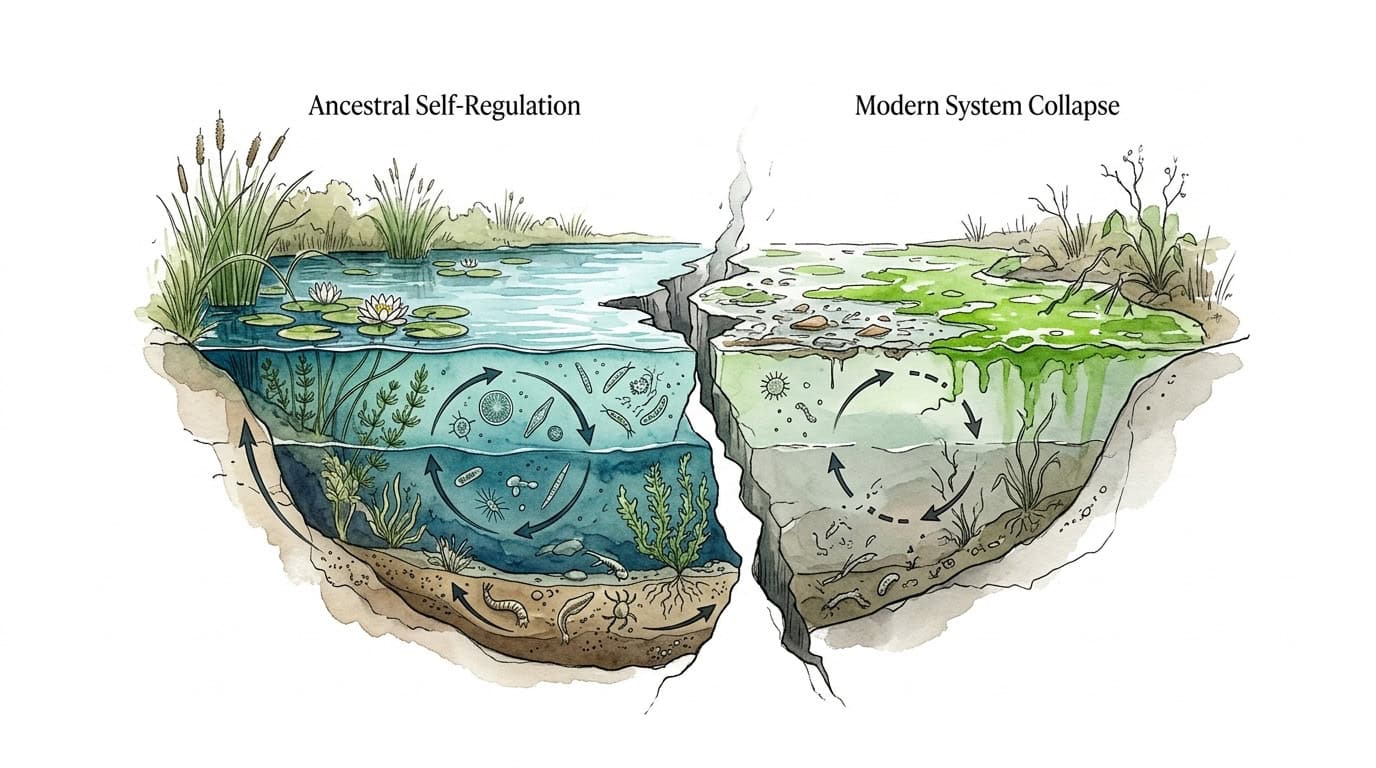
Is your pond a resilient ecosystem or a life-support machine waiting to fail? Biological balance isn’t just a buzzword—it’s the difference between a pond that thrives on its own and one that requires constant, expensive intervention. Are you seeing these red flags?
Biological balance breaks down when nutrient loading exceeds the oxidative capacity of the pond’s microbial community. Primary technical indicators include persistent ammonia or nitrite spikes, sudden dissolved oxygen (DO) depletion, excessive benthic sludge accumulation, recurring filamentous algae blooms, and a decline in fish immune response. These signs indicate a failure in the nitrogen cycle and a shift toward anaerobic dominance, requiring immediate mechanical or biological optimization to prevent total system collapse.
Five Signs Your Pond’s Biological Balance Is Breaking Down
Biological balance in an aquatic system refers to the steady-state equilibrium where the rate of waste production is equal to or less than the rate of waste processing by nitrifying and heterotrophic bacteria. In a balanced system, the nitrogen cycle functions as a continuous loop: fish excretion and organic decay produce ammonia, which is oxidized into nitrite and then into relatively inert nitrate.
When this equilibrium shifts, the system enters a state of biological breakdown. This is not merely an aesthetic issue but a mechanical failure of the pond’s natural filtration capacity. Identifying these signs early allows for corrective measures before the system reaches a tipping point of eutrophication or mass mortality.

1. Non-Zero Ammonia and Nitrite Concentrations
In a stable biological system, ammonia (NH3/NH4+) and nitrite (NO2-) concentrations should consistently measure 0 mg/L. Any detectable presence of these compounds in an established pond indicates that the nitrifying bacteria populations, specifically Nitrosomonas and Nitrobacter, are insufficient for the current biomass load.
2. Hypoxia and Dissolved Oxygen (DO) Volatility
A healthy pond maintains high dissolved oxygen levels, typically above 6-8 mg/L depending on temperature. A sign of breakdown is “gasping” behavior in fish at the surface, especially during dawn when oxygen is lowest. This indicates a high Biochemical Oxygen Demand (BOD), where decomposing organic matter consumes oxygen faster than the system can replenish it through surface gas exchange.
3. Excessive Benthic Sludge (Muck) Accumulation
While some sediment is natural, the rapid accumulation of black, foul-smelling “muck” at the bottom of the pond signals a failure of heterotrophic bacteria. This sludge is a reservoir of anaerobic activity, producing toxic gases like hydrogen sulfide (H2S) and providing a breeding ground for opportunistic pathogens.
4. Opportunistic Algae Dominance
While algae are a natural component of aquatic systems, sudden blooms of filamentous (string) algae or dense phytoplankton (green water) indicate a nutrient surplus. High levels of nitrates (>50 mg/L) or phosphates (>0.03 mg/L) act as fuel, showing that the biological “sink” for these nutrients is saturated or bypassed.
5. Increased Pathogen Pressure and Fish Stress
Biological breakdown often manifests as physical symptoms in livestock. If fish exhibit red streaking on fins, ulcers, or persistent parasitic infections, it is frequently due to a suppressed immune system caused by sub-lethal ammonia exposure or high bacterial counts in the water column.
The Mechanics of Microbial Nitrification and Trophic Shifts
Understanding how a pond fails requires a deep dive into the nitrogen cycle. Nitrification is a two-step aerobic process. First, ammonia-oxidizing bacteria (AOB) convert ammonia into nitrite. Second, nitrite-oxidizing bacteria (NOB) convert nitrite into nitrate. This process is highly dependent on available surface area (bio-media) and high dissolved oxygen levels.

When biological balance breaks down, the pond often undergoes a “trophic shift.” In a healthy, oligotrophic-leaning state, nutrients are sequestered in beneficial biofilms and higher plants. In a collapsing, eutrophic state, the system shifts toward a high-turnover, low-stability environment dominated by algae and anaerobic bacteria.
The critical factor in this transition is the Oxidation-Reduction Potential (ORP). A high ORP indicates a healthy, oxidative environment where waste is efficiently broken down. A low or negative ORP indicates a reducing environment where waste accumulates, oxygen is depleted, and the biological balance is fundamentally compromised.
The Practical Benefits of Maintaining Biological Equilibrium
Maintaining a stable biological balance is the most cost-effective method of pond management. A balanced system functions as a self-regulating machine, reducing the need for chemical additives and frequent water changes.
Lower Maintenance Costs
Balanced ponds require fewer interventions. When the microbial community is healthy, there is no need for expensive ammonia neutralizers, algaecides, or clarifies. The system processes its own waste, keeping the water clear and the parameters stable naturally.
Increased Livestock Longevity
Stable water chemistry is the foundation of fish health. By maintaining 0 mg/L of ammonia and nitrite, the physiological stress on fish is minimized. This leads to better growth rates, more vibrant coloration, and a significantly lower mortality rate during seasonal transitions or temperature fluctuations.
System Resilience
A biologically balanced pond has a higher “buffering capacity” against external shocks. Whether it is a heavy rainstorm introducing runoff or a temporary pump failure, a robust microbial population can absorb the impact far better than a system that is already on the verge of collapse.
Common Challenges and Systemic Failures
Biological breakdown rarely happens in a vacuum; it is usually the result of specific management errors or environmental stressors.
The “Over-Cleaning” Paradox
One of the most common mistakes is the over-sterilization of the pond. Using high-pressure washers on rocks or excessively cleaning filter media with chlorinated tap water kills the very nitrifying bacteria required for balance. This can trigger “New Pond Syndrome” in an established system, leading to immediate ammonia spikes.
Excessive Nutrient Inputs
Overfeeding fish is the primary driver of biological failure. Any uneaten food adds directly to the BOD. High-protein feeds (above 35%) produce more ammonia per gram of food, which can overwhelm a biofilter that was previously adequate for a lower-load diet.
Insufficient Gas Exchange
Bio-filtration is an aerobic process. If the pond lacks adequate aeration—either through waterfalls, fountains, or air stones—the bacteria cannot function at peak efficiency. This creates a feedback loop where low oxygen reduces bacterial activity, which leads to more waste accumulation, further depleting oxygen.
Constraints and Limitations of Biological Filtration
Biological systems have physical and chemical boundaries that cannot be ignored. Recognizing these limits is essential for realistic pond management.
Temperature Dependency
Nitrifying bacteria are highly sensitive to temperature. Their metabolic rate drops significantly as water temperatures fall below 50°F (10°C). In winter, a pond’s biological capacity is naturally reduced, meaning any waste input (such as late-season feeding) is more likely to cause an imbalance.
pH and Alkalinity Requirements
The nitrification process consumes carbonate hardness (KH). For every gram of ammonia oxidized, roughly 7 grams of alkalinity are consumed. If the KH drops too low (below 50-80 mg/L), the pH will become unstable, and the nitrifying bacteria may “stall,” leading to a sudden collapse of the nitrogen cycle.
Maximum Load Capacity
Every pond has a maximum carrying capacity based on its total surface area for bacteria and its volume. Attempting to keep too many fish in a small volume will eventually lead to a breakdown regardless of how much filtration is added, as the system reaches a point where the dissolved oxygen cannot keep up with the total respiratory demand.
System Comparison: Ancestral Self-Regulation vs Modern System Collapse
The differences between a self-regulating natural system and a high-maintenance modern system are defined by complexity and biomass density.
| Factor | Ancestral Self-Regulation | Modern System Collapse (At Risk) |
|---|---|---|
| Biomass Density | Low (Low fish-to-water ratio) | High (Intensive stocking) |
| Nutrient Inputs | Natural (Detritus, insects) | External (High-protein pelleted feed) |
| Filtration Method | Diverse (Soil, plants, large surface area) | Mechanical (Pressurized filters, UV) |
| Stability | High (Negative feedback loops) | Low (Fragile, dependent on power) |
| Maintenance | Minimal | Constant monitoring and cleaning |
Optimization Protocols and Best Practices
If you detect signs of biological breakdown, a systematic approach is required to restore equilibrium.
- Perform a Large Water Exchange: Replace 20-30% of the water using a de-chlorinator. This immediately dilutes toxins and replenishes necessary minerals and alkalinity (KH).
- Increase Aeration: Add supplemental air stones or increase water flow. Dissolved oxygen is the “fuel” for the recovery process.
- Dose Beneficial Bacteria: Introduce concentrated strains of heterotrophic and nitrifying bacteria to out-compete algae and jump-start the nitrogen cycle.
- Reduce or Suspend Feeding: Temporarily stop feeding fish until ammonia and nitrite levels return to zero. Fish can safely go without food for several days while the system stabilizes.
- Mechanical Pre-filtration: Clean skimmer baskets and pre-filter sponges to remove solid waste before it can break down into dissolved ammonia.
Advanced Considerations: ORP and BOD Optimization
For serious practitioners, monitoring the Oxidation-Reduction Potential (ORP) provides the most accurate real-time data on biological health. An ORP reading between 250mV and 400mV indicates a highly oxidative environment where waste is being efficiently processed. A reading below 150mV is a warning sign that the BOD is too high and a breakdown is imminent.
Furthermore, consider the Specific Surface Area (SSA) of your filter media. Moving bed bio-reactors (MBBR) using K1 media or high-density ceramic media provide significantly more surface area for bacteria than traditional lava rocks or sponges. Optimizing the SSA allows for a smaller physical footprint while maintaining a much higher biological processing capacity.
Practical Scenario: Analyzing a High-Biomass System Collapse
Consider a 2,000-gallon pond with 15 large Koi. During a heatwave, the water temperature rises to 85°F. Warm water holds less oxygen than cold water, but the metabolic rate of the fish increases, requiring more food and producing more ammonia.
The owner continues feeding at the usual rate. The biofilter, already operating at its maximum capacity, cannot keep up because the high temperature and lower oxygen levels have inhibited the efficiency of the nitrifying bacteria. Ammonia levels rise to 0.5 mg/L. The fish, stressed by the ammonia, produce more mucus, further increasing the organic load.

The result is a sudden dissolved oxygen crash at 4:00 AM, leading to fish gasping and potential mortality. Restoration requires an immediate 50% water change, the addition of a high-volume air pump, and a complete cessation of feeding for 48 hours to allow the bacterial population to catch up to the nutrient load.
Final Thoughts
Biological balance is the invisible engine that drives a successful pond. When this balance breaks down, the symptoms—algae, sludge, and sick fish—are merely warnings of a deeper mechanical failure within the nitrogen cycle. By monitoring the technical indicators like ammonia and dissolved oxygen, you can maintain a system that is resilient and efficient.
True success in pond keeping comes from understanding the limits of your system. Focus on optimizing the environment for beneficial bacteria, and the bacteria will handle the maintenance for you. This data-driven approach transforms a high-maintenance chore into a self-regulating aquatic ecosystem.
Whether you are managing a small ornamental pond or a large-scale aquaculture system, the principles of biological equilibrium remain the same. Respect the chemistry, provide the necessary oxygen, and always prioritize the health of the microbial community to ensure long-term stability.
Frequently Asked Questions About Five Signs Your Pond’s Biological Balance Is Breaking Down
Why does my pond have zero ammonia but my fish are still gasping at the surface?
While ammonia is a major stressor, it is not the only factor affecting fish health. Gasping at the surface is a primary indicator of low dissolved oxygen (DO). Even if the nitrogen cycle is processing ammonia efficiently, the total Biological Oxygen Demand (BOD) might be too high. This often happens in summer when warm water holds less oxygen, or if there is excessive decomposing organic matter at the bottom of the pond. The decomposition process consumes vast amounts of oxygen, leaving little for the fish. In this scenario, adding aeration is more critical than checking the biofilter.
Can a pond be “too clean” for biological balance?
Yes, a pond can be over-cleaned to the point of sterilization. Nitrifying bacteria live in the biofilm—the slippery coating on rocks, liner, and filter media. If you use a pressure washer or harsh chemicals to remove all algae and “grime,” you are simultaneously wiping out the beneficial microbial colonies that maintain water safety. This often leads to a sudden ammonia spike a few days after the cleaning, as there are no bacteria left to process the fish waste. Always leave some biofilm intact and clean filter media in pond water rather than chlorinated tap water.
How does pH affect the signs of biological breakdown?
pH is a critical multiplier of ammonia toxicity. Ammonia exists in two forms: toxic unionized ammonia (NH3) and relatively harmless ammonium (NH4+). As pH and temperature rise, a higher percentage of total ammonia shifts into the toxic NH3 form. A reading of 0.5 mg/L ammonia might be manageable at a pH of 7.0, but it can become lethal at a pH of 8.5. Therefore, a sign of breakdown in a high-pH pond is much more dangerous and requires faster intervention than the same reading in a low-pH system.
What is the relationship between string algae and biological balance?
String algae, or filamentous algae, act as a “secondary biofilter.” They consume the nitrates and phosphates that your biological filter or plants have failed to sequester. While they are often viewed as a nuisance, a sudden explosion of string algae is a clear sign that your system has a nutrient surplus. If you kill the algae with chemicals without addressing the underlying nutrient load, those nutrients will remain in the water, often leading to an even more dangerous planktonic algae bloom or an ammonia spike as the dead algae decomposes.
When should I suspect anaerobic conditions in my pond?
You should suspect anaerobic conditions if you notice a “rotten egg” smell (hydrogen sulfide) when you disturb the pond bottom or if the water clarity suddenly decreases with a greyish tint. Anaerobic zones form in deep sludge where oxygen cannot penetrate. These zones produce toxins and can harbor harmful bacteria like Aeromonas or Pseudomonas. If your biological balance is breaking down, these anaerobic pockets will expand, eventually releasing gases that can be lethal to fish during a “pond turnover” event or heavy rainstorm.