

Pond Talk is an Amazon Associate. As an Amazon Associate we earn from qualifying purchases.
Introduction
You can buy a clear pond every month, or you can build one that stays clear for free. The chemical industry wants you to believe that clear water comes in a bottle. We are showing you the $0 alternative that uses local materials to create a self-balancing ecosystem that never needs a refill.
Most pond owners fall into a cycle of purchasing algaecides, clarifiers, and expensive UV sterilizers. This approach treats the symptoms of an imbalanced system rather than the root cause. A functional ecosystem manages nitrogen levels through biological processes, rendering external chemical interventions unnecessary.
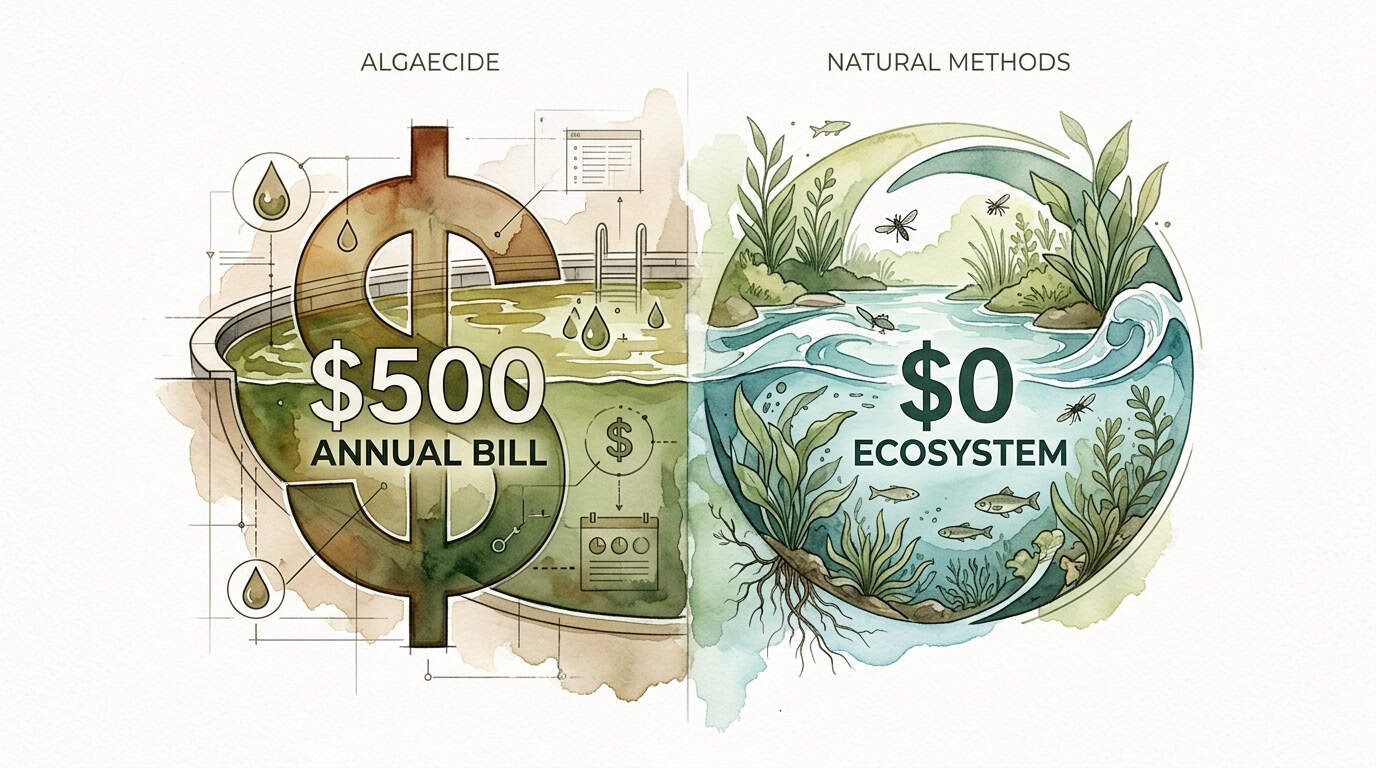
The transition from a high-maintenance water feature to a self-sustaining ecosystem relies on understanding mechanical and biological filtration. Shifting from a $500 annual bill to a $0 ecosystem requires a one-time investment in design logic and local biological resources. This guide provides the technical framework to achieve permanent water clarity using the physics of water movement and the biology of indigenous microbes.

Water clarity is not merely an aesthetic choice. It is a metric of system health. High turbidity and algae blooms indicate excess dissolved nutrients that the system cannot process. We will examine how to build a biological filter that captures these nutrients and converts them into plant biomass.
Algaecide Cost Vs Natural Methods
Algaecide functions as a biocide. It introduces chemical compounds, often copper-based, to kill photosynthetic organisms on contact. While this provides immediate visual results, it creates a secondary problem: dead organic matter. This decaying mass sinks to the bottom, releases more nutrients, and triggers a larger bloom once the chemical dissipates.
Natural methods focus on nutrient sequestration. In a self-balancing ecosystem, nitrogen and phosphorus are diverted away from algae and toward vascular plants and beneficial biofilms. This process is passive and relies on the surface area of local materials rather than recurring chemical applications.
Consider the economic trajectory of a traditional pond. A typical 1,000-gallon pond may require $100 to $200 in chemicals annually, plus the electricity for high-pressure pumps and UV bulbs. Over five years, maintenance costs can exceed the initial construction price. A natural system utilizes a low-head pump and biological media found in the local environment, reducing operating costs to near zero.
The reliance on bottled solutions creates a fragile environment. If a pump fails or a chemical dose is missed, the system crashes. A natural ecosystem possesses higher resilience. The established microbial colonies and plant roots act as a buffer, maintaining stability even during environmental fluctuations.
How It Works: The Mechanics of Biological Filtration
Biological filtration relies on the nitrogen cycle. Fish waste, decaying leaves, and uneaten food produce ammonia (NH3). Ammonia is toxic to aquatic life. In a balanced system, Nitrosomonas bacteria oxidize ammonia into nitrites (NO2), and Nitrobacter bacteria oxidize those nitrites into nitrates (NO3).
Nitrates are less toxic but serve as the primary fuel for algae. To prevent green water, you must provide a mechanism to remove these nitrates. A vegetated submerged bed, also known as a bog filter, accomplishes this by forcing water through a substrate colonized by plants. The plants absorb nitrates directly through their root systems to build new tissue.
Surface area is the most critical variable in this process. Bacteria require a substrate to grow. Using local gravel or crushed stone provides millions of square inches of surface area for microbial colonization. The water must move slowly through this media to allow for maximum contact time between the microbes and the dissolved nutrients.
Oxygenation is the second critical factor. Most beneficial bacteria are aerobic. They require dissolved oxygen to perform the nitrification process. Designing the system with a waterfall or an air stone ensures that oxygen levels remain high enough to support the metabolic needs of the bacterial colony.
Building the Bog Filter
The bog filter should be approximately 10% to 30% of the total surface area of the pond. A shallow basin is excavated adjacent to the main pond and filled with graduated layers of local stone. Water is pumped into the bottom of this basin, forcing it to rise through the stone and return to the main pond via a spillway.
Positioning the intake at the bottom prevents “short-circuiting,” where water takes the path of least resistance across the surface. Forced up-flow ensures every drop of water passes through the root zones and bacterial colonies. This mechanical configuration maximizes the efficiency of the biological process.
Benefits of the Ecosystem Approach
Stability is the primary benefit of a natural system. Unlike chemical treatments that cause massive swings in pH and dissolved oxygen, a biological system maintains a steady state. The gradual processing of nutrients prevents the “bloom and bust” cycles common in traditional pond management.
Maintenance requirements drop significantly once the ecosystem reaches maturity. There are no filters to scrub or UV bulbs to replace. The only required maintenance is the seasonal pruning of plants to physically remove the captured nutrients from the system. This manual removal ensures that the nitrogen is permanently exported from the pond environment.
Local biodiversity increases in and around a self-balancing pond. The lack of harsh chemicals allows for the colonization of beneficial insects, amphibians, and birds. These organisms contribute to the ecosystem by consuming pests like mosquito larvae, further reducing the need for external management.
Energy efficiency is another measurable advantage. Natural systems typically operate on lower-pressure pumps because they do not need to force water through fine mechanical sponges or pressurized canisters. This reduces the monthly electrical draw and extends the lifespan of the hardware.
Challenges and Common Mistakes
Insufficient surface area is the most frequent cause of system failure. Builders often underestimate the volume of gravel required to support the necessary bacterial load. If the biological “engine” is too small for the nutrient “fuel” provided by fish and debris, the water will remain turbid.
Overstocking fish creates a nutrient surplus that no amount of filtration can easily overcome. Every fish added to the pond increases the ammonia input. Beginners often treat a pond like an aquarium, leading to a nitrogen spike that overwhelms the young ecosystem. Maintaining a low biomass-to-water ratio is essential during the first two years of operation.
Using the wrong size of substrate can lead to clogging. If the gravel is too fine, it traps physical solids and becomes anaerobic. Anaerobic pockets produce hydrogen sulfide, which is toxic. Utilizing 1-inch to 3-inch round river rock allows for sufficient water flow while still providing ample surface area for biofilms.
Inadequate water circulation causes “dead zones.” These areas of stagnant water accumulate organic sludge and become breeding grounds for undesirable algae. Ensuring that the pump circulates the entire volume of the pond at least once per hour is a standard technical requirement for clarity.
Limitations and Constraints
Spatial requirements can be a limitation for small properties. A truly self-balancing system requires enough room for both the deep water zone and the shallow filtration zone. In very confined spaces, the 30% filter ratio may be difficult to achieve, necessitating more frequent manual intervention.
Climatic extremes impact biological activity. In cold regions, bacterial metabolism slows down significantly when water temperatures drop below 50°F (10°C). During these periods, the system’s ability to process ammonia is reduced. While this is balanced by a corresponding decrease in fish activity and algae growth, the transition periods in spring and fall can be volatile.
Heavy deciduous tree cover poses a challenge. If thousands of leaves fall into the pond each autumn, the sheer volume of organic matter can overwhelm the biological filter. In these environments, mechanical pre-filtration (like a skimmer) or physical netting is required to prevent the pond from becoming a compost pile.
The “startup lag” is a psychological hurdle for many users. A chemical treatment works in 24 hours. A natural ecosystem may take 6 to 12 weeks to fully colonize with bacteria and for plants to establish root systems. During this phase, the water may turn green, requiring the owner to resist the urge to add chemicals.
Comparison: Traditional vs. Ecosystem Filtration
| Feature | Chemical/Mechanical | Natural Ecosystem |
|---|---|---|
| Annual Cost | $300 – $700+ | $0 – $50 (Electricity) |
| Maintenance Frequency | Weekly/Bi-weekly | Seasonal (Pruning) |
| Primary Filter Media | Synthetic Sponges/UV | Local Stone/Native Plants |
| Resilience | Low (Requires power) | High (Self-buffering) |
| Clarity Mechanism | Cellular Destruction | Nutrient Sequestration |
Practical Tips for Success
Source your gravel locally to minimize transportation costs and ensure the mineral content is compatible with the local water chemistry. Avoid limestone if your local water is already alkaline, as it can drive pH levels too high. Granite, basalt, or river-worn quartz are generally inert and ideal for biological filters.
Select native aquatic plants rather than exotic species. Native plants are adapted to your local climate and nutrient profile. They are more likely to survive the winter and begin growing early in the spring, providing filtration when it is most needed. Species like Pickerelweed, Arrowhead, and Marsh Marigold are excellent nutrient sponges.
Install a “clean-out” pipe in your bog filter. This is a vertical PVC pipe that extends to the bottom of the gravel bed. It allows you to drop a pump down and flush out accumulated silt every few years without dismantling the entire system. This simple addition extends the functional life of the filter indefinitely.
Monitor your water temperature and fish feeding habits. In water above 75°F (24°C), oxygen levels drop. Increase aeration during heatwaves to support the bacteria. Only feed the fish what they can consume in 2 minutes; any excess food is simply raw material for algae growth.
Advanced Considerations: Scaling and Optimization
Scaling a natural system requires understanding the relationship between volume and surface area. As a pond increases in size, the ratio of surface area to volume decreases. Large ponds may require multiple bog filters or the integration of a “veins and arteries” circulation system to ensure no water remains stagnant.
Advanced practitioners can optimize nutrient uptake by selecting “hyper-accumulator” plants. These are species that absorb heavy metals or specific nutrients at rates much higher than average. Utilizing a mix of floating plants (which shade the water) and emergent plants (which filter the substrate) creates a multi-tiered defense against algae.
Redox potential (ORP) is a metric used by professionals to measure the water’s ability to cleanse itself. A high ORP indicates an oxidative environment where organic matter breaks down quickly. You can increase ORP naturally by maximizing the “thin-film” contact of water—essentially creating wide, shallow waterfalls that allow for massive gas exchange.
Hydraulic retention time (HRT) is the final variable to tune. If water moves too fast through the filter, the bacteria don’t have time to process the nutrients. If it moves too slow, the filter can become oxygen-depleted. Aim for a retention time of 15 to 30 minutes within the filter bed for optimal results.
Example Scenario: The 1,000 Gallon Conversion
A homeowner has a 1,000-gallon pond that is perpetually green despite using a $400 pressurized filter and weekly algaecide treatments. The conversion begins by deactivating the pressurized filter and excavating a 100-gallon “bog basin” at the head of the waterfall. This basin is lined and connected to the main pond pump.
The basin is filled with 1.5 tons of local 1-3 inch river rock, costing roughly $60 from a local landscape yard. A manifold of perforated PVC pipe is laid at the bottom to distribute the water evenly. Six native Juncus plants and four Canna lilies are planted directly into the gravel.
Within three weeks, the lilies begin to sprout new leaves. By week six, the “pea soup” water begins to clear as the plants and bacteria sequester the nitrates. By the end of the first season, the owner no longer purchases algaecide. The total cost of the transition is less than the previous year’s chemical budget, and the maintenance is reduced to a single fall pruning session.
Final Thoughts
The transition from a chemically dependent pond to a self-balancing ecosystem is a shift from management to stewardship. By providing the necessary surface area, oxygen, and plant life, you allow natural processes to do the work that expensive bottles promise but rarely deliver. The efficiency of biology far exceeds the efficacy of industrial chemicals when viewed over a long-term horizon.
Building with local materials not only saves money but also creates a more resilient system tailored to your specific environment. The logic of the nitrogen cycle is universal, but the application is local. Once the biological engine is started, it requires very little input to maintain its momentum.
Experimenting with different plant species and flow rates will help you fine-tune your specific ecosystem. As you observe the water clarity improve and the local wildlife return, you will find that the most effective solutions are often those that work with nature rather than against it. Clarity is the natural state of a healthy pond; your job is simply to provide the framework for it to exist.
Amazon and the Amazon logo are trademarks of Amazon.com, Inc, or its affiliates.