

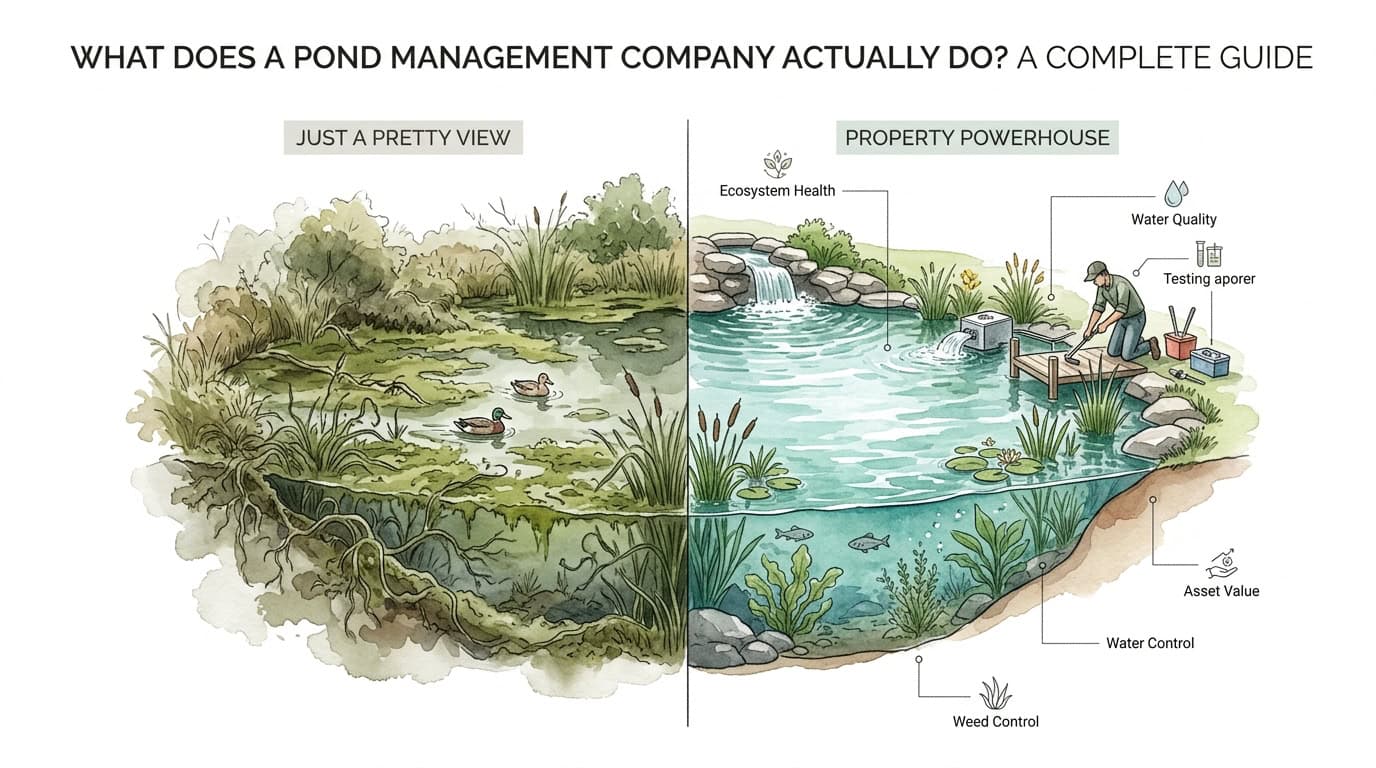
If your pond is only for looking at, you’re missing out. Professional management turns a stagnant hole in the ground into a multi-functional asset. From fire protection to trophy fishing, see what a pro team actually brings to the table.
Professional management shifts the focus from aesthetic maintenance to mechanical and biological optimization. A pond is essentially a biological reactor where nutrient inputs, oxygen levels, and biomass density must be precisely balanced to prevent system failure. Most unmanaged ponds eventually succumb to eutrophication, a process where nutrient loading leads to oxygen depletion and sediment accumulation.
Engaging a professional team ensures that the water body functions as a property powerhouse rather than just a pretty view. This involves the application of limnology, hydraulic engineering, and aquatic biology to maintain high-performance standards for irrigation, livestock, fire safety, or recreation.
What Does A Pond Management Company Actually Do? A Complete Guide
A pond management company serves as a specialized technical consultant and field operator for aquatic ecosystems. Their primary objective is to arrest the natural aging process of a pond and steer its biological trajectory toward specific owner-defined goals. This work is divided into four primary technical domains: water chemistry, vegetation control, structural integrity, and fisheries management.

In the domain of water chemistry, professionals monitor parameters that directly influence the survival of aquatic life and the clarity of the water. Monitoring includes testing for Dissolved Oxygen (DO), pH, total alkalinity, and nutrient concentrations like phosphorus and nitrogen. High phosphorus levels often trigger toxic cyanobacteria blooms, which require chemical remediation using nutrient binders like alum or lanthanum-modified clay.
Vegetation control involves the identification and regulation of both native and invasive aquatic plants. Management teams use a combination of biological controls, such as sterile grass carp, and EPA-approved aquatic herbicides. These treatments are calculated based on the precise volume of the water body to ensure that active ingredients reach the required parts-per-billion (ppb) concentration without causing collateral damage to the ecosystem.
Structural and mechanical oversight is also a critical component. Companies inspect dams, spillways, and overflow pipes for signs of erosion or blockage. They also design and maintain aeration systems, which are mechanical devices used to circulate water and increase oxygen transfer at the air-water interface. Without these systems, deeper ponds often stratify, creating a “dead zone” of hypoxic water at the bottom that can lead to catastrophic fish kills during seasonal turnovers.
Finally, fisheries management focuses on the predator-prey balance. Professionals use electrofishing—a method of temporarily stunning fish with a controlled electrical current—to conduct population surveys. This data allows for precise adjustments to stocking densities and harvest limits, ensuring the pond can support trophy-sized specimens rather than a stunted, overcrowded population.
The Physics of Aeration: Oxygen Transfer and Circulation
Aeration is the single most important mechanical intervention in pond management. Water’s ability to hold dissolved oxygen is inversely proportional to its temperature. Warm water has a lower saturation point for DO, yet biological activity and oxygen demand peak during the summer months. Professional management utilizes specific calculations to size aeration systems based on the acre-feet of water and the biological oxygen demand (BOD).
The standard metric for evaluating these systems is the Standard Oxygen Transfer Rate (SOTR). Subsurface diffused aeration systems work by pumping compressed air through membranes located at the pond’s deepest point. As the bubbles rise, they create a “gas lift” effect that pulls cold, oxygen-depleted water from the bottom to the surface. This process, known as destratification, eliminates the thermocline and ensures that the entire water column is habitable for fish and beneficial aerobic bacteria.

For effective management, a system should be capable of turning over the total pond volume at least once every 24 hours. In high-load environments, such as ponds receiving significant agricultural runoff, a twice-daily turnover rate may be required. Surface aerators or fountains are often used for shallower ponds where subsurface diffusers are less efficient, as the “residence time” of a bubble in shallow water is too short for significant gas exchange.
Fisheries Engineering: Maximizing Biomass and Genetics
Trophy fish production is a matter of energetic efficiency and data-driven stocking. To grow a largemouth bass to trophy size (8+ pounds), the pond must maintain a specific forage-to-predator ratio. The general benchmark is a 10:1 biomass ratio, meaning it takes approximately 10 pounds of forage fish, usually bluegill, to produce one pound of bass growth.
Management companies optimize this through several technical steps:
1. Forage Base Diversity
Relying solely on one prey species creates a fragile system. Professionals often stock a variety of forage, including threadfin shad, crawfish, and fathead minnows. This ensures that predators have access to prey of varying sizes throughout the different stages of their growth cycle.
2. Genetic Selection
Stocking “bucket fish” from a local lake often introduces poor genetics or diseases. Management companies source certified fingerlings, such as F1 Tiger Bass (a cross between Northern and Florida strains), which combine the aggressive feeding behavior of the Northern strain with the massive growth potential of the Florida strain.
3. Habitat Optimization
Fish are “edge” hunters. A professional team will map the pond bottom using side-scan sonar and place artificial structures or rock piles at specific depths. This provides cover for forage to spawn and ambush points for predators, reducing the energy bass must expend to capture a meal.
Aquatic Vegetation Control: Chemical Precision and Safety
Uncontrolled plant growth can ruin a pond’s utility in a single season. However, complete eradication of plants is rarely the goal, as a healthy ecosystem requires approximately 15% to 20% submerged vegetation for oxygen production and habitat. Management involves a precise “Integrated Pest Management” (IPM) approach.
Chemical control requires a deep understanding of herbicide modes of action. Contact herbicides, like Diquat, provide rapid “burn down” of surface weeds but do not kill the root system. Systemic herbicides, such as Fluridone or Glyphosate (in its aquatic-labeled form), are absorbed by the plant and translocated to the roots, providing long-term control.
Application must be calculated with extreme care. Over-treating a pond can cause a sudden massive die-off of plants. As these plants decompose, they consume dissolved oxygen through aerobic respiration. If the DO level drops below 2.0 mg/L, a total fish kill is likely. Professionals mitigate this by treating the pond in sections and monitoring DO levels throughout the process.
Fire Protection Retrofitting: NFPA 1142 Standards
In rural areas, a managed pond is more than a landscape feature; it is a life-saving water reservoir. Many property owners work with pond management companies to install “dry hydrants.” These are non-pressurized pipe systems that allow fire trucks to draft water directly from the pond.
To be recognized by insurance companies and local fire departments, these installations must often meet NFPA 1142 (Standard on Water Supplies for Suburban and Rural Fire Fighting) requirements. Key technical specifications include:
- Flow Rate: The system must be capable of delivering a minimum of 1,000 gallons per minute (gpm).
- Pipe Sizing: Usually requires 6-inch or larger Schedule 40 PVC or equivalent.
- Depth: The intake strainer must be submerged at least 2 feet below the anticipated 50-year drought water level and at least 2 feet above the pond floor to avoid sediment intake.
- Access: The hydrant head must be located within a specified distance (typically 10-20 feet) of an all-weather road capable of supporting heavy fire apparatus.
Regular professional maintenance ensures these intakes do not become clogged with silt or aquatic weeds, keeping the property’s ISO fire rating favorable and insurance premiums lower.
Benefits of Professional Management
Choosing professional oversight provides measurable advantages over a passive or DIY approach. These benefits are centered on asset longevity and risk mitigation.
Managed ponds experience significantly slower sedimentation rates. By using nutrient binders and maintaining a healthy riparian buffer, professionals reduce the amount of organic “muck” that accumulates on the bottom. This can delay the need for expensive dredging by decades.
Property valuation is another factor. A pond with clear water, high-quality fish, and stable banks is a significant asset. Conversely, a stagnant, weed-choked pond with eroded dams is a liability that can decrease property value and increase safety risks.
Finally, the use of remote sensing technology allows for real-time monitoring. Many pro teams now install sensors that send alerts to a smartphone if dissolved oxygen levels drop or if an aeration compressor fails. This proactive response prevents the total loss of a fishery that might have taken years to develop.
Challenges and Common Mistakes
The most frequent mistake made by pond owners is the “reactive treatment” cycle. This occurs when an owner waits until a pond is completely covered in algae before seeking help. At this stage, the biomass is so high that chemical treatment poses a severe risk of an oxygen crash.
Another common error is the introduction of invasive species. Whether it’s an ornamental plant from a water garden or fish from a local creek, “hitchhikers” can quickly dominate an ecosystem. For example, common carp or bullheads can muddy the water through their feeding habits, destroying clarity and out-competing more desirable species.
Structural neglect is also a major challenge. Small leaks in a dam can lead to “piping,” where water creates a tunnel through the soil. If not caught early via professional inspection, this can lead to a sudden and catastrophic dam failure.
Limitations: When Management Hits a Wall
Professional management cannot overcome fundamental design flaws or extreme environmental loads. If a pond is built with a watershed-to-surface-area ratio that is too high (e.g., 50:1 in a high-runoff area), it will act as a sediment trap for every rain event. No amount of chemical treatment can keep such a pond clear.

Depth is another limiting factor. Ponds shallower than 6 feet across their entire area are difficult to manage for fisheries in most climates. They warm up too quickly in the summer and are prone to winter-kill in northern regions. In these cases, the only viable “management” strategy may be mechanical deepening or partial filling to convert the area into a wetland.
Environmental regulations may also limit management options. In certain jurisdictions, the use of specific herbicides is restricted near potable water intakes or in protected wetlands. Professional managers must navigate these legal frameworks, which can sometimes result in slower or more expensive control methods.
Managed Asset vs. Passive Retention
The following table illustrates the technical differences between a passively managed pond and one under a professional management contract.
| Feature | Passive Retention (Unmanaged) | Property Powerhouse (Managed) |
|---|---|---|
| Dissolved Oxygen | Variable; prone to hypoxia below thermocline. | Maintained >5.0 mg/L via mechanical aeration. |
| Nutrient Load | Accumulating; fuels annual algae blooms. | Sequestration via alum/lanthanum; active removal. |
| Fishery Status | Stunted; high competition, poor genetics. | Trophy status; F1 genetics, balanced biomass. |
| Safety / Utility | Visual only; potential drowning/fire hazard. | Fire protection ready (NFPA 1142 dry hydrants). |
| Asset Lifespan | 15–20 years before major dredging needed. | 40+ years via sediment & nutrient management. |
Practical Tips for Property Owners
Owners looking to improve their aquatic assets can take several immediate steps to support a professional management plan.
- Establish a Riparian Buffer: Stop mowing to the water’s edge. A 10-to-15-foot strip of native tall grasses and shrubs will filter out excess nitrogen and phosphorus from lawn fertilizers before they reach the water.
- Monitor Water Levels: Use a permanent gauge to track seasonal fluctuations. Significant drops that aren’t related to drought can indicate a structural leak in the dam or liner.
- Keep a Catch Log: If fishing is a priority, record the length and weight of every fish caught. This data is invaluable for a fisheries biologist to determine if the population is “trending” toward a stunted or trophy state.
- Inspect Aeration Filters: If you have an aeration cabinet, check the air intake filters monthly. Clogged filters cause the compressor to run hot, significantly shortening its service life.
Advanced Considerations: Bathymetric Mapping and Sonar
For serious practitioners, the transition to data-driven management involves bathymetric mapping. This process uses high-frequency sonar and GPS to create a 3D contour map of the pond bottom. This is not just for identifying fishing spots; it is an essential engineering tool.
Bathymetric maps allow for the exact calculation of “Acre-Feet”—a measurement of volume (one acre of surface area at one foot of depth). Knowing the exact volume is critical for dosing expensive water treatments accurately. Without an accurate volume calculation, you are either over-treating (wasting money and risking fish) or under-treating (failing to kill target weeds).
Furthermore, sediment surveys can be integrated into these maps. By using dual-frequency sonar, professionals can distinguish between the hard pond bottom and the soft “muck” layer. This allows the owner to see exactly how many cubic yards of sediment have accumulated and where, providing a data-driven timeline for when mechanical dredging will be required.
Example Scenario: The Multi-Use Reservoir Retrofit
Consider a 3-acre pond on a rural estate that had been neglected for 10 years. It was 40% covered in filamentous algae, had a maximum depth of 12 feet (reduced from an original 15 feet due to silt), and was located 500 feet from the main residence.
A professional management team was brought in to convert this into a trophy fishery and a fire protection asset. The process followed these steps:
First, a bathymetric survey revealed 3,500 cubic yards of soft sediment accumulation near the primary inflow pipe. Instead of a full dredge, the team used a hydraulic “muck” pump to remove the most critical blockages.
Second, a 1.5 HP rocking piston aeration system was installed with three diffusers. This immediately addressed the hypoxia in the bottom 6 feet of the pond. Within 60 days, the aerobic bacteria began breaking down the remaining organic sludge at an accelerated rate.
Third, the team installed a 6-inch dry hydrant near the access road, meeting NFPA 1142 standards. This lowered the homeowner’s insurance premium by 12% because the local fire department now had a guaranteed 300,000-gallon water source.
Finally, an electrofishing survey showed a population of thousands of 2-inch bluegill and a few dozen skinny, 12-inch bass. The team removed 50 pounds of bass per acre to reduce competition and stocked 500 adult “bream” to jumpstart the forage base. Two years later, the pond is producing 5-pound bass regularly, and the water clarity has increased from 18 inches to 5 feet.
Final Thoughts
Professional pond management is the difference between owning a liability and owning a high-performance asset. By applying rigorous standards to water chemistry, mechanical aeration, and biological balance, a management team ensures that your pond serves its intended purpose for decades.
The focus on technical metrics—such as dissolved oxygen levels, ppb herbicide concentrations, and predator-prey biomass ratios—removes the guesswork from aquatic care. Whether the goal is to protect a home from fire or to create a world-class fishery, the principles of limnology and engineering remain the same.
If you are currently treating your pond as a static feature of the landscape, consider the long-term implications of nutrient loading and sedimentation. Transitioning to an active management model not only preserves the beauty of the water but also secures its structural and functional future. Encouraging the growth of a healthy ecosystem requires patience and data, but the return on investment is a resilient, productive, and safe aquatic environment.