

Pond Talk is an Amazon Associate. As an Amazon Associate we earn from qualifying purchases.
Why spend hundreds at the nursery when your pond is begging to give you free plants? Seasonal maintenance is the perfect time to stop being a consumer. Learn to divide your tubers and rhizomes to fill your pond—and your friends’ ponds—without spending a dime.
How To Divide Pond Plants For Free
Pond plant division is a mechanical propagation technique used to increase biomass and optimize the biological filtration capacity of an aquatic ecosystem. In a closed-loop pond system, plants function as nitrogen sequesters and phosphorus sinks. Over time, these biological machines become “pot-bound,” a state where root density exceeds the available substrate volume, leading to reduced metabolic efficiency and hydraulic conductivity.
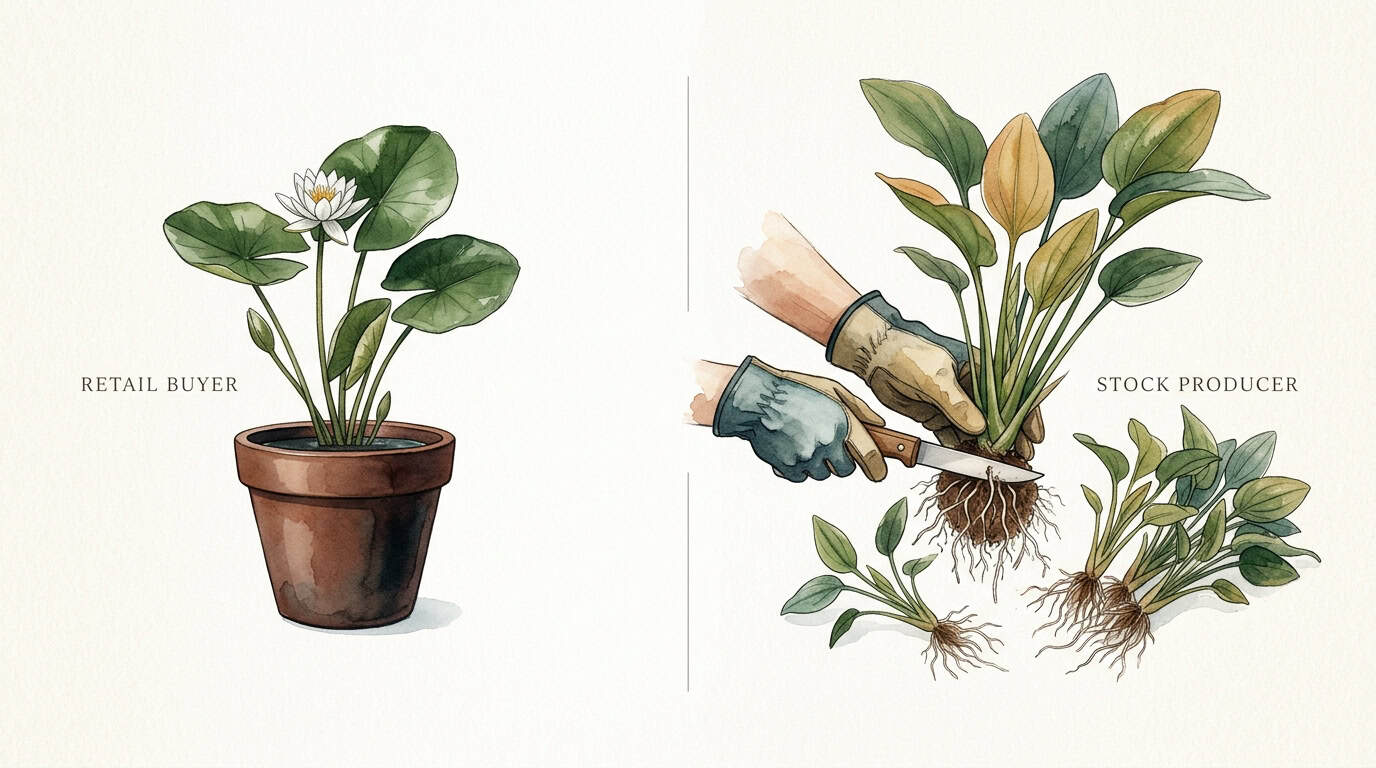
Dividing plants involves the physical separation of a single parent organism into multiple autonomous units. This process leverages the natural vegetative reproduction strategies of aquatic flora, such as rhizomatous extension or tuberous budding. By manually intervening in this cycle, a pond owner transitions from a retail buyer—dependent on external supply chains—to a stock producer, capable of generating high-quality aquatic biomass internally.
In real-world applications, this technique is used to maintain water clarity, prevent anaerobic conditions in the substrate, and manage the structural integrity of the pond’s marginal zones. An overgrown Iris or Water Lily is not just an aesthetic issue; it is a mechanical failure of the biofiltration system. Division restores the “growth phase” of the plant, which is the period of highest nutrient uptake.
The Mechanics of Aquatic Plant Propagation
The success of plant division depends on identifying the specific root architecture of the species. Most pond plants fall into three primary categories: rhizomatous, tuberous, or fibrous-clumping. Understanding the physiology of these structures is essential for precise mechanical separation without compromising the vascular system of the plant.
Rhizomatous Plants: Species like Iris laevigata and Acorus grow via horizontal underground stems called rhizomes. These act as storage organs for carbohydrates and nutrients. To divide them, the rhizome must be cut into sections, ensuring each piece contains at least one “growing point” or fan of leaves. Data suggests that a 3-to-4-inch section is optimal for rapid re-establishment.
Tuberous Plants: Hardy Water Lilies (Nymphaea) and Lotus (Nelumbo) utilize tubers. These thick, fleshy structures store energy for dormancy. Division requires locating the “eyes” or buds where new foliage emerges. For Lotus, this must be done with extreme precision, as the growing tips are brittle and any damage can lead to the death of the entire tuber segment through water-borne pathogens.
Fibrous and Clumping Plants: Plants like Caltha palustris (Marsh Marigold) or various Carex species form dense, interwoven root balls. These are the simplest to divide, often requiring only a sharp spade or a serrated knife to slice the clump into smaller segments. Each segment must retain a portion of the original crown and a functional root mass to survive the transplant.
Step-by-Step Technical Protocol for Division
Execution of plant division should follow a structured sequence to minimize cellular stress and prevent the introduction of opportunistic bacteria. The following protocol is optimized for hardy marginals and deep-water aquatics.
Step 1: Extraction and Cleaning
Remove the plant container from the pond. Use a high-pressure hose to clear all existing substrate from the root mass. This is a critical step; removing the soil allows for a clear visual inspection of the rhizome or tuber structure and identifies areas of rot or necrosis that must be excised.
Step 2: Identifying the Division Points
Locate the newest growth. In rhizomatous plants, this is the firm, lighter-colored section of the root. In tubers, look for the “eyes” or emerging buds. Avoid the “back-bulbs” or older, woody sections of the rhizome, as these have lower metabolic rates and may not produce vigorous new growth.
Step 3: Precise Mechanical Cutting
Using a sterilized, sharp blade, make a clean cut through the connection point. For Water Lilies, aim for sections approximately 4 inches long. Ensure the cut is perpendicular to the growth direction to minimize the surface area of the wound. Sterilizing the blade between different plants prevents the cross-contamination of viral pathogens.
Step 4: Wound Management and Re-potting
Optional: Apply a dusting of powdered charcoal or a fungicide to the cut ends to prevent rot. Re-pot the new division in a heavy loam or specialized aquatic substrate. For rhizomes, position the cut end against the side of the pot with the growing tip pointing toward the center, allowing maximum horizontal expansion before the next division cycle.
Biological Benefits of Regular Division
Maintaining a regular division schedule—typically every 2 to 3 years for most species—provides measurable improvements to the pond’s chemical balance. When plants become pot-bound, their growth rate plateaus, and their ability to sequester nitrogen (N) and phosphorus (P) decreases significantly.

Technical studies on floating treatment wetlands and pond biofiltration show that younger, actively growing tissues have higher nutrient concentrations than older, senescent tissues. For example, the roots of actively growing aquatic plants can fix up to 12.1 g of Nitrogen per kg of biomass. By dividing and re-potting, you reset the plant into its most aggressive growth phase, maximizing the “polishing” effect on the water column.
Furthermore, division prevents the formation of anaerobic “dead zones” within the root ball. In an overgrown pot, water cannot circulate through the dense root mass. This leads to oxygen depletion, allowing anaerobic bacteria to thrive. These bacteria produce hydrogen sulfide (H2S), which is toxic to fish and can cause localized pH crashes. Freshly divided plants promote better gas exchange in the substrate.
Challenges and Common Pitfalls
The most frequent error in pond plant division is improper timing. Performing division during the height of summer heat can lead to severe transplant shock. Conversely, dividing too late in the fall may not allow the plant enough time to establish a root system before dormancy, leading to “heaving” or winter kill.
Another common mistake is the use of improper potting media. Standard garden compost contains high levels of organic matter that will decay rapidly underwater, stripping oxygen from the water and fueling massive algae blooms. High-quality aquatic soil or calcined clay should be used to ensure structural stability and nutrient retention.
Mechanical damage to growing tips is particularly lethal for Lotus. The vascular system of a Lotus tuber is a series of air canals; if the growing tip is snapped, water enters these canals and can cause the entire tuber to rot within days. Practitioners must handle these structures with extreme care, often using a “mud-potting” technique to cushion the plant during transition.
Limitations and Environmental Constraints
While division is an efficient way to increase plant stock, it is not always the ideal solution for every situation. Genetic diversity is one primary limitation. Because division is a form of cloning, every new plant is a genetic duplicate of the parent. This lack of variation can make your entire plant population vulnerable to a single species-specific pathogen or pest.
There are also physical space constraints to consider. Doubling your plant biomass every two years creates an exponential growth curve. Unless you have additional pond surface area or a network of friends to accept the surplus, you may find yourself with more biological material than your system can support. Over-planting can lead to excessive surface coverage, which prevents essential gas exchange and can suffocate fish during the night when plants consume oxygen.
Comparative Analysis: Retail Procurement vs. Mechanical Division
The following table compares the metrics of purchasing new nursery stock versus performing internal division. Data is based on average growth rates and costs for a standard 1,000-gallon garden pond.
| Metric | Retail Procurement | Mechanical Division |
|---|---|---|
| Initial Cost | $25 – $75 per specimen | $0 (Internal Stock) |
| Acclimatization Time | High (Change in water chemistry) | Low (Same water parameters) |
| Genetic Quality | Variable / Commercial hybrids | Proven local performers |
| Pathogen Risk | High (External introduction) | Minimal (Closed system) |
| Biofiltration Lag | 2-4 weeks for root establishment | Immediate (Large root mass) |
Practical Tips for Maximum Efficiency
To optimize the division process and ensure a high success rate, implement the following best practices. These techniques focus on reducing the recovery time of the plant and maximizing its initial nutrient uptake.
- Use Specialized Tools: Invest in a dedicated serrated pond knife or a stainless steel pruning saw. Standard garden tools often lack the thin profile needed to navigate tight root spaces without causing collateral damage.
- Sanitation Protocol: Dip tools in a 10% bleach solution or isopropyl alcohol between plants. This prevents the spread of Tobacco Mosaic Virus or Pythium root rot.
- Water Temperature Monitoring: Perform divisions when water temperatures are consistently between 60°F and 70°F. This range is optimal for metabolic activity and cell division in hardy aquatic species.
- Depth Adjustment: Place newly divided plants in shallower water (3-6 inches) for the first two weeks. This increases the available light and warmth, accelerating the development of new shoots. Move to final depth once growth is established.
- Substrate Weighting: Top-dress pots with 1-2 inches of pea gravel. This prevents koi from uprooting the fresh divisions and keeps the lightweight aquatic soil from leaching into the water column.
Advanced Considerations: Hormonal Signaling and Nutrient Loading
For the serious practitioner, plant division is not just about physical separation but about managing the plant’s hormonal balance. When you cut a rhizome, you disrupt the “apical dominance”—the primary growing tip’s ability to suppress lateral buds through the production of auxins. By removing the primary tip, you stimulate the development of dormant “eyes” along the rhizome, leading to a much bushier and more productive plant.
Post-division nutrient loading is also critical. While aquatic plants can pull nitrogen and phosphorus from the water, a newly divided plant benefits significantly from localized fertilization. Slow-release aquatic fertilizer tablets should be placed deep in the root zone at the time of potting. This ensures that the plant has immediate access to macro and micro-nutrients without fueling an algae bloom in the surrounding water. Data indicates that targeted fertilization can reduce re-establishment time by up to 30%.
Practical Scenario: Optimizing a Marginal Shelf
Imagine a 20-foot marginal shelf currently occupied by three large, three-year-old Yellow Flags (Iris pseudacorus). These plants have become so root-bound that they are pushing themselves out of their 5-gallon pots, and their centers are becoming necrotic. Their nitrate removal efficiency has dropped because they are no longer producing new, vigorous foliage.
By applying mechanical division, each of these three plants can be converted into 10 high-quality divisions. After discarding the old, woody centers, you are left with 30 fresh plants. Re-planting 15 of these back onto the shelf in 2-gallon pots creates a much more effective “biological filter” than the three original overgrown plants. The remaining 15 plants can be traded for other species, increasing the biodiversity of your pond without any financial outlay.
Within one growing season, the 15 new Iris plants will have higher leaf surface area and more active root tips than the original three, resulting in lower nitrate levels and clearer water. This is the essence of transitioning from a retail buyer to a stock producer: managing biomass for maximum system performance.
Final Thoughts
Pond plant division is a fundamental skill for any water gardener looking to optimize their ecosystem. It is a process that turns maintenance into production, allowing you to leverage the natural growth cycles of aquatic flora to improve water quality and increase plant stock. By focusing on the technical aspects of root architecture and hormonal signaling, you can ensure that your pond remains a vibrant, healthy environment.
Applying these mechanical techniques reduces your reliance on commercial nurseries and prevents the common issues associated with overgrown, pot-bound plants. Whether you are managing Water Lilies for shade or marginals for biofiltration, regular division is the key to a high-performance pond. Experiment with different species and observe how the “reset” of the growth phase impacts your water clarity and plant health.
As you become more proficient, consider exploring the relationships between different plant types and their specific nutrient uptake rates. Integrating a diverse range of divided plants will create a more resilient and efficient system. The transition from consumer to producer is a rewarding journey that begins with a single sharp cut and a bit of mud on your hands.
Amazon and the Amazon logo are trademarks of Amazon.com, Inc, or its affiliates.