

Pond Talk is an Amazon Associate. As an Amazon Associate we earn from qualifying purchases.
Is every square inch of your pond working for you, or is it just sitting there looking pretty? Why settle for a plant that only looks good when you can have one that cleans your water, feeds your family, and hides your liner all at once? Move beyond the basic lily and start building a high-performance aquatic ecosystem.
High-performance pond management shifts the focus from purely aesthetic horticulture to functional bio-remediation and biomass production. In this technical framework, plants are not merely decorations; they are biological engines designed to sequester nitrogen, stabilize pH, and produce caloric or nutritional yields. Selecting the right species requires an understanding of nutrient uptake rates, metabolic pathways, and harvesting cycles.
Integrating multi-purpose plants allows for the optimization of the nitrogen cycle while providing secondary outputs like livestock feed, human-grade produce, or green manure for terrestrial gardens. This article analyzes the specific metrics and mechanical advantages of high-efficiency aquatic flora.
Best Multi-purpose Pond Plants
Multi-purpose pond plants are species that fulfill more than two ecological or utilitarian roles simultaneously. These roles typically include nutrient sequestration (nitrogen and phosphorus removal), sediment stabilization, biomass production, and habitat provision. In a closed-loop pond system, these plants act as the primary filter, reducing the reliance on mechanical or chemical filtration methods.
Identifying the best plants involves evaluating their growth rate, nutrient absorption capacity, and secondary utility. The following species represent the highest efficiency metrics for backyard and semi-industrial pond environments.
Duckweed (Lemna minor)
Duckweed is perhaps the most efficient nutrient sponge in the aquatic world. It is a small, free-floating macrophyte capable of doubling its biomass in 16 to 48 hours under optimal conditions. From a technical standpoint, duckweed can remove up to 547 mg of nitrogen per square meter per day and 200 mg of phosphorus per square meter per day.
Beyond filtration, duckweed is a high-protein resource. Dry weight analysis shows protein levels ranging from 20% to 45%, depending on the nitrogen concentration of the water. It contains a full spectrum of essential amino acids, making it a viable supplement for fish feed or poultry. Harvesting duckweed is a critical mechanical step to ensure the permanent removal of nutrients from the water column.
Watercress (Nasturtium officinale)
Watercress is a hardy marginal plant that excels in moving water or high-flow bio-filters. It is a potent phyto-remediator, shown to reduce Chemical Oxygen Demand (COD) by up to 21.96% in domestic wastewater scenarios. Its root system provides a massive surface area for nitrifying bacteria, facilitating the conversion of ammonia to nitrate.
For the practitioner, watercress serves as a high-value edible crop. It is rich in vitamin K, vitamin C, and calcium. Because it thrives in cooler water (growing effectively between 10°C and 20°C), it serves as a “bridge” plant, maintaining filtration efficiency during the spring and fall when tropical species are dormant.
Taro (Colocasia esculenta)
Taro is a heavy-feeding marginal plant that provides significant architectural value while performing deep-water filtration. Its massive leaves provide 100% shade coverage for the water surface beneath them, which suppresses algae growth by limiting UV penetration. Taro has shown removal effectiveness of over 95% for heavy metals like zinc in leachate studies.
The plant produces edible tubers (corms) and leaves, though both must be cooked thoroughly to neutralize calcium oxalate crystals. In a pond, taro acts as a bio-indicator; yellowing of the leaves often signals a nitrogen or potassium deficiency before other plants show symptoms, allowing for precise nutrient adjustment.
Pickerelweed (Pontederia cordata)
Pickerelweed is an emergent aquatic plant with a nitrogen uptake rate of approximately 28.2 mg per square meter per day in floating wetland configurations. It is highly effective at stabilizing pond banks and hiding EPDM or PVC liners due to its dense, clump-forming growth habit.
The seeds of Pickerelweed are a starch-rich food source that can be eaten raw, roasted, or ground into flour. The plant also supports pollinator biodiversity, attracting bees and butterflies, which indirectly benefits nearby terrestrial vegetable gardens.
How the Aquatic Filtration Process Works
The primary mechanism behind multi-purpose plants is phytoremediation, specifically rhizofiltration and phytoextraction. Rhizofiltration occurs when plants filter water through their root mats, trapping suspended solids and absorbing dissolved nutrients. Phytoextraction is the process by which plants take up contaminants—like nitrates, phosphates, and heavy metals—and store them in their stems and leaves.

To maximize these processes, the pond must maintain a steady flow of water through the root zones. In a stagnant pond, nutrient uptake is limited by the diffusion rate of ions in the water. By using a pump to direct water through a “bog filter” or “riparian zone” planted with these workhorses, the efficiency of nutrient removal increases by a factor of three to five.
The nitrogen cycle in a high-performance pond follows a specific sequence. Beneficial bacteria (Nitrosomonas and Nitrobacter) on the plant roots convert toxic ammonia from fish waste into nitrite and then into relatively harmless nitrate. The plants then absorb this nitrate as their primary fuel source for growth. Without consistent harvesting of the plant biomass, these nutrients eventually return to the pond when the plant dies and decomposes, creating a closed-loop nutrient trap that must be managed through physical removal.
Benefits of High-Performance Aquatic Ecosystems
The transition from ornamental to functional planting offers several measurable advantages for the pond owner. The most immediate benefit is water clarity. By utilizing heavy feeders like duckweed or water spinach, you can starve opportunistic algae of the nitrogen and phosphorus they need to bloom.
Energy efficiency is another significant advantage. A well-designed planted filter can reduce the need for high-wattage UV sterilizers and pressurized bead filters. Biological filtration is passive, requiring only the energy needed to move water across the roots. In many cases, a low-voltage solar pump is sufficient to maintain the necessary flow rates.
Furthermore, multi-purpose plants provide thermal regulation. Floating plants and large-leaved marginals like Taro reduce the surface temperature of the water by 3°C to 5°C during peak summer months. Cooler water holds more dissolved oxygen, which is vital for fish health and the metabolic activity of beneficial bacteria.
Finally, the production of “free” inputs for the homestead cannot be overlooked. Aquatic plants grown in a pond utilize waste that would otherwise be a pollutant. Converting this waste into chicken feed (duckweed), mulch (cattails), or human food (watercress) increases the total efficiency of the property.
Challenges and Common Pitfalls
The most frequent mistake in managing multi-purpose plants is a failure to harvest. Because these plants are selected for their aggressive growth and high metabolic rates, they can quickly overpopulate a pond. If they are not thinned regularly, the bottom layers of the plant mass will die due to lack of light, leading to a massive release of nutrients back into the water and a spike in BOD (Biochemical Oxygen Demand).
Nutrient lockout is another technical challenge. In highly efficient systems, plants may remove all available nitrogen, causing a growth stall even if other nutrients like potassium or iron are present. This is particularly common in ponds with low fish stocking densities. Monitoring nitrate levels is essential; if levels drop to zero, plant health will decline, and their filtration capacity will diminish.
Invasive potential is a significant concern with species like duckweed, azolla, and water hyacinth. In many regions, these plants are restricted because they can escape into local waterways and cause ecological damage. Always check local regulations before introducing aggressive aquatic species and ensure that pond overflows are screened to prevent the escape of plant fragments.
Limitations of Multi-purpose Planting
Temperature is the primary limiting factor for most high-performance aquatic plants. Many of the most efficient nutrient sponges, such as Water Hyacinth and Taro, are tropical or sub-tropical and will die back when water temperatures drop below 10°C. This creates a seasonal “filtration gap” where the pond’s biological capacity is significantly reduced during winter.
Space is another constraint. To achieve complete nutrient neutrality in a heavily stocked koi pond, the planted area (the “workhorse” zone) often needs to be 30% to 50% of the total pond surface area. For owners of small pre-formed ponds, dedicating this much space to filtration may not be aesthetically or practically feasible.
Finally, there is the issue of water chemistry. Certain plants, like Watercress, prefer slightly alkaline water with high mineral content. If your pond water is very soft or acidic, these plants may struggle to establish, reducing their filtration effectiveness regardless of the nitrogen levels present.
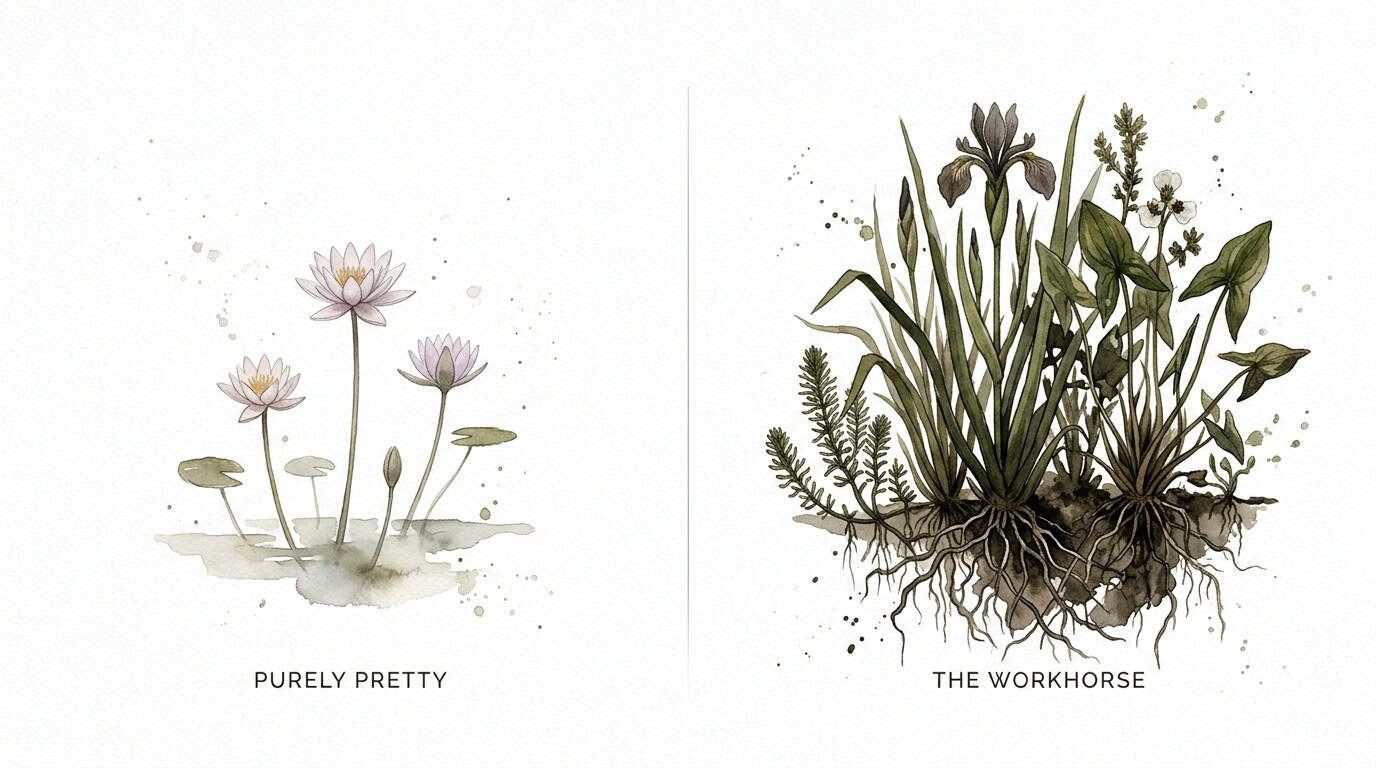
Comparison: Purely Pretty vs. The Workhorse
To understand the value of multi-purpose plants, it is helpful to compare them to standard ornamental species. Ornamental plants are bred for flower size and color, often at the expense of metabolic rate and nutrient uptake.
| Metric | Purely Pretty (e.g., Hybrid Lily) | The Workhorse (e.g., Duckweed) |
|---|---|---|
| Nitrogen Uptake Rate | Low to Moderate | Extremely High |
| Biomass Doubling Time | 4–8 Weeks | 24–48 Hours |
| Maintenance Requirement | Low (Pruning) | High (Weekly Harvesting) |
| Secondary Utility | Aesthetic Only | Feed, Food, Mulch |
| Filtration Efficiency | 15–20% | 80–95% |
While a hybrid lily provides a beautiful focal point, its contribution to water chemistry is minimal. In contrast, “The Workhorse” plants act as a functional organ of the pond’s biology, directly influencing the health and clarity of the water.
Practical Tips and Best Practices
Implementing a high-performance plant strategy requires a structured approach to planting and maintenance. Start by diversifying your “guilds.” Use a mix of submerged oxygenators (like Hornwort), floating sponges (like Duckweed), and marginal filters (like Water Iris). Each guild targets nutrients at different depths and during different stages of the season.
- Optimize Inoculation Density: For maximum protein production in duckweed, maintain a surface coverage of approximately 60%. If coverage exceeds 80%, the growth rate slows due to overcrowding and lack of light penetration.
- Use Up-Flow Bog Filters: Instead of planting directly in the pond, place your workhorse plants in a separate basin where water is pumped from the bottom and flows up through the roots. This forces the water to interact with the maximum possible surface area of the root mat.
- Stagger Your Harvests: Never remove 100% of your filtration plants at once. Harvest 20% of the biomass every week to maintain a constant “youthful” growth phase, which is when the plants are most metabolically active.
- Protect the Roots: If you have large fish like Koi, they will often eat the roots of your filter plants. Use mesh cages or separate plant zones to ensure the “biological engine” isn’t consumed before it can clean the water.
Advanced Considerations for Serious Practitioners
For those looking to optimize their system to a professional level, consider the Mass Balance Equation. To maintain zero nitrate accumulation, the rate of nitrogen input (from fish food) must equal the rate of nitrogen removal (through plant harvesting and water changes).
Calculating the specific yield of your plants can help fine-tune this balance. For example, if you feed your fish 100 grams of protein-rich food per day, you are adding roughly 16 grams of nitrogen to the system. Knowing that duckweed can sequester about 0.5 grams of nitrogen per square meter, you would need approximately 32 square meters of duckweed to offset that specific feeding load entirely through plant growth.
Furthermore, pay attention to trace element depletion. High-performance plants can quickly strip the water of micronutrients like iron, manganese, and boron. If you notice new leaves appearing pale (chlorosis) or stunted, you may need to supplement with an aquatic-safe chelated iron or a trace element mix to keep the biological filter running at peak efficiency.
Examples and Scenarios
Consider a 1,000-gallon pond with ten large goldfish. In a standard setup with only a mechanical filter and a few lilies, the nitrate levels will likely climb to 40-80 ppm (parts per million) within a few weeks, requiring frequent water changes to prevent fish stress and algae blooms.
In a high-performance scenario, the owner installs a 50-square-foot marginal bog planted with Watercress and Taro, and allows Duckweed to cover 30% of the main pond surface. Water is circulated through the bog at a rate of 1,000 gallons per hour.
After the plants establish, the nitrate levels drop to a consistent 5-10 ppm. The owner harvests one gallon of Duckweed every three days, which is fed to a small flock of chickens, and harvests enough Watercress for a daily salad. The water remains crystal clear without the use of a UV sterilizer, and the fish thrive in the highly oxygenated, low-toxin environment.
Final Thoughts
Building a high-performance aquatic ecosystem is about moving from a passive observer to an active manager of the nitrogen cycle. By selecting multi-purpose plants that offer high metabolic rates and tangible secondary benefits, you transform your pond into a productive asset.
This approach requires more maintenance than a traditional ornamental garden, but the rewards are measurable. You gain clearer water, healthier fish, and a source of fresh food or feed that requires no additional water or fertilizer beyond what is already in the pond.
Experiment with different species to find what thrives in your specific climate and water chemistry. As you master the balance of nutrient input and biomass harvest, you will find that a hard-working pond is far more satisfying than one that just sits there looking pretty.
Amazon and the Amazon logo are trademarks of Amazon.com, Inc, or its affiliates.