

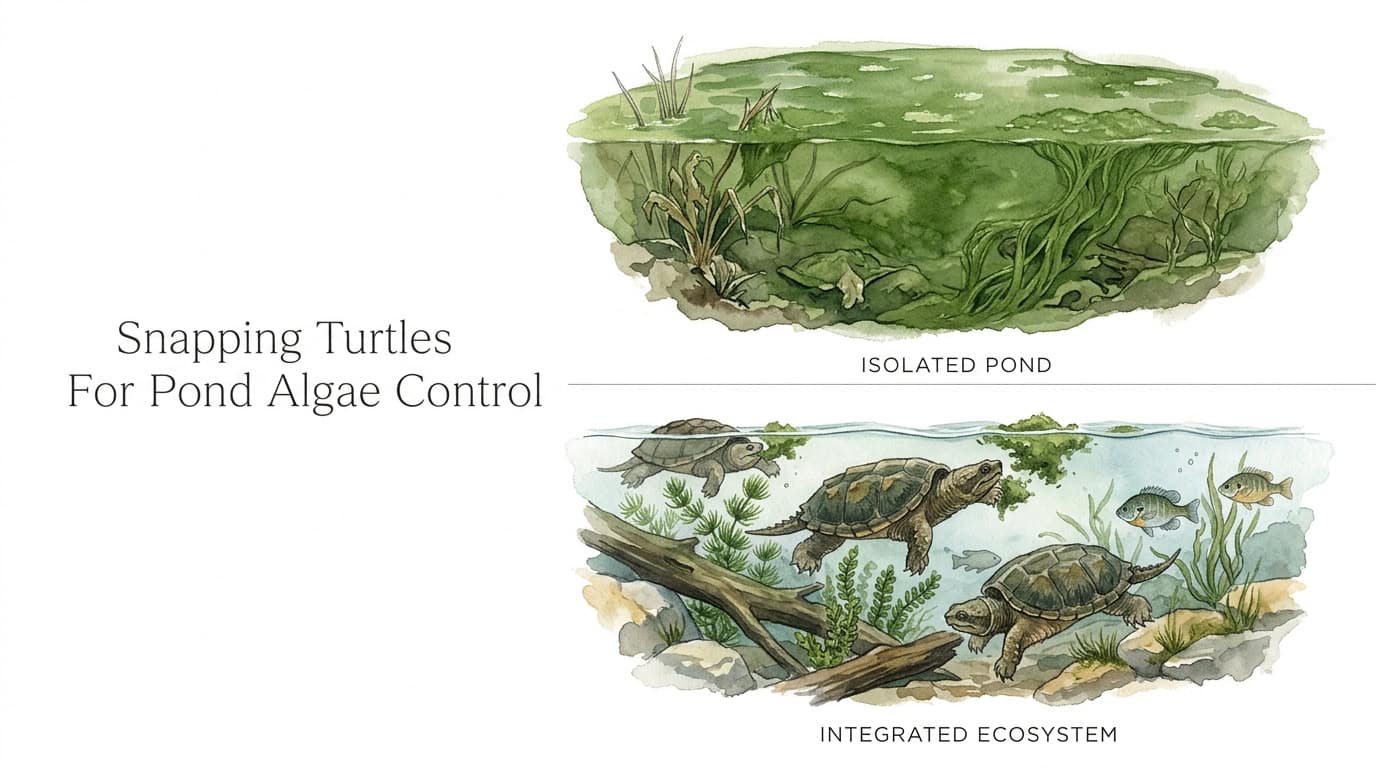
Is the scariest creature in your pond actually its most important janitor? Most pond owners panic when they see a snapping turtle, but they should be cheering. Without these apex scavengers, dead organic matter rot and fuel massive algae blooms. Integrating a snapping turtle turns a ‘problem’ into a self-cleaning biological engine.
Snapping Turtles For Pond Algae Control
Snapping turtles (Chelydra serpentina) serve as primary biological filters in freshwater ecosystems. While many pond owners associate algae control strictly with herbivorous fish or chemical algaecides, the snapping turtle manages the root cause of algae: excessive nutrient loading. These reptiles do not consume filamentous algae as their primary food source; instead, they function as apex scavengers that remove the organic precursors to nitrogen and phosphorus spikes.
In a closed pond environment, the death of a single large fish or a cluster of amphibians initiates a rapid decomposition process. This process releases ammonia and phosphates directly into the water column, providing an immediate fuel source for cyanobacteria and string algae. A snapping turtle intercepts this nutrient cycle by consuming carrion before the decomposition reaches a critical state. This process effectively sequesters nutrients within the turtle’s biomass, preventing them from becoming bioavailable to opportunistic algae.
The snapping turtle is an opportunistic omnivore. Research indicates that the diet of a common snapping turtle consists of approximately 30% vegetable matter and 70% animal matter, including insects, crayfish, and carrion. This diverse intake allows the turtle to act as a comprehensive “janitor,” addressing both plant-based debris and animal-based waste that contribute to pond eutrophication.

How Nutrient Interception and Scavenging Mechanics Work
Nutrient cycling in a pond is a continuous movement of energy. When organic matter—such as dead fish, waterfowl, or decaying aquatic plants—settles at the bottom, it enters an anaerobic or aerobic decomposition phase. Snapping turtles utilize a highly developed olfactory system to locate this matter quickly. Their role in the ecosystem is primarily defined by “nutrient sequestration.”
The Decomposition Interruption Phase
A snapping turtle consumes carcasses that would otherwise take weeks to break down. By converting high-protein carrion into turtle biomass, the organism prevents the sudden “slug” of phosphorus and nitrogen that often triggers a mid-summer algae bloom. This biological conversion is significantly more efficient than mechanical filtration in large, unlined ponds where nutrient inputs from runoff are high.
Bioturbation and Sediment Aeration
Snapping turtles are primarily bottom-dwellers that “walk” along the pond floor rather than swimming constantly. This movement causes bioturbation—the physical disturbance of the sediment layer. Controlled bioturbation helps prevent the formation of thick, anaerobic muck layers where toxic gases like hydrogen sulfide accumulate. By stirring the top millimeter of sediment, turtles facilitate oxygen exchange at the mud-water interface, which supports aerobic bacteria that further assist in breaking down organic sludge.
Trophic Cascade Management
Snapping turtles exert “top-down” pressure on the pond’s food web. They target weak, diseased, or slow-moving fish. Removing these individuals prevents the spread of pathogens and ensures that the remaining fish population is robust. In many cases, these turtles also consume small vertebrate mesopredators like newts or bullfrog tadpoles. Reducing mesopredator density can lead to a “trophic cascade” where zooplankton populations (which eat algae) are allowed to thrive because their predators have been thinned by the turtle.
Benefits of Maintaining an Apex Scavenger
Utilizing a snapping turtle for pond maintenance offers several measurable advantages over traditional mechanical or chemical interventions. These benefits center on the long-term stability of the pond’s biological load.
Prevention of Ammonia Spikes
The removal of carrion is the most direct benefit. A single 20-pound snapping turtle can consume several pounds of decaying organic matter in a week. This rapid removal prevents the ammonia spikes that often lead to fish kills and subsequent algae explosions.

Reduction in Chemical Dependency
Ponds with a healthy population of scavengers require fewer algaecides and phosphate binders. Because the turtles manage the nutrients at the source (the organic waste), the owner does not need to treat the symptoms (the algae) as frequently. This results in a more stable pH and dissolved oxygen profile.
Ecosystem Resilience
Ecosystems with high biodiversity are more resilient to environmental stressors. A snapping turtle fills a niche that few other pond inhabitants can occupy. Their long lifespans—often exceeding 40 to 100 years—provide a consistent, decades-long stabilizing force for the pond environment. Unlike short-lived fish species, a snapping turtle remains a constant variable in the nutrient management equation.
Challenges and Common Management Pitfalls
Integrating or tolerating snapping turtles in a managed pond requires an objective understanding of their behavior. Failure to account for their predatory nature can lead to imbalances in fish stocking.
Predation on Desired Stock
Snapping turtles are opportunistic. If a pond is overstocked with slow-moving ornamental fish like fancy goldfish or prize koi, a snapping turtle may view them as easy prey. While they typically prefer carrion, a hungry turtle will hunt. Pond owners must balance the “janitorial” benefits against the potential loss of high-value specimens.
Handling and Safety Risks
The defensive nature of a snapping turtle on land is a frequent point of concern. Their powerful jaws and flexible necks are designed for defense and capturing prey. While they are generally docile and avoidant while submerged, they can be hazardous if handled improperly during nesting season (May through June). Management of these turtles must be hands-off to avoid injury.
Biomass Saturation
An overpopulation of snapping turtles can shift from a benefit to a burden. If the biomass of turtles exceeds the carrying capacity of the pond, they may begin to compete for limited food resources, leading to increased predation on healthy fish populations. Monitoring the number of turtles per surface acre is essential for maintaining the balance.
Limitations of Biological Control
Biological agents like the snapping turtle are not a “quick fix” for severe pond issues. They are part of a slow-moving, long-term management strategy.
Surface Area Requirements
Small, backyard “preformed” ponds are generally unsuitable for snapping turtles. These reptiles require adequate space and depth to forage and brumate (the reptilian version of hibernation) during winter. A minimum of 1/4 acre is typically required to support a single adult snapping turtle without causing localized over-predation.
Nutrient Input Overload
If a pond receives massive amounts of nutrient runoff from agricultural fertilizers or nearby septic systems, a snapping turtle cannot “eat” its way out of the problem. They manage organic waste, but they do not filter dissolved inorganic nutrients directly from the water. In such cases, turtles must be paired with floating wetlands or aeration systems.
Thermal Constraints
As ectotherms, snapping turtles rely on environmental heat to drive their metabolism. In colder climates, their activity levels drop significantly during late autumn and winter. During these periods, their “janitorial” services are essentially paused, meaning other forms of nutrient management (such as fall netting of leaves) remain necessary.
Comparing Scavenger Efficacy: Snapping Turtle vs. Red-Eared Slider
The following table compares the primary functions of common pond turtles in the context of algae and nutrient management.
| Feature | Common Snapping Turtle | Red-Eared Slider |
|---|---|---|
| Primary Diet | Carrion, Fish, Invertebrates (70% Meat) | Aquatic Vegetation, Algae, Insects (50%+ Veg) |
| Algae Impact | Indirect (Nutrient Interception) | Direct (Consumption of filamentous algae) |
| Waste Processing | High (Processes large carcasses) | Moderate (Gathers smaller debris) |
| Habitat Range | Bottom-dweller / Submerged | Surface-dweller / Basking-focused |
| Lifespan | 40–100+ Years | 20–30 Years |
Practical Tips for Managing Your Pond Janitor
Managing a snapping turtle population effectively requires a strategy based on observation rather than active interference.
- Monitor Population Density: For a healthy 1-acre pond, 1 to 3 adult snapping turtles are usually sufficient to provide scavenging services without decanting the fish population.
- Protect Nesting Sites: If you value the presence of your turtle, leave nesting females alone during May and June. They may travel up to 100 yards from the water to find loose soil. Disturbing them can lead to defensive strikes.
- Avoid Supplemental Feeding: Do not feed snapping turtles. Feeding them encourages them to associate humans with food, which reduces their effectiveness as scavengers and increases the risk of negative human-turtle interactions.
- Provide Submerged Cover: Snapping turtles prefer shallow water (less than 1 meter) with abundant woody structure or fallen logs. Adding “fish cribs” or brush piles provides the turtles with the necessary habitat to ambush prey and process waste in safety.
Advanced Considerations for Serious Pond Managers
Experienced practitioners should look at the snapping turtle as a component of the “nutrient standing stock.” This term refers to the total amount of nitrogen and phosphorus currently held in biological forms (plants, fish, turtles) rather than dissolved in the water.
Bioaccumulation and Nitrogen Sinks
Because snapping turtles are long-lived and grow to significant sizes (20–40 lbs), they act as a long-term nitrogen sink. A turtle that lives in your pond for 50 years is effectively “locking up” a portion of the pond’s nutrient budget in its shell and muscle tissue. When a turtle eventually leaves the pond or dies on land, those nutrients are permanently removed from the aquatic system.
Assessing Eutrophic Status
Research shows that snapping turtle biomass can reach as high as 340 kg per hectare (approximately 137 lbs per acre) in highly eutrophic (nutrient-rich) ponds. If you notice a sudden influx of snapping turtles, it is often a bio-indicator that your pond has an excess of organic waste. The turtles are responding to the available “fuel.” Rather than removing the turtles, a manager should investigate the source of the organic loading.
Example Scenario: The 1-Acre Farm Pond
Consider a 1-acre farm pond that experiences seasonal algae blooms every August. The pond owner notices several dead bluegills near the shore following a heatwave. Without a scavenger, these fish will rot over the next 72 hours, releasing phosphates that will double the algae growth in that area.
A resident 15-pound snapping turtle detects the carcasses via chemoreception. Within 24 hours, the turtle consumes the dead fish. The nitrogen from the fish is now being used to fuel the turtle’s metabolic processes or is stored in its tissue. The “slug” of nutrients is averted. The owner observes that the water clarity remains stable, and the “muck” at the bottom does not increase in thickness. This is the biological engine in action.
Final Thoughts
The snapping turtle is a misunderstood tool in the pond owner’s kit. While its appearance and reputation are intimidating, its mechanical role as a scavenger is unmatched by any other native freshwater species. By removing dead organic matter, these turtles prevent the chemical imbalances that lead to catastrophic algae blooms and poor water quality.
Rethinking the role of the snapping turtle allows a pond manager to shift away from expensive, temporary fixes toward a self-sustaining ecosystem. These reptiles provide a constant, low-maintenance service that keeps fish populations healthy and nutrients sequestered.
Embrace the presence of these prehistoric janitors. Their work beneath the surface ensures that your pond remains a clear, balanced, and productive environment for years to come. Applying this biological perspective is the first step toward true ecosystem integration.
