

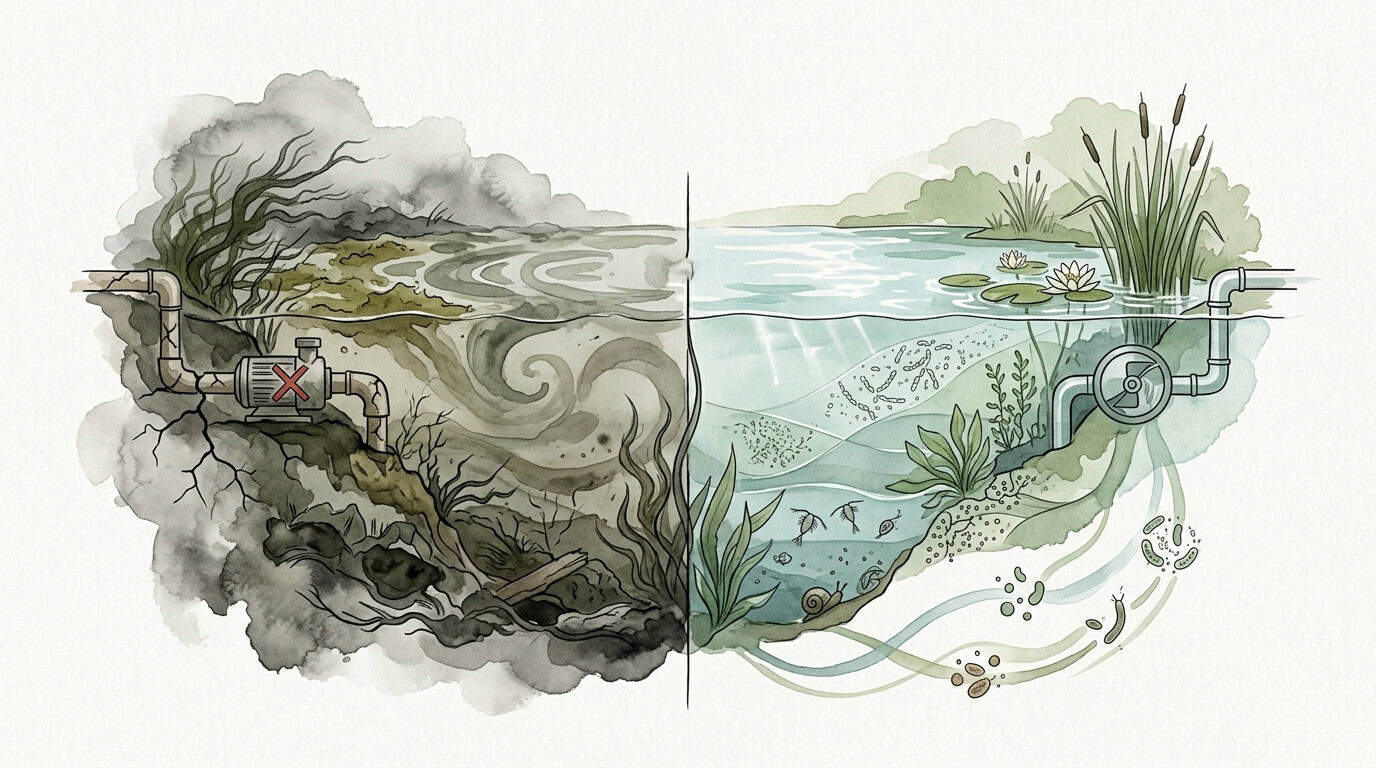
If your water clarity depends on a 110v outlet, you are one storm away from a swamp. Most pools are on life support. When the pump stops, the water dies. A resilient swim pond uses trophic levels—a complex web of life that eats waste and algae—to keep things clear even when the grid goes down. Build for the long haul.
Self-cleaning swim pond design relies on a biological filtration system known as a regeneration zone, where aquatic plants and beneficial bacteria naturally strip nutrients from the water. Maintaining a 1:1 ratio between the swimming area and the planting zone ensures the ecosystem processes organic waste without synthetic chemicals. This design mimics wetland dynamics to maintain clarity and hygiene through trophic interactions rather than mechanical sterilization.
Designing a system that cleans itself requires moving beyond the “sterile box” mindset of traditional pool engineering. Instead of fighting biology with chlorine, you are cultivating a specific set of organisms that compete for resources, effectively starving out nuisance algae and pathogens. A successful build integrates hydraulic efficiency with ecological complexity to create a stable, low-energy environment.
Self-cleaning Swim Pond Design
Self-cleaning swim pond design, often referred to as a Natural Swimming Pool (NSP) or bio-pool, is an engineered freshwater system that utilizes biological processes to maintain water quality. Unlike a traditional pond, which may have stagnant edges and high sediment loads, a swim pond is divided into distinct zones: a deep swimming area and a shallow, gravel-based regeneration zone. The regeneration zone acts as a living filter, where water is continuously circulated through a substrate of washed gravel and a variety of aquatic plants.

These systems exist as a sustainable alternative to chlorinated or salt-water pools. They are used in residential landscapes, public parks, and eco-resorts across Europe and North America to provide a chemical-free swimming experience. In a real-world application, the pond functions as a closed-loop ecosystem. Organic matter introduced by swimmers or the environment is broken down by aerobic bacteria into nitrates, which are then sequestered by plants, leaving the water clear and nutrient-poor.
The design effectively creates a “nutrient-limited” environment. By controlling the levels of phosphorus and nitrogen, the pond prevents the massive algae blooms common in unmanaged bodies of water. This is achieved through precise sizing—typically ensuring the regeneration area covers at least 50% of the total surface area—and choosing materials that do not leach minerals back into the water column.
How to Design and Implement the System
The mechanical and biological integration of a self-cleaning pond follows a specific sequence. Precision during the excavation and plumbing phases is mandatory to ensure long-term stability and prevent hydraulic dead zones.
1. Zonal Partitioning and Excavation
The swimming zone should be excavated to a depth of 6 to 8 feet. This depth provides a thermal buffer, preventing rapid temperature spikes that can trigger algae growth. The walls should be steep or vertical to maximize swimming space and minimize sediment accumulation on slopes. The regeneration zone is typically 1 to 3 feet deep and surrounds or sits adjacent to the swimming area. A 1:1 ratio between these two zones is the gold standard for high-performance filtration.
2. Liner and Substrate Installation
Durable liners, such as 45-mil EPDM or reinforced PVC, are used to seal the basin. A geotextile underlayment is required to protect the liner from punctures. In the regeneration zone, layering is critical. The bottom 6 inches should consist of 1.5 to 2-inch drainage stone to house the plumbing manifolds. Above this, 12 to 18 inches of washed pea gravel (3/8 to 3/4 inch) provides the massive surface area required for beneficial biofilm colonization. One square foot of gravel can provide up to 100 square feet of bacterial surface area.
3. Hydraulic Circulation
Water must move continuously to prevent anaerobic conditions. A pump—either external or submersible—should be sized to achieve a full volume turnover every 8 to 12 hours. Water is typically drawn from the swimming area via a skimmer, which removes surface debris, and then pumped into the bottom of the regeneration zone. This “upflow” or “vertical flow” method forces water through the gravel and plant roots before it spills back into the swimming area, ensuring maximum contact with the biological filter.

4. Biological Loading (Planting)
Plants are selected based on their nutrient-uptake capacity rather than just aesthetics. High-performance species include:
- Emergent: Iris pseudacorus, Typha (cattails), and Carex (sedges) for heavy nitrogen and phosphorus removal through their root systems.
- Submerged: Elodea or Hornwort to oxygenate the water and compete directly with algae for dissolved nutrients.
- Floating: Water lilies to provide surface shade, which cools the water and inhibits UV-triggered algae growth.
Benefits of Biological Filtration
Practical benefits of self-cleaning swim pond design extend beyond the absence of chlorine. Because the system relies on a living biome, it becomes more resilient over time as the bacterial colonies mature and the plant root systems expand.
Operating costs are significantly lower than traditional pools. A low-wattage pump is the only continuous electrical draw, as there is no need for salt cells, UV sterilizers, or chemical dosing systems. Maintenance is reduced to seasonal tasks: trimming dead plant foliage in autumn and occasional vacuuming of the swimming floor. There is no need for backwashing filters with chemical-laden water, which saves thousands of gallons of water annually.
The ecological impact is a secondary benefit. These ponds act as pocket wetlands, supporting local biodiversity by providing habitat for dragonflies, frogs, and birds. Unlike a chlorinated pool that kills any life that enters it, a swim pond integrates into the local ecosystem while keeping the swimming water hygienically safe through biological competition.
Challenges and Common Design Mistakes
Frequent errors in design can lead to “New Pond Syndrome” or persistent water quality issues. Understanding why these mistakes occur is essential for any practitioner.
Undersizing the regeneration zone is the most common pitfall. If the planting area is less than 50% of the total surface area, the biological load from bathers may exceed the system’s processing capacity. This results in an accumulation of nitrates, fueling green water or blanket weed. This mistake often happens when builders prioritize swimming space over ecological balance.
Stagnant water zones are another major failure point. If the plumbing does not ensure even flow through the entire gravel bed, “dead spots” will become anaerobic. These areas can produce foul odors and harbor pathogens. Designers must ensure that the return manifold covers the entire width of the regeneration zone to create a uniform hydraulic front.
Using unwashed gravel or garden soil in the planting zone introduces excess nutrients and fines. This immediately clouds the water and provides a massive initial dose of phosphorus, which can take months to clear. All aggregate used in the filtration bed must be thoroughly washed until the runoff is crystal clear.
Limitations and Trade-offs
While highly efficient, self-cleaning ponds are not universal solutions. Environmental constraints and user expectations must align with the reality of biological systems.
Water temperature is a primary constraint. Biological systems struggle when water temperatures consistently exceed 85°F (29°C). Warm water holds less dissolved oxygen, which can stress beneficial bacteria and encourage algae blooms. In very hot climates, additional aeration or deeper swimming zones are required to maintain thermal stability.
Footprint is a significant trade-off. Because you need a 1:1 ratio for filtration, a 20×40 foot swimming area requires a total footprint of roughly 40×40 feet. This makes swim ponds less ideal for small urban lots where space is at a premium. Additionally, the initial construction cost can be 30% to 50% higher than a traditional pool due to the complexity of the earthworks and the volume of specialized aggregate required.
PUMP FAILURE vs TROPHIC BALANCE
Understanding the difference between mechanical dependency and ecological resilience is critical for long-term pond health. Traditional pools rely on high-energy turnover to stay clear, while swim ponds rely on a complex web of life.
| Factor | Pump-Dependent (Chemical) | Trophic Balance (Biological) |
|---|---|---|
| Grid Resilience | Turns to “swamp” within 48-72 hours of power loss. | Maintains clarity for days or weeks due to existing biofilms. |
| Maintenance Type | Chemical testing and synthetic adjustment. | Biological monitoring and plant management. |
| Energy Demand | High-pressure pumps for sand/cartridge filters. | Low-wattage pumps for slow biological transit. |
| Filter Medium | Synthetic sand or paper cartridges. | Living root zones and mineral gravel beds. |
Practical Tips and Best Practices
Optimization of a swim pond involves fine-tuning the nutrient cycle. These best practices help maintain a “nutrient-lean” environment that naturally inhibits algae.
- Phosphorus Management: Keep phosphorus levels below 0.035 mg/l. If levels rise, use a lanthanum-based phosphate binder in a filter cartridge to strip the nutrient before it reaches the plants.
- Oxygenation: Install an air diffuser or a waterfall. Aerobic bacteria are significantly more efficient at breaking down waste than their anaerobic counterparts.
- Skimmer Efficiency: Use a dedicated surface skimmer to catch leaves and pollen before they sink. Once organic matter hits the bottom, it begins to decay and release nitrogen.
- Vacuuming: Even a self-cleaning pond accumulates some sediment. Vacuum the swimming zone once every two weeks during the peak season to prevent “muck” buildup.
Advanced Considerations: Airlift Systems and Phosphorus Sequestration
Serious practitioners often look beyond standard centrifugal pumps toward airlift technology. An airlift system uses a column of bubbles to move water, which simultaneously oxygenates and circulates the pond without moving parts in the water. This is highly efficient and eliminates the risk of clogging a pump impeller with debris. It also ensures that the water returning to the regeneration zone is saturated with oxygen, boosting bacterial metabolism.
Phosphorus sequestration is another advanced strategy. Phosphorus is the limiting nutrient for algae. By incorporating specialized iron-rich or calcium-rich aggregates in the filtration bed, you can chemically “lock” phosphorus into the substrate. This prevents it from recycling back into the water column during the winter or after heavy rain. Long-term management involves testing for orthophosphates and adjusting the plant density to match the bather load.
Example Scenario: A 1,000 Square Foot System
Consider a residential pond with a total surface area of 1,000 square feet. To achieve a self-cleaning balance, the design would look like this:
- Swimming Zone: 500 sq. ft. (approx. 15′ x 33′) with a depth of 7 feet.
- Regeneration Zone: 500 sq. ft. with a depth of 1.5 feet.
- Total Volume: Approximately 35,000 gallons.
- Pump Requirement: A pump capable of 3,000 to 4,000 gallons per hour (GPH) to ensure a full turnover every 9-11 hours.
- Plant Count: 6 to 10 plants per square meter in the regeneration zone, totaling roughly 400 to 500 individual plants.
In this scenario, the water remains clear because the 500 sq. ft. of gravel and plants act as a massive biological kidney, stripping out every gram of waste produced by 2 to 4 daily swimmers.
Final Thoughts
Self-cleaning swim pond design represents a shift from sterile engineering to biological management. By understanding and implementing the 50/50 rule and maintaining consistent vertical water flow through a gravel substrate, you create a system that thrives on the very waste that would destroy a traditional pool. It is a technical discipline that requires patience during the initial “balancing” phase, but the reward is a resilient, chemical-free environment.
The success of these systems lies in their technical simplicity. Once the nitrogen cycle is established and the plants reach maturity, the pond handles the majority of the filtration load autonomously. While the initial investment in space and material is higher, the long-term payoff in reduced energy, water, and chemical costs is undeniable.
As you move forward with your design, focus on the details of oxygenation and nutrient limitation. Experimenting with different plant species and flow rates will allow you to tune the ecosystem to your specific climate. Building with trophic levels in mind ensures that your water remains alive, clear, and ready for use, regardless of what happens at the power outlet.

Frequently Asked Questions About Self-cleaning Swim Pond Design
How long does it take for a new swim pond to become “self-cleaning”?
A natural swim pond typically requires one full growing season (3 to 6 months) to reach biological maturity. During the first few weeks, the pond may experience “New Pond Syndrome,” characterized by temporary algae blooms or cloudiness. This occurs because the beneficial bacteria in the gravel and the root systems of the plants have not yet established themselves. As the biofilm develops on the aggregate surfaces and the plants begin to aggressively uptake nutrients, the water will clear naturally. It is important to avoid adding chemicals during this phase, as they will kill the very bacteria you are trying to cultivate. Patience is a mechanical necessity in ecological design.
Do self-cleaning swim ponds attract mosquitoes?
A properly designed swim pond will not become a mosquito breeding ground. Mosquitoes require stagnant, still water to lay their eggs and for their larvae to survive. Because a self-cleaning pond utilizes a pump to ensure continuous water circulation and surface movement, the water is too active for mosquitoes. Furthermore, the healthy ecosystem of a swim pond supports natural predators like dragonflies, water striders, and backswimmers, which feed on mosquito larvae. If you see mosquitoes in your pond, it is a diagnostic sign of hydraulic failure—specifically, a “dead zone” where water is not circulating properly.
Can I use a pond heater in a self-cleaning design?
Heating a self-cleaning swim pond is possible, but it must be done with caution. Biological filtration is highly dependent on dissolved oxygen, and as water temperature increases, its ability to hold oxygen decreases. If you heat the water above 82°F (28°C), you may trigger an algae bloom or stress the beneficial aerobic bacteria. If a heater is used, it is critical to increase aeration through air diffusers or waterfalls to compensate for the lower oxygen saturation. Most practitioners recommend seasonal heating rather than year-round high temperatures to maintain the ecological balance of the regeneration zone.
Does the regeneration zone need to be cleaned or drained?
The regeneration zone should never be fully drained under normal circumstances, as this would kill the beneficial bacterial colonies. However, the top layer of gravel will eventually accumulate some organic sediment (detritus). Every 3 to 5 years, it is beneficial to use a pond vacuum to gently remove the “muck” from the surface of the gravel. In the autumn, you must trim back the aquatic plants and remove the dead foliage before it falls into the water and decays. This “harvesting” of plant material is the primary way nutrients are permanently removed from the system, preventing them from recycling back into the water the following spring.
Is a self-cleaning swim pond safe regarding bacteria like E. coli?
When properly designed and circulated, a swim pond is hygienically safe for swimming. Pathogens like E. coli and other harmful bacteria thrive in nutrient-rich, low-oxygen environments. A self-cleaning pond creates the opposite: a nutrient-lean, highly oxygenated environment. Beneficial microorganisms in the biofilm and zooplankton (like Daphnia) in the water actively compete with and consume pathogens. Studies of European natural swimming ponds, which follow strict DIN 19643 standards, show that they consistently meet or exceed the safety requirements for public bathing water. The key to safety is continuous circulation and maintaining the 50/50 plant-to-water ratio.