

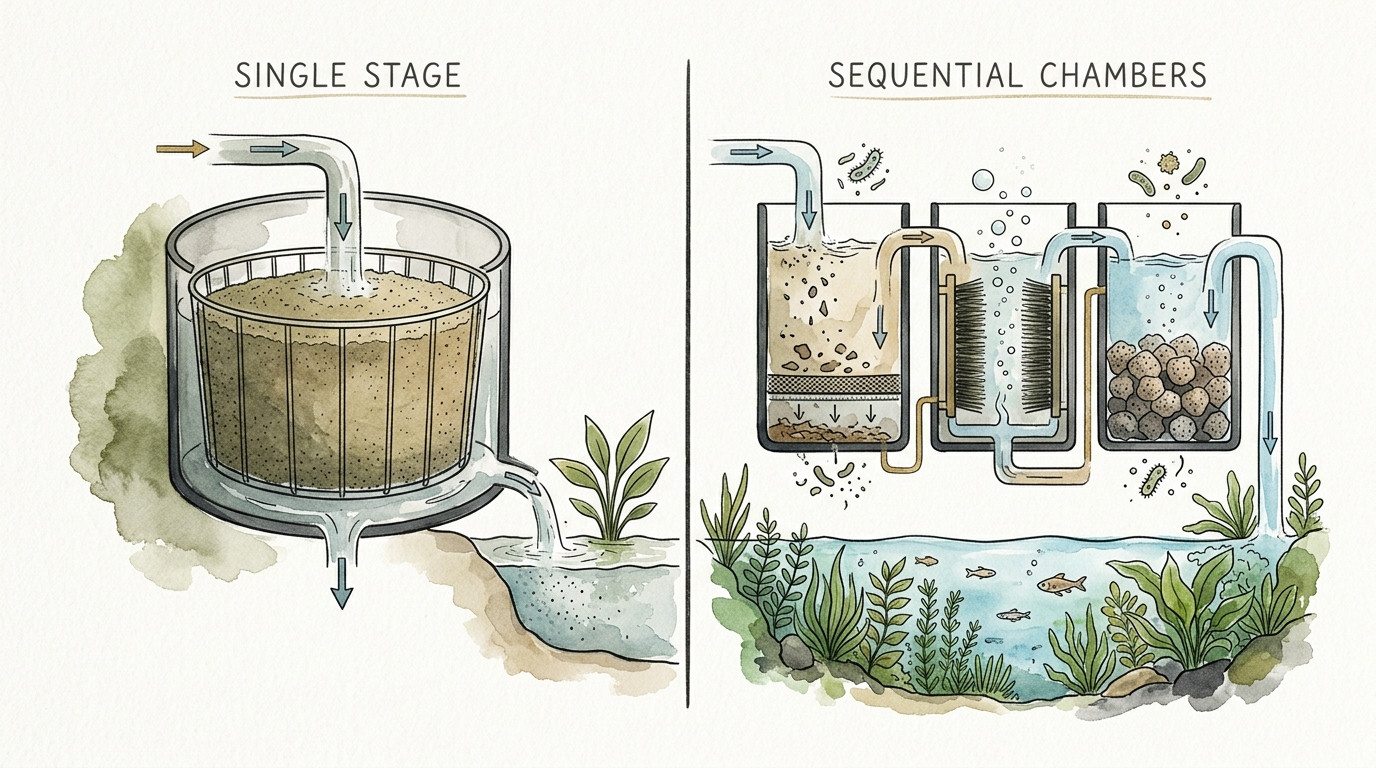
Most pond filters are designed to fail because they try to do everything at once. Professionals don’t rely on a single box to clean a swim pond. Sequential bio-chambers allow you to break down waste incrementally, mimicking the world’s cleanest mountain streams. Stop scrubbing mats and start managing biology.
Best filtration for swim ponds focuses on creating a multi-stage, high-efficiency biological system that processes water through mechanical separation, biological conversion, and ecological polishing. To maintain recreational water standards without chemicals, a system must provide a turnover rate of the entire pond volume every 2 to 4 hours and incorporate a regeneration zone or wetland filter comprising roughly 30% of the total surface area. This configuration ensures the suppression of pathogens and the complete conversion of ammonia into nitrates, which are then sequestered by aquatic vegetation.
Best Filtration For Swim Ponds
Filtering a swimming pond is a complex engineering challenge that differs significantly from standard backyard koi ponds or traditional chlorinated pools. The objective is to achieve crystal-clear, pathogen-free water using only biological and mechanical processes. This is accomplished by dividing the filtration duties into distinct, specialized stages that handle different types of waste.
In a real-world application, the best filtration for swim ponds relies on sequential chambers. These systems are designed to manage the nitrogen cycle and the removal of suspended solids without the use of chemical oxidizers. They are used in residential natural swimming pools and large-scale commercial eco-pools where water safety and clarity are paramount.

Think of it like a municipal wastewater treatment plant scaled down for your backyard. Instead of one plastic bucket trying to catch leaves and grow bacteria simultaneously, the system uses a dedicated mechanical pre-filter to remove physical debris, followed by a biological reactor to process dissolved toxins, and finally a plant-based regeneration zone to polish the water. This modular approach prevents the biological media from clogging, ensuring that the bacteria always have access to the oxygen they need to perform.
The Engineering of Sequential Bio-Chambers
The core philosophy of high-end swim pond filtration is the separation of duties. When you combine mechanical and biological filtration in a single chamber, the biological media inevitably becomes coated in “fines”—tiny particles of organic matter. This coating smothers the beneficial bacteria, leading to anaerobic (low-oxygen) pockets that can harbor pathogens like E. coli.
Sequential chambers solve this by processing the water in the following order:
- Mechanical Pre-Filtration: Water enters a skimmer or a sieve. This stage captures large debris like leaves and sticks before they can sink and decay. Advanced systems often use rotary drum filters (RDFs) that can filter down to 40 microns, removing solids automatically.
- Biological Conversion: Once the water is free of physical solids, it enters the bio-chambers. Here, media with high Specific Surface Area (SSA) provides a home for nitrifying bacteria. Moving bed reactors using K1 media or static beds with Matala matting are common choices.
- Phosphate Sequestration: Phosphorus is the primary driver of algae growth. Dedicated chambers containing phosphorus-binding media, such as modified limestone or iron-rich substrates, remove this nutrient from the water column.
- Ecological Polishing (Wetlands): The final stage is usually a constructed wetland or regeneration zone. Water flows slowly through layers of gravel and the root systems of aquatic plants. This stage removes the final traces of nitrates and provides a competitive environment where “good” bacteria outcompete harmful microorganisms.
By using this step-by-step process, the system maintains a high Redox potential, which is a measure of the water’s ability to clean itself. High oxygen levels and low organic loading are the hallmarks of a professionally designed swim pond.
Efficiency Metrics and Biological Performance
When evaluating the best filtration for swim ponds, you must look at the data. Professionals use several key metrics to size a system correctly. The most critical is the Specific Surface Area (SSA) of the filter media. SSA is measured in square feet of surface area per cubic foot of media (or m²/m³). For example, Kaldnes K1 media provides approximately 500 m² of protected surface per cubic meter, while standard gravel might provide less than 50 m².
Another vital metric is the Hydraulic Retention Time (HRT). This is the amount of time water spends inside the biological filter. If water moves too fast, the bacteria don’t have enough contact time to “scrub” the nutrients. Conversely, if it moves too slowly, the oxygen levels can drop. A well-designed swim pond filter aims for a turnover rate where the entire pond’s volume is circulated every 2 to 4 hours.

Biological performance is also dictated by the metabolization rate. Nitrifying bacteria biofilms process ammonia and waste in proportion to their mass. Industry standards suggest that 50 square feet of biofilm SSA can metabolize approximately 1 gram of ammonia per day. In a swim pond, where the nutrient load is primarily from swimmers (urea and skin cells) and wind-blown debris, calculating the expected nitrogen load is essential for sizing the bio-chambers.
Benefits of Sequential Filtration
The primary advantage of sequential filtration is stability. Because the mechanical stage removes the bulk of the waste, the biological stage remains clean and efficient for years. You are not fighting a losing battle against sludge buildup inside your bio-media.
Practical benefits include:
- Reduced Maintenance: Modern pre-filters like sieves and drum filters are often self-cleaning or require only a few minutes of attention per week. You no longer have to pull out heavy, dirty filter mats and hose them down.
- Chemical-Free Clarity: By managing the biology correctly, you achieve “gin-clear” water that is safe for the eyes and skin. The absence of chlorine means no “red-eye” or dry skin after swimming.
- Pathogen Suppression: A mature biological system creates an environment where beneficial aerobic bacteria outcompete anaerobic pathogens. Research shows that properly maintained natural swim ponds consistently meet recreational water safety standards.
- Longevity: Because the components are modular, you can upgrade or replace parts of the system without tearing out the entire filter. If your swimming load increases, you simply add another bio-chamber.
Challenges and Common Mistakes
The biggest mistake in swim pond design is undersizing the biological stage. Many DIY builders assume that a few bags of lava rock and some plants will be enough. In reality, without adequate surface area and oxygen, the system will quickly become overwhelmed by algae or become a breeding ground for bacteria.
Common pitfalls include:
- Poor Pre-Filtration: Allowing leaves and organic muck to enter the biological filter. This leads to “channeling,” where water finds a path around the clogged media, effectively bypassing the filtration.
- Insufficient Aeration: Nitrifying bacteria are aerobic; they require high levels of dissolved oxygen to function. If the water returning from the filter isn’t properly aerated via a waterfall or air stones, the nitrogen cycle will stall.
- Ignoring Phosphate: Even with low ammonia and nitrites, a pond high in phosphorus will suffer from persistent string algae. Best practices include using phosphate-absorbing media or harvesting plants regularly to remove the nutrients they’ve absorbed.
Limitations of Natural Filtration
While biological filtration is the gold standard for water quality, it has realistic constraints. The most significant is space. A sequential system with a regeneration zone requires a footprint that can be 30% to 50% as large as the swimming area itself. This makes natural swim ponds difficult to install on small urban lots.
Initial cost is another factor. High-efficiency mechanical pre-filters and specialized bio-media represent a higher upfront investment than a simple pressurized sand filter. Furthermore, biological systems are temperature-dependent. In very cold climates, the bacteria become dormant, and the plants die back, meaning the system’s “cleaning power” is reduced during the winter months.
Comparison: Single-Stage vs. Sequential Chambers
It is helpful to compare traditional “all-in-one” filters with professional sequential systems. While single-stage filters are tempting due to their low price, they rarely meet the needs of a dedicated swim pond.
| Factor | Single-Stage (Pressure Filter) | Sequential Bio-Chambers |
|---|---|---|
| Maintenance | High (Weekly cleaning required) | Low (Monthly or seasonal) |
| Biological Capacity | Limited by small media volume | Extremely High (Scalable) |
| Water Clarity | Often cloudy or green | Crystal clear (Polished) |
| Electricity Cost | High (Requires high-pressure pump) | Low (Gravity-fed/Low-head pumps) |
Practical Tips for System Optimization
To get the most out of your swim pond filtration, focus on oxygen saturation. The more oxygen you can drive into the water, the faster your bacteria can work. Consider installing a dedicated aeration system in the bio-chamber itself. This “boils” the media, ensuring that every square inch is exposed to oxygenated water.
Use gradated media in your wetland zones. Start with large stones (2-3 inches) at the bottom where the water enters to prevent clogging, and transition to smaller pea gravel at the top where the plants are rooted. This creates a “deep bed” effect that encourages different types of bacteria to thrive at different depths.
Always install a bottom drain. Unlike traditional pools that pull water only from the surface, a swim pond needs to remove heavy debris and sludge that settles on the floor. Connecting a bottom drain to your mechanical pre-filter ensures that this waste is removed before it can rot and fuel algae blooms.
Advanced Considerations: Redox and Dissolved Oxygen
Serious practitioners often monitor the Oxidation-Reduction Potential (ORP) or Redox of their water. ORP is measured in millivolts (mV) and indicates the “cleansing power” of the water. In a chlorinated pool, ORP is kept high by chemicals. In a swim pond, a high ORP (usually above 250mV) is achieved through massive aeration and efficient biological processing. A falling ORP is an early warning sign that the filter is becoming clogged or that the nutrient load is too high.
Nitrogen cycle kinetics also play a role. The transition from ammonia to nitrite is faster than the transition from nitrite to nitrate. This can lead to “nitrite spikes” in new systems. Advanced setups may use nitrite-oxidizing bacteria (NOB) inoculants during the startup phase to ensure the system cycles quickly and safely. Furthermore, managing the pH is vital, as nitrifying bacteria consume alkalinity as they process ammonia; in “soft” water areas, you may need to add buffering agents to prevent the pH from crashing.
Scenario: Sizing for a 20,000 Gallon Swim Pond
Consider a standard residential swim pond with a volume of 20,000 gallons. To filter this effectively, you would target a turnover rate of 10,000 gallons per hour (GPH), completing a full cycle every two hours. Your mechanical stage should consist of at least two high-capacity skimmers and a 300-micron sieve filter.
For the biological stage, you would need approximately 20 cubic feet of high-SSA media (like K1) in a moving bed reactor, followed by a 400-square-foot regeneration zone. This wetland should be 18 to 24 inches deep, filled with clean, crushed granite or river stone, and planted with at least 150-200 deep-rooted aquatic plants like Iris or Scirpus. This setup provides enough biological “muscle” to handle a family of four swimming daily while keeping the water clear and safe.
Final Thoughts
Designing the best filtration for swim ponds requires moving away from the “one size fits all” mentality of pond kits. By implementing a sequential chamber system, you respect the biological limits of the nitrogen cycle and create a robust, self-sustaining ecosystem. The goal is to manage the biology, not the equipment.
While the technical requirements for swim ponds are higher than for decorative water features, the rewards are unmatched. You gain a swimming environment that is chemically pure, ecologically vibrant, and mechanically efficient. As you experiment with different media types and plant species, you will find that the best filter isn’t a machine—it’s a living, breathing system.
Focus on the fundamentals: remove solids immediately, provide massive surface area for bacteria, and ensure high oxygen levels throughout the circuit. If you follow these principles, your swim pond will remain a clear, healthy sanctuary for decades.
Frequently Asked Questions About Best Filtration For Swim Ponds
How often does the water in a swim pond need to be turned over?
For a natural swimming pond to maintain safety and clarity, the entire volume of water should pass through the filtration system once every 2 to 4 hours. This is slower than a traditional chlorinated pool but faster than a decorative koi pond. The reason for this specific range is to provide enough “contact time” within the biological filter for bacteria to process nutrients, while still moving enough water to prevent stagnation and the buildup of surface debris. If the turnover is too slow, the water can become stagnant and warm, encouraging algae; if it is too fast, the beneficial bacteria in the wetland zones may not have sufficient time to absorb nitrates and phosphates effectively.
Can I use a standard pool sand filter for a swim pond?
Standard pool sand filters are generally unsuitable for swim ponds because they are designed to trap fine particles in a sterile environment. In a swim pond, the “dirt” being filtered is live organic matter. This organic waste will quickly coat the sand in a thick biofilm, causing the filter to clog and turn anaerobic within days. Once a sand filter goes anaerobic, it stops cleaning the water and starts producing toxins like hydrogen sulfide. The best filtration for swim ponds uses “open” systems like sieves, drum filters, or moving bed reactors that allow for easy waste removal and constant oxygenation of the media.

Do I really need a regeneration zone or wetland filter?
While it is technically possible to filter a pond using only mechanical and pressurized biological filters, a regeneration zone is highly recommended. It acts as the “liver” of the pond, performing the final polishing that machines cannot do. Wetland plants and their associated root-zone bacteria are exceptionally efficient at removing phosphates—the primary fuel for algae—and sequestering nitrates. Additionally, the complex environment of a wetland encourages a diverse ecosystem of micro-crustaceans and “good” bacteria that outcompete human pathogens. Without a regeneration zone, you are likely to struggle with persistent algae and water that feels “flat” rather than crisp and alive.
Is UV clarification necessary in a swim pond system?
A UV clarifier is not strictly “necessary” in a perfectly balanced ecosystem, but it is an excellent insurance policy. A UV unit works by exposing water to high-intensity ultraviolet light, which destroys the DNA of single-cell algae (the cause of green water) and neutralizes harmful bacteria and viruses. In a swim pond, a UV clarifier is typically used as a “polishing” stage. It ensures that the water remains clear even during seasonal shifts or heavy swimmer loads when the biological system might be temporarily overwhelmed. It provides an extra layer of safety for swimmers without introducing chemicals into the environment.
How do I know if my biological filter is large enough?
Sizing a bio-filter is based on the expected nutrient load. As a general rule of thumb, the surface area of your regeneration zone should be approximately 30% of the total swimming area. If you are using manufactured bio-media, you should calculate the total Specific Surface Area (SSA). A healthy swim pond requires enough SSA to process the nitrogen produced by wind-blown debris and the urea/skin cells of the expected number of swimmers. If you consistently see ammonia or nitrite readings above zero on a test kit, or if the water remains persistently cloudy, your biological filter is likely undersized or lacks sufficient oxygen to support the necessary bacterial population.