

Pond Talk is an Amazon Associate. As an Amazon Associate we earn from qualifying purchases.
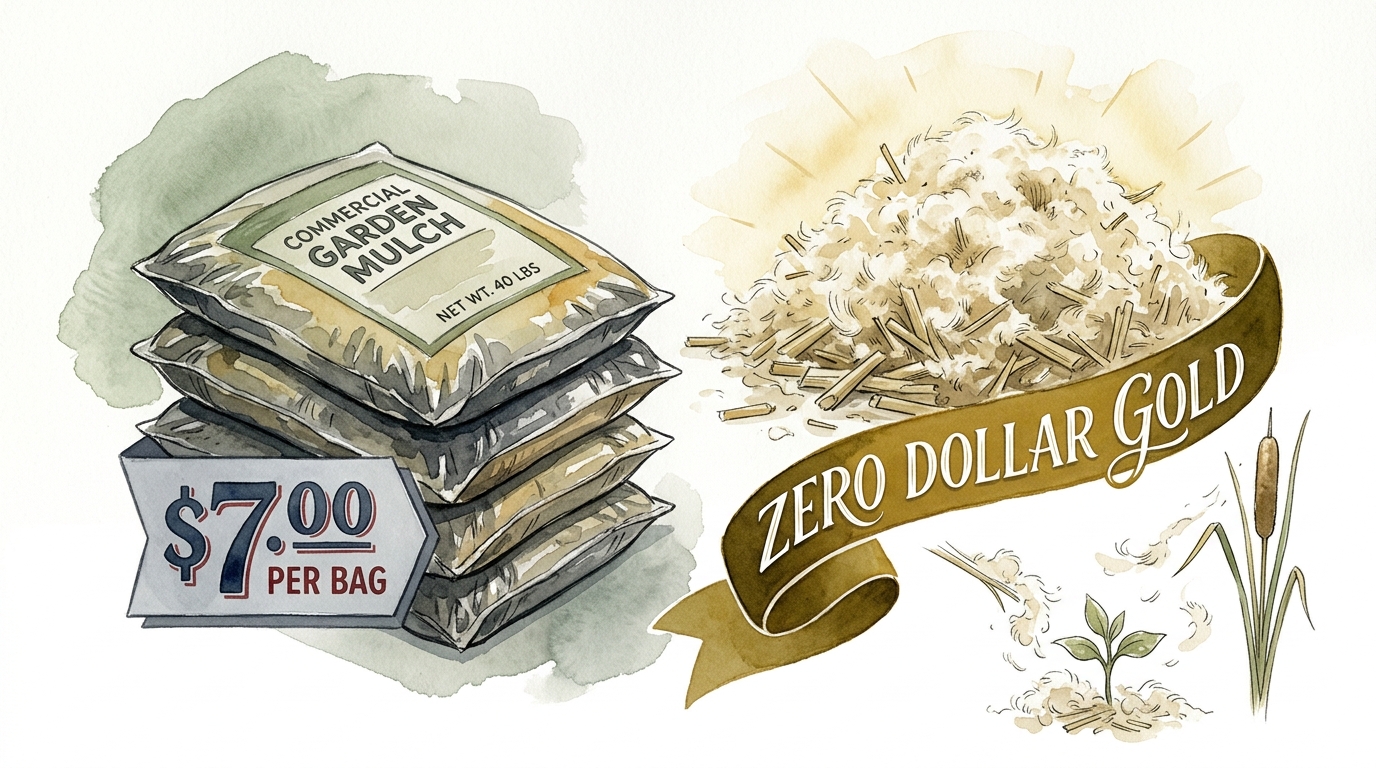
Stop paying for plastic bags of wood chips when the pond is overflowing with free nutrients. Wood mulch takes forever to break down and can rob your soil of nitrogen. Cattail leaves are high in minerals and suppress weeds just as well—and they won’t cost you a dime.
Gardening efficiency often dictates the transition from retail-dependent inputs to localized resource management. While arborist wood chips have long been the industry standard for ground cover, they represent a significant metabolic drag on soil systems due to their high carbon-to-nitrogen (C:N) ratio. This ratio, often exceeding 500:1, forces soil microbes to scavenge nitrogen from the root zone to fuel the decomposition process.
Cattails, or plants in the genus Typha, offer a structurally similar but chemically superior alternative. These aquatic perennials function as nutrient sponges, sequestering phosphorus, potassium, and nitrogen from water runoff and storing them in dense biomass. Utilizing this biomass as a garden mulch transitions a potential pond-clogging nuisance into a high-performance soil amendment.

Using Cattails As Garden Mulch
Cattails are a genus of monocotyledonous flowering plants found in wetland habitats throughout the Northern Hemisphere. The most common species, Typha latifolia (broadleaf) and Typha angustifolia (narrowleaf), are characterized by their rapid biomass accumulation and extensive rhizomatic networks. In a garden context, the above-ground foliage—specifically the leaves and stalks—is harvested, dried, or shredded to create a protective surface layer for soil.
The primary role of cattail mulch is to provide a physical barrier between the soil and the atmosphere. This barrier serves several critical functions: thermal insulation, moisture retention, and light exclusion for weed suppression. Unlike wood bark, which is primarily composed of lignin and suberin, cattail leaves contain a higher percentage of cellulose and hemicellulose. This chemical composition allows for a more predictable decomposition rate, providing a steady release of minerals without the multi-year nitrogen lockup associated with woody debris.
Historically, Typha species have been used for textiles and insulation due to their aerenchyma—a specialized tissue containing large air-filled spaces. These cellular tubes provide excellent thermal resistance (R-value) when applied as a mulch, protecting delicate plant roots from extreme temperature fluctuations in mid-summer or late winter.
How It Works
The mechanical and chemical efficacy of cattail mulch is rooted in its biological structure. The aerenchyma tissue allows the leaves to remain lightweight yet bulky, providing high coverage with low weight. This structural aeration prevents the mulch from matting into an anaerobic sheet, a common failure point with grass clippings or fallen maple leaves.
When applied to the soil surface, the decomposition of Typha biomass follows a predictable biochemical pathway. Initially, the soluble carbohydrates and proteins are broken down by bacterial activity. Because the C:N ratio of green cattail leaves is significantly lower than that of wood—estimated between 30:1 and 50:1—there is a net mineralizing effect. Instead of stealing nitrogen, the mulch begins contributing it to the soil within a single growing season.
Moisture retention is facilitated through the high surface area of the shredded leaves. The spongy internal structure of the leaf can absorb and hold water, releasing it slowly into the soil through capillary action. This reduces the evaporation rate from the soil surface by up to 70% compared to bare earth, significantly lowering the irrigation requirements for high-demand crops like tomatoes or brassicas.
The physical suppression of weeds occurs through light exclusion. Typha leaves are broad and opaque. When layered to a depth of 3 to 4 inches, they prevent the 400-700nm light spectrum from reaching the soil surface, effectively halting the germination of photoblastic weed seeds.
Benefits
The transition to cattail-based mulching systems provides measurable advantages in soil chemistry and economic efficiency. For the practitioner managing large-scale beds, the cost reduction is the most immediate metric of success.
The mineral density of Typha biomass is a primary benefit. Research indicates that above-ground cattail tissue can contain approximately 96 kg of total nitrogen and 5.6 kg of total phosphorus per hectare. By moving this biomass from a pond to a garden, the gardener is effectively performing nutrient translocation, reclaiming fertilizers that would otherwise be lost to aquatic sediment.
Microbiological diversity is also enhanced. Woody mulches tend to favor fungal-dominant soil environments, which are ideal for perennial trees but less optimal for annual vegetables. Cattail mulch, with its lower lignin content, supports a balanced bacterial-to-fungal ratio. This encourages the presence of nitrifying bacteria and earthworms, which are attracted to the more accessible carbon sources in the leaves.
The environmental footprint of cattails is significantly lower than commercial mulch. Traditional wood chips require industrial chipping, plastic packaging, and fossil-fuel-based transportation. Harvesting local cattails removes a carbon-intensive supply chain and replaces it with a renewable, carbon-neutral byproduct of wetland management.

Challenges
Handling cattail biomass requires an understanding of its physical properties. The leaves contain high levels of silica, which gives them structural rigidity but also makes them abrasive. Manual handling without gloves can lead to micro-cuts or skin irritation. Using high-quality leather or synthetic puncture-resistant gloves is mandatory for large-scale processing.
The presence of seeds is another operational challenge. If cattails are harvested after the female flowers have matured into the characteristic brown “sausages,” the mulch may contain millions of wind-dispersed seeds. While Typha seeds require saturated soil to germinate and rarely thrive in a standard garden bed, the fluffy down can become a nuisance, clinging to clothes and tools. Harvesting in midsummer, before the seed heads dry and shatter, mitigates this risk.
Processing the material is more labor-intensive than buying bagged wood chips. To maximize surface area and decomposition efficiency, the long leaves should be shredded. A standard lawn mower or a dedicated leaf shredder can be used, but the moisture content must be managed. Wet cattails can clog shredding equipment, while overly dry leaves may produce significant dust.
Limitations
Wetland regulations represent the most significant legal limitation. In many jurisdictions, cattails are protected as part of critical wetland habitats. Harvesting from public lands, state parks, or protected waterways without a permit can result in legal penalties. Practitioners must ensure they have harvesting rights on private property or local government clearance before removing biomass.
The potential for bioaccumulation is a critical safety consideration. Cattails are frequently used in phytoremediation because they are hyper-accumulators of heavy metals, including zinc, cadmium, and lead. If the source pond receives runoff from an industrial site, a heavily trafficked highway, or a chemically treated golf course, the biomass may contain concentrated toxins.
Applying contaminated mulch to edible crops can lead to the translocation of heavy metals into the food chain. It is essential to test the water and sediment of the source pond or to use the mulch only for ornamental landscaping if the history of the water source is unknown. Additionally, the high electrical conductivity (EC) of raw Typha—measured as high as 7.9 dS/m in some studies—suggests that excessive application in poorly drained soils could lead to localized salinity issues.
Comparison of Mulch Types
The following table provides a technical comparison between traditional wood chips, agricultural straw, and shredded cattail leaves.
| Metric | Wood Chips (Arborist) | Agricultural Straw | Shredded Cattail Leaves |
|---|---|---|---|
| C:N Ratio | 400:1 – 700:1 | 80:1 – 127:1 | 30:1 – 50:1 |
| Decomposition Rate | 2 – 4 Years | 6 – 12 Months | 4 – 9 Months |
| Nutrient Density | Low (primarily Carbon) | Moderate (K, some N) | High (N, P, K, Minerals) |
| Water Retention | Moderate | High | Very High |
| Nitrogen Drawdown | Severe | Mild | Negligible / Positive |
| Cost per 100 sq ft | $25 – $50 | $10 – $20 | $0.00 (Labor only) |
Practical Tips
Optimizing the use of cattail mulch involves precise timing and mechanical preparation. Harvesting should ideally occur in July or August. During this window, the plant has reached peak biomass and nutrient sequestration, but the seed heads have not yet reached the dispersal phase. This timing ensures maximum nutrient return to the soil and minimum seed contamination.
Cutting the leaves 6 inches above the water line preserves the rhizome’s ability to regrow, ensuring a sustainable harvest for subsequent years. Once harvested, the leaves should be allowed to wilt for 24 to 48 hours. This reduction in turgor pressure makes the leaves less “rubbery” and easier to shred with a rotary mower.
For garden application, a depth of 3 inches is recommended for annual vegetables. For perennial fruit trees or berry bushes, a thicker layer of 5 to 6 inches can be used. Because cattail mulch decomposes faster than wood, it may require a “top-off” mid-season to maintain weed suppression. Mixing the shredded cattails with a small amount of wood chips can provide a “hybrid” mulch that combines the nutrient release of the cattails with the longevity of the wood.
Advanced Considerations
Serious practitioners should monitor the soil’s Electrical Conductivity (EC) when using cattails as a primary mulch source. The high salt-sequestration capacity of Typha means that in arid climates with low rainfall, salts could accumulate at the soil surface. Periodic flushing of the soil with deep irrigation can prevent salt-induced osmotic stress in sensitive crops.
The impact on soil microbiology can be further optimized by inoculating the mulch with beneficial fungi or bacteria. Because cattail leaves are a high-quality food source, they respond well to the application of compost tea or effective microorganisms (EM). This can accelerate the conversion of biomass into humus, improving the soil’s cation exchange capacity (CEC).
Thermal dynamics are also worth investigating for those in extreme climates. The high air-to-biomass ratio of the aerenchyma tissue provides superior insulation against soil freezing. In Zone 4 or 5 gardens, a thick layer of cattails can prevent the deep frost penetration that often damages the root crowns of semi-hardy perennials like artichokes or certain herbs.
Harvesting Scenario
Consider a garden bed of 100 square feet requiring a 3-inch mulch layer. This volume equals 25 cubic feet of shredded material. Based on average Typha density, a 10-foot by 10-foot dense stand of cattails can yield approximately 15 to 20 cubic feet of shredded biomass.
A single afternoon of harvesting and shredding can cover a significant portion of a home garden. For a larger 1,000-square-foot market garden, the practitioner would need to harvest roughly 250 cubic feet. This would require access to a pond edge approximately 150 feet long. The transition from $7.00 bags of wood mulch to this free resource represents a savings of nearly $500 for a garden of this size, assuming 2 cubic feet per bag.
Final Thoughts
Cattail mulch represents a sophisticated convergence of wetland ecology and regenerative agriculture. By shifting from high-carbon woody inputs to mineral-rich aquatic biomass, gardeners can improve soil fertility while simultaneously managing invasive or overgrown pond species. The technical advantages—lower C:N ratio, high mineral content, and superior thermal insulation—make it an ideal choice for the self-sufficient practitioner.
Success with this method depends on careful source selection and proper mechanical processing. Avoiding polluted water sources and ensuring the legal right to harvest are the primary hurdles. Once these are cleared, the transition to Typha-based systems offers a sustainable, zero-cost pathway to superior soil health.
Experimenting with different shredding sizes and application depths will allow for the fine-tuning of this resource to specific local conditions. As global supply chains for garden inputs become increasingly volatile, the ability to harvest “zero dollar gold” from the landscape remains a vital skill for the modern grower.
Amazon and the Amazon logo are trademarks of Amazon.com, Inc, or its affiliates.