

Pond Talk is an Amazon Associate. As an Amazon Associate we earn from qualifying purchases.
You can spend your weekends fighting the weeds, or you can let biology do the heavy lifting for you. Why are you still using a rake? Manual weeding is back-breaking, temporary, and usually just spreads the seeds for more growth. One well-placed grass carp can do in a morning what takes a human ten hours of labor. It’s time to retire the rake and let the ‘underwater lawnmower’ take over.
Pond management requires an understanding of nutrient cycles and energy expenditure. Managing aquatic vegetation is not merely an aesthetic concern but a mechanical necessity to maintain dissolved oxygen levels and prevent the “choking” of a water body. When a pond exceeds 20% to 30% vegetative cover, the risk of late-night oxygen depletion and subsequent fish kills increases. Choosing between manual intervention and biological control involves weighing immediate labor costs against long-term ecological shifts.
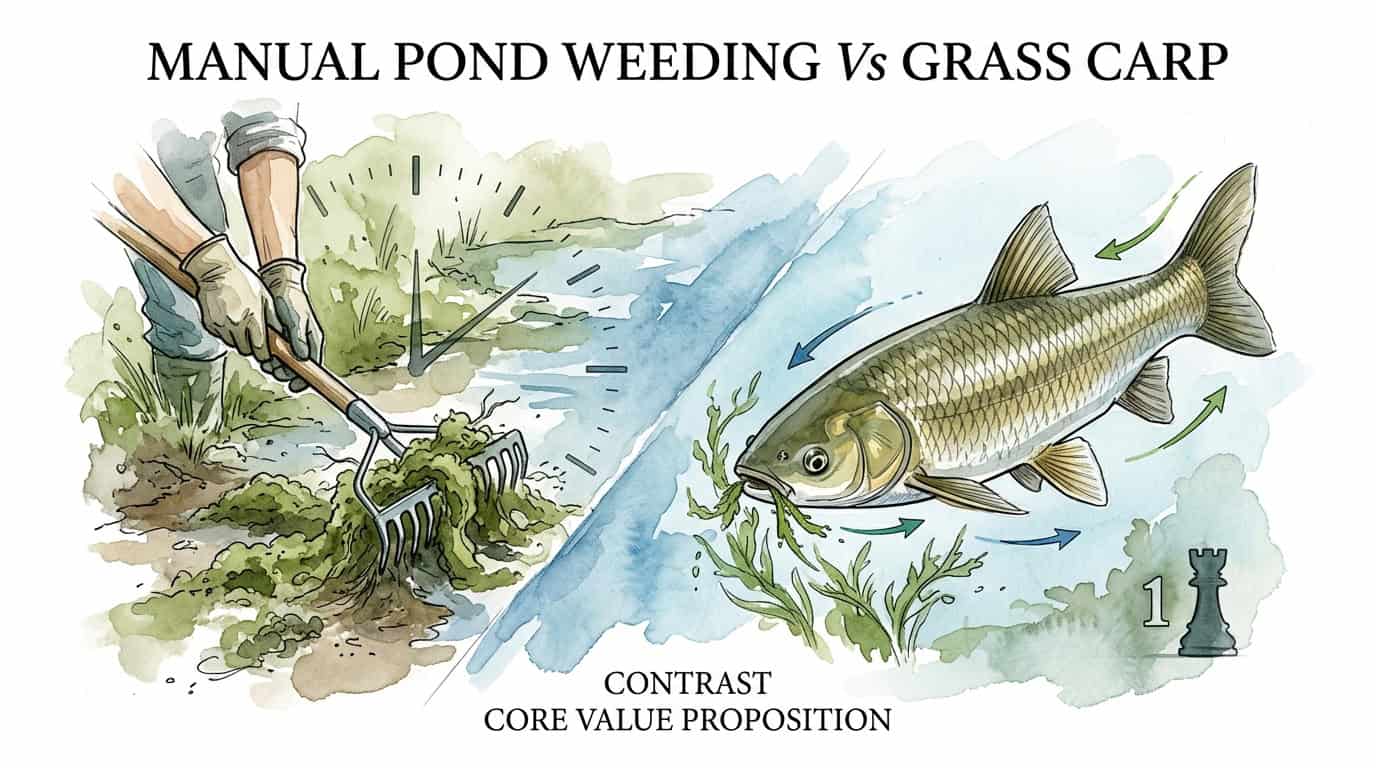
Manual Pond Weeding Vs Grass Carp
Manual pond weeding involves the physical extraction of aquatic plants using specialized rakes, cutters, or hand-pulling techniques. This method provides immediate relief for specific areas, such as swimming docks or boat launches. It is a localized, mechanical solution that removes biomass directly from the water column, preventing that material from decomposing and releasing nutrients back into the system.

The grass carp (Ctenopharyngodon idella), specifically the sterile triploid variety, represents a biological control system. These fish are engineered to possess an extra set of chromosomes, rendering them unable to reproduce. This allows for precise population control within an enclosed ecosystem. Unlike manual labor, grass carp work continuously, targeting the problem at the metabolic level by converting plant tissue into fish biomass.
Manual weeding is comparable to treating symptoms, whereas grass carp function as a continuous maintenance system. While a human with a rake might clear ten square feet in an hour, a single sub-adult grass carp can consume its own body weight in vegetation daily under optimal thermal conditions. The choice between these methods depends on the pond’s total surface area, the specific plant species present, and the available labor budget.
How Biological Control Works in Aquatic Systems
Biological control operates through the redirection of energy. In a pond with excessive vegetation, nitrogen and phosphorus are locked within plant tissues. Manual removal exports these nutrients entirely. Grass carp, however, recycle these nutrients. They consume the plants, digest the soft tissue, and excrete nitrogen and phosphorus back into the water in a more bioavailable form.
This process begins the moment the fish are stocked. For maximum efficiency, stocking should occur in early spring when water temperatures reach approximately 65°F to 70°F. At these temperatures, the metabolic rate of the grass carp increases, allowing them to consume young, tender plant shoots before the vegetation reaches peak biomass in the summer.
Success with grass carp is highly dependent on plant palatability. They possess pharyngeal teeth located in the throat, which they use to grind fibrous material. They prioritize soft-stemmed submerged plants. If the pond is dominated by tough, emergent species like cattails or woody lilies, the grass carp will be significantly less effective, as their mechanical digestive apparatus is not designed for highly lignified tissues.
Benefits of Grass Carp Over Manual Labor
The primary advantage of grass carp is operational longevity. A single stocking event can provide effective vegetation management for five to seven years. Manual weeding requires repeated sessions throughout the growing season, often as frequently as every two weeks during the peak of summer. The cumulative labor hours required for manual maintenance over five years far exceed the initial cost of purchasing and permitting triploid fish.
Grass carp also eliminate the risk of fragmentation-based propagation. Many invasive aquatic plants, such as Hydrilla or Eurasian Watermilfoil, can grow from tiny fragments broken off during manual raking. A rake may clear a patch of weeds but simultaneously broadcast hundreds of “starts” across the rest of the pond. Grass carp consume the entire plant structure, preventing this unintended spread.
Efficiency metrics favor the fish in large-scale applications. In a one-acre pond with 50% coverage, manual removal could take over 100 man-hours to achieve a 90% reduction in biomass. Ten to twelve grass carp can achieve the same level of control over a single season with zero additional human intervention. This passive management style allows pond owners to focus resources on other infrastructure needs.
Challenges and Technical Pitfalls
Overstocking is a frequent error in biological management. If too many fish are introduced, they may consume all available submerged vegetation. While this results in a “clean” pond, it removes essential habitat for juvenile game fish and disrupts the base of the food chain. Total eradication is rarely the goal in a balanced ecosystem; maintaining 10% to 20% coverage is generally considered optimal for sportfish health.
Nutrient shifting is another critical challenge. Because grass carp excrete nutrients back into the water, a pond that was once “clear but weedy” may become “muddy and green.” The removal of rooted plants allows planktonic algae to utilize the newly available phosphorus. This can lead to Harmful Algal Blooms (HABs) or a significant decrease in water clarity, which may require secondary treatments like aeration or nutrient binders.
Predation on stocked fish is a common cause of system failure. Stocking grass carp that are too small—typically under 10 inches—increases the likelihood that they will be consumed by existing predators like Largemouth Bass. To ensure a return on investment, the fish must be large enough to be “predator-proof” at the time of introduction. Most professionals recommend stocking fish that are 10 to 12 inches in length.

Limitations of Biological Control
Grass carp are not universal weed consumers. Their dietary preferences are highly specific. They exhibit high preference for Hydrilla, Muskgrass (Chara), and Southern Naiad. They show moderate preference for Pondweeds and Duckweed. However, they almost entirely avoid filamentous algae (pond scum), watermeal, and tough emergent plants like cattails, bulrushes, or water lilies.
Environmental conditions also dictate performance. Grass carp are highly sensitive to dissolved oxygen levels. If oxygen levels drop below 3 parts per million (ppm), the fish will stop feeding. If levels drop below 2 ppm, mortality is likely. In ponds with heavy organic loading and no aeration, the risk of losing the entire biological “investment” during a summer heatwave is substantial.
Legal constraints are a significant boundary. Many states require a permit for triploid grass carp to prevent the accidental introduction of fertile fish into public waterways. Escape is a concern during heavy rain events. If the pond has an overflow or spillway, mechanical barriers must be installed to prevent the fish from leaving the system. Without these screens, a single flood can wash the entire management strategy downstream.
Quantitative Comparison: Manual vs. Biological
The following table outlines the technical differences between manual weeding and grass carp management for a standard one-acre pond with moderate (50%) infestation.
| Metric | Manual Weeding | Triploid Grass Carp |
|---|---|---|
| Initial Cost | Low (Cost of Rake/Cutter) | Moderate (Fish + Permit + Screens) |
| Labor Requirement | 10-20 hours per month | Zero (Post-Stocking) |
| Effectiveness Period | 2-4 weeks | 5-8 years |
| Target Specificity | Non-selective (removes everything) | Highly selective (prefers soft plants) |
| Nutrient Impact | Exports nutrients from pond | Recycles nutrients within pond |
| Risk of Spread | High (via fragmentation) | Low (plants are digested) |
Practical Tips for Implementation
Identify the dominant plant species before purchasing fish. If the primary nuisance is filamentous algae, grass carp are the wrong tool; you should consider Tilapia or chemical surfactants instead. If the target is Hydrilla or Pondweed, the carp will perform with high efficiency. Using a plant identification key or consulting a local extension agent is a mandatory first step.
Calculate the stocking density based on vegetated acres, not total surface acres. If you have a five-acre pond but only one acre is choked with weeds, stock for one acre. General recommendations suggest 5 to 10 fish per vegetated acre for moderate control, and 15 to 20 for aggressive reduction. Conservative stocking is advised, as it is easier to add fish later than to remove them once they are in the water.
Install horizontal bar screens on all outlets. Grass carp have a natural instinct to move with flowing water. A screen with one-inch spacing will retain sub-adult fish while allowing debris to pass through. Ensure the screen is sturdy enough to withstand the pressure of a major storm event, as the loss of your fish population during a flood represents a 100% loss of the management budget.
Advanced Considerations for Serious Practitioners
Serious pond managers should monitor water temperature and metabolic windows. Grass carp consumption peaks between 78°F and 85°F. During these windows, the fish can consume up to three times their weight in wet vegetation weekly. If you are experiencing a “rebound” of growth in late summer, it may be due to water temperatures exceeding 90°F, which can actually cause a slight depression in feeding activity.
Supplemental management is often necessary in high-nutrient environments. Combining grass carp with bottom-diffused aeration ensures that oxygen levels remain high enough to support maximum metabolic rates. Furthermore, if the pond has a history of algae blooms, applying a nutrient lock (like lanthanum-modified clay) alongside the fish can help mitigate the phosphorus pulse that occurs as the carp digest the submerged weeds.
Integration with limited herbicide use can “jumpstart” a heavily infested pond. If a pond is 100% covered, the oxygen demand of that much rotting vegetation after a fish stocking could be lethal. A better approach is to treat 30% of the pond with a selective herbicide, wait for the biomass to decompose, and then stock the grass carp to manage the remaining 70% and all future regrowth. This reduces the immediate biological load on the fish and prevents oxygen crashes.
Scenario: The 2-Acre Hydrilla Infestation
Consider a two-acre irrigation pond in a temperate climate that has become 70% covered in Hydrilla over three seasons. Manual removal would require a team of three people working for a full week to clear the area, with 100% regrowth expected within 45 days due to the remaining tubers in the sediment. Total labor cost at $20/hour would exceed $2,400 for a single temporary clearing.
Instead, the manager stocks 20 triploid grass carp (10 per acre). The fish are purchased at 12 inches for $15 each, totaling $300. Permitting and spillway screening add another $200. Total initial investment is $500. Within the first six months, the fish reduce the Hydrilla coverage to 40%. By the end of the second season, the Hydrilla is maintained at a stable 10% coverage.
The biological solution costs 79% less than a single manual clearing event and provides continuous maintenance for up to seven years. The metabolic conversion of Hydrilla into fish weight also provides a secondary benefit: the grass carp grow to 20+ pounds, providing an impressive (though often difficult to catch) addition to the pond’s biomass. This mechanical efficiency is the hallmark of well-executed biological control.
Final Thoughts
Transitioning from manual labor to biological control represents a move toward data-driven pond management. By understanding the metabolic capabilities of the triploid grass carp, a pond owner can replace hundreds of hours of physical labor with a self-sustaining system. The key to success lies in proper plant identification, accurate stocking density, and the installation of physical barriers to protect the investment.
Relying on biology does not mean the pond is maintenance-free; it means the nature of the maintenance has changed. Instead of raking, the manager now monitors water quality, oxygen levels, and fish health. This shift allows for a more stable ecosystem and a significant reduction in the long-term cost of ownership.
If the goal is to reclaim a pond from invasive submersed weeds, the grass carp remains the most cost-effective and efficient tool available. Start with a clear assessment of your vegetation type, secure the necessary permits, and let these specialized herbivores handle the heavy lifting. Your weekends are better spent enjoying the water than fighting it.
Amazon and the Amazon logo are trademarks of Amazon.com, Inc, or its affiliates.