

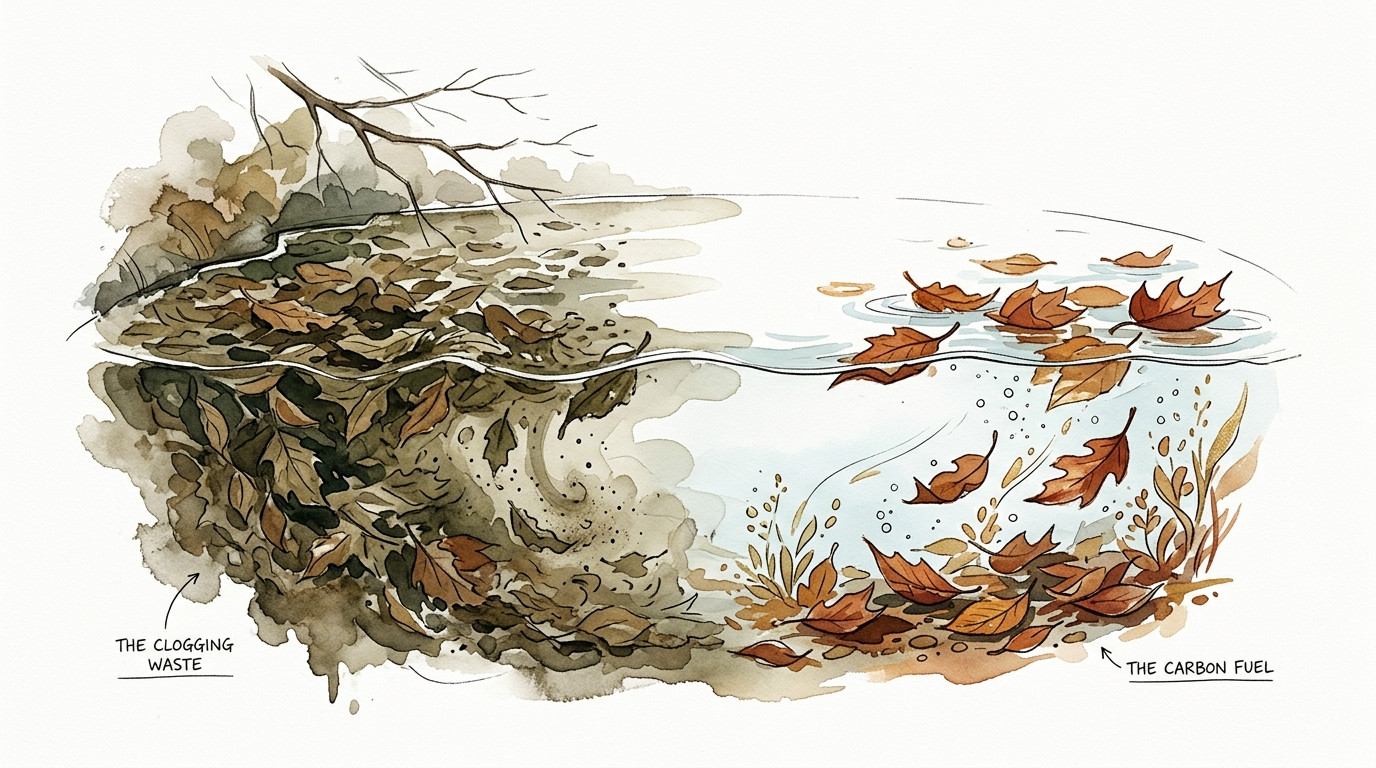
Turn your autumn leaves into next year’s garden fuel. In the water, leaves are an oxygen-sucking mess. In the compost bin, they are high-carbon gold. Get them out of the water and into the soil cycle today.
Preparing your pond for the autumn transition requires a proactive shift from biological maintenance to mechanical exclusion. As trees enter dormancy, the sheer volume of organic matter entering aquatic systems can overwhelm natural filtration. Managing this influx is not merely an aesthetic choice; it is a critical intervention to prevent catastrophic dissolved oxygen depletion and nutrient loading.
The following sections detail the technical protocols for mitigating leaf drop impact, optimizing filtration, and stabilizing water chemistry before winter temperatures induce biological stasis.
Preparing Your Pond for Fall Leaf Drop
Preparing your pond for fall leaf drop involves the strategic integration of physical barriers, mechanical skimming, and cold-weather microbial support. The primary objective is to minimize the biological oxygen demand (BOD) created by decomposing organic matter. When leaves enter a pond, they begin a leaching process that releases nitrogen and phosphorus. Research indicates that leaf litter can contribute over 50% of the annual phosphorus load in a water body, fueling massive algae blooms during the following spring.

In real-world applications, failure to manage this debris leads to the accumulation of “muck”—a thick layer of anaerobic sludge at the pond bottom. This sludge not only reduces the functional depth of the pond but also traps toxic gases like hydrogen sulfide. By implementing a multi-layered defense system, you convert a potential ecological hazard into manageable compostable material.
Technical Protocols for Leaf Management
Effective management follows a hierarchical approach: exclusion, capture, and then biological breakdown. Each stage must be calibrated to the specific tree species surrounding the pond, as different leaf types exhibit varying decomposition rates and tannin concentrations.
Mechanical Exclusion: Netting Strategies
Physical exclusion is the most efficient method for preventing nutrient loading. Use heavy-duty pond netting with a 1/2-inch to 3/4-inch diamond mesh. Avoid “bird netting” found in general hardware stores; these materials often lack the tensile strength to support wet leaf loads and may sag into the water, creating a trap for fish.
Secure the netting above the water surface using a domed or tent-style framework. This prevents leaves from touching the water, where they would otherwise begin leaching tannins. A tensioned net allows wind to blow dried leaves off the surface, effectively automating the removal process.
Mechanical Capture: Skimmer Optimization
If exclusion is not possible, mechanical skimming becomes the primary line of defense. Pond skimmers operate by breaking the surface tension of the water and pulling floating debris into a collection basket. During peak leaf drop, skimmer baskets must be emptied daily.
For ponds with high leaf loads, consider retrofitting the skimmer with a larger debris net or an external “leaf trap” canister. This increases the interval between maintenance cycles and prevents pump cavitation caused by clogged intakes. Ensure the skimmer weir is functioning correctly; a sticky weir will fail to adjust to water level changes, drastically reducing skimming efficiency.

Microbial Intervention: Cold-Water Bacteria
Standard beneficial bacteria strains typically become dormant when water temperatures fall below 50°F (10°C). To maintain waste processing, transition to cold-water bacterial blends. These specialized microbes are formulated with strains that remain active down to 35°F.
These bacteria focus on breaking down cellulose and lignin—the complex carbohydrates that make up leaf structure. Regular dosing throughout the fall reduces the volume of sludge that settles on the bottom, ensuring that the pond enters winter with a lower organic load.
Benefits of Proactive Fall Preparation
The measurable benefits of a rigorous fall preparation protocol extend beyond clear water. Scientific data suggests that removing leaf litter before it sinks can reduce phosphorus concentrations in the water column by as much as 80%. This prevents the “spring shock” phenomenon where warming water triggers rapid microbial activity and subsequent oxygen crashes.
Practical advantages include:
- Reduced Chemical Oxygen Demand: Minimizing organic waste ensures higher dissolved oxygen levels for overwintering fish.
- Tannin Mitigation: Preventing leaf decay keeps the water clear and prevents the “tea-stained” appearance caused by polyphenolic compounds.
- Pump Longevity: Keeping debris out of the intake prevents mechanical strain and overheating of submersible pumps.
- Nutrient Cycling: Transferring leaves to a compost bin preserves the carbon for garden use rather than allowing it to fuel algae.
Challenges and Common Technical Failures
The most frequent failure in fall preparation is the “sagging net” syndrome. When a net is draped flat across the water, the weight of accumulated leaves eventually pushes the mesh below the surface. This creates an anaerobic environment where leaves rot in direct contact with the water, effectively bypassing the exclusion barrier.
Another common mistake is neglecting the skimmer basket during storm events. High winds can fill a standard skimmer basket in hours. If the basket is not cleared, the pump will starve for water, leading to seal failure or motor burnout. Technicians recommend installing an auto-fill valve to maintain the water level at the optimal height for the skimmer weir during these high-demand periods.
Limitations of Standard Methods
Mechanical exclusion and skimming have realistic boundaries based on pond scale and surrounding vegetation. In large-scale ponds or small lakes (greater than 1/4 acre), netting becomes structurally impractical. In these scenarios, the focus must shift entirely to high-volume aeration and aggressive microbial dosing to handle the inevitable organic influx.
Furthermore, if the surrounding trees are primarily coniferous (pines, cedars), standard 3/4-inch mesh netting will fail to catch needles. These situations require fine-mesh silt screens or a heavier reliance on bottom-drains and pond vacuums to remove the sunken material before winter ice-over.
Comparison: Netting vs. Mechanical Skimmers
Choosing the primary defense mechanism depends on labor availability and pond architecture.
| Metric | Pond Netting (Exclusion) | Pond Skimmer (Capture) |
|---|---|---|
| Efficiency | 95% (if tensioned correctly) | 70-85% (surface only) |
| Initial Cost | Low to Moderate | High (Installation required) |
| Maintenance Frequency | Weekly inspection | Daily emptying during peak drop |
| Fish Safety | Can be hazardous if sags | Very safe; serves as a refuge |
| Impact on Water Quality | Prevents all leaching | Allows minor leaching before capture |
Practical Tips for Peak Performance
To maximize the efficiency of your fall maintenance routine, apply these mechanical adjustments:
- Angle the Net: Install the net at a 15-degree slope toward the leeward side of the pond. This allows wind to assist in clearing the net of dry debris.
- Monitor Redox Potential: If using a pond controller, monitor the Oxygen Reduction Potential (ORP). A sharp drop in ORP indicates a sudden increase in organic load or a failure in the skimming system.
- Adjust Aeration: Move aerator diffusers from the deepest point of the pond to a mid-depth shelf. This prevents “super-cooling” the bottom layer where fish congregate during winter while still providing surface gas exchange.
- Clean Pre-Filters: Check mechanical pre-filters (bead filters or sieve filters) more frequently as fine leaf particulates bypass the skimmer.
Advanced Considerations: The Carbon-Nitrogen Balance
Serious practitioners should consider the chemical impact of leaf drop on the pond’s C:N ratio. Leaves are primarily carbon. When they decompose in an environment with high fish waste (nitrogen), they can actually speed up the consumption of nitrogen by bacteria. However, this process is oxygen-intensive.
In heavily stocked koi ponds, the “Clogging Waste vs. The Carbon Fuel” trade-off is dangerous. While the carbon in leaves could technically help balance high nitrates, the biological oxygen demand required to process that carbon far outweighs the benefit. It is always more efficient to remove the carbon (leaves) and manage nitrogen through water changes or specialized resin media.
Scenario: High-Load Deciduous Environment
Consider a 2,000-gallon pond surrounded by mature Oak and Maple trees. During a typical three-week leaf drop, this pond could receive upwards of 50 pounds of dry organic matter.
1. **Without Intervention:** The 50 lbs of leaves sink, leaching approximately 0.5 lbs of pure phosphorus—enough to trigger 500 lbs of algae growth in the spring.
2. **With Netting:** 48 lbs are excluded; 2 lbs enter via wind-blown edges. Phosphorus load is reduced by 96%.
3. **With Skimmer Only:** 40 lbs are captured; 10 lbs sink due to saturation or missing the intake. The maintenance requirement involves emptying the 5-gallon skimmer basket 15-20 times over the season.
The data clearly favors exclusion as the primary strategy in high-load environments.
Final Thoughts
Maintaining a healthy pond through the autumn requires a transition from aesthetic enjoyment to mechanical rigor. By prioritizing the exclusion of organic matter, you protect the dissolved oxygen levels critical for fish survival and prevent the accumulation of nutrient-rich muck. The conversion of these leaves into garden compost is the final step in a closed-loop nutrient cycle that benefits both the aquatic and terrestrial landscape.
Success is found in the details: the tension of the net, the daily clearing of the skimmer, and the switch to cold-water biological supports. Implementing these protocols ensures that the pond remains a stable, low-maintenance ecosystem when the spring thaw arrives. Experiment with different netting heights and skimmer flow rates to find the optimal configuration for your specific micro-climate.
Frequently Asked Questions About Preparing Your Pond for Fall Leaf Drop
How does leaf decomposition affect pond pH and alkalinity?
Leaf decomposition releases organic acids, such as humic and tannic acids, which can lead to a gradual decrease in pH. In ponds with low carbonate hardness (alkalinity), this influx of organic acids can cause “pH crashes,” where the water becomes dangerously acidic for fish. Furthermore, the microbial activity required to break down the leaves consumes oxygen and produces carbon dioxide, which further acidifies the water. Monitoring alkalinity and maintaining levels above 100 ppm is crucial during heavy leaf drop to buffer these changes and keep the environment stable.
Can I leave some leaves in the pond for “natural” cover?
While a few leaves might provide temporary cover for invertebrates, the risks in a closed system like a garden pond far outweigh the benefits. In natural lakes, the volume of water relative to the organic load is massive. In a backyard pond, the same leaf load creates a concentrated “nutrient soup.” As leaves decay, they create an anaerobic muck layer that produces toxic gasses and robs the water of dissolved oxygen. For cover, it is far safer to use dedicated fish caves or submerged structures that do not decompose and consume oxygen.
What is the difference between summer and winter beneficial bacteria?
Summer bacteria (mesophilic strains) thrive in temperatures between 60°F and 85°F. As temperatures drop, their metabolic rate slows until they become effectively dormant. Winter or cold-water bacteria (psychrophilic strains) are specifically selected for their ability to remain metabolically active in temperatures as low as 35°F. These strains possess specialized enzymes that can break down complex organic polymers like cellulose and lignin even in near-freezing conditions. Using these in the fall ensures that any debris that bypasses your nets is processed before it can accumulate as sludge.
When should I stop feeding my fish during the fall?
Fish metabolism is strictly regulated by water temperature. As the water cools to 50°F-55°F, switch to a low-protein, wheat-germ-based food which is easier to digest. Once the water temperature consistently drops below 40°F, you must stop feeding entirely. At these temperatures, the fish’s digestive tract slows to a near-halt; any food consumed will not be processed correctly and can rot inside the fish, leading to systemic infections or death. The fish will survive the winter on stored fat reserves and the occasional nibble of natural algae.

Is it better to vacuum the pond in the fall or the spring?
A “light” vacuuming in the fall is highly recommended to remove the bulk of the organic load before it is trapped under winter ice. Removing the muck in the fall prevents the buildup of harmful gases like hydrogen sulfide during the months when the pond surface may be frozen over. While a deep “spring clean” is common, performing maintenance in the fall reduces the biological stress on the pond during the winter dormancy period. Focus on removing large debris and heavy silt layers, but avoid scrubbing the biological film off the rocks, as this contains the beneficial bacteria needed for spring startup.