

Pond Talk is an Amazon Associate. As an Amazon Associate we earn from qualifying purchases.
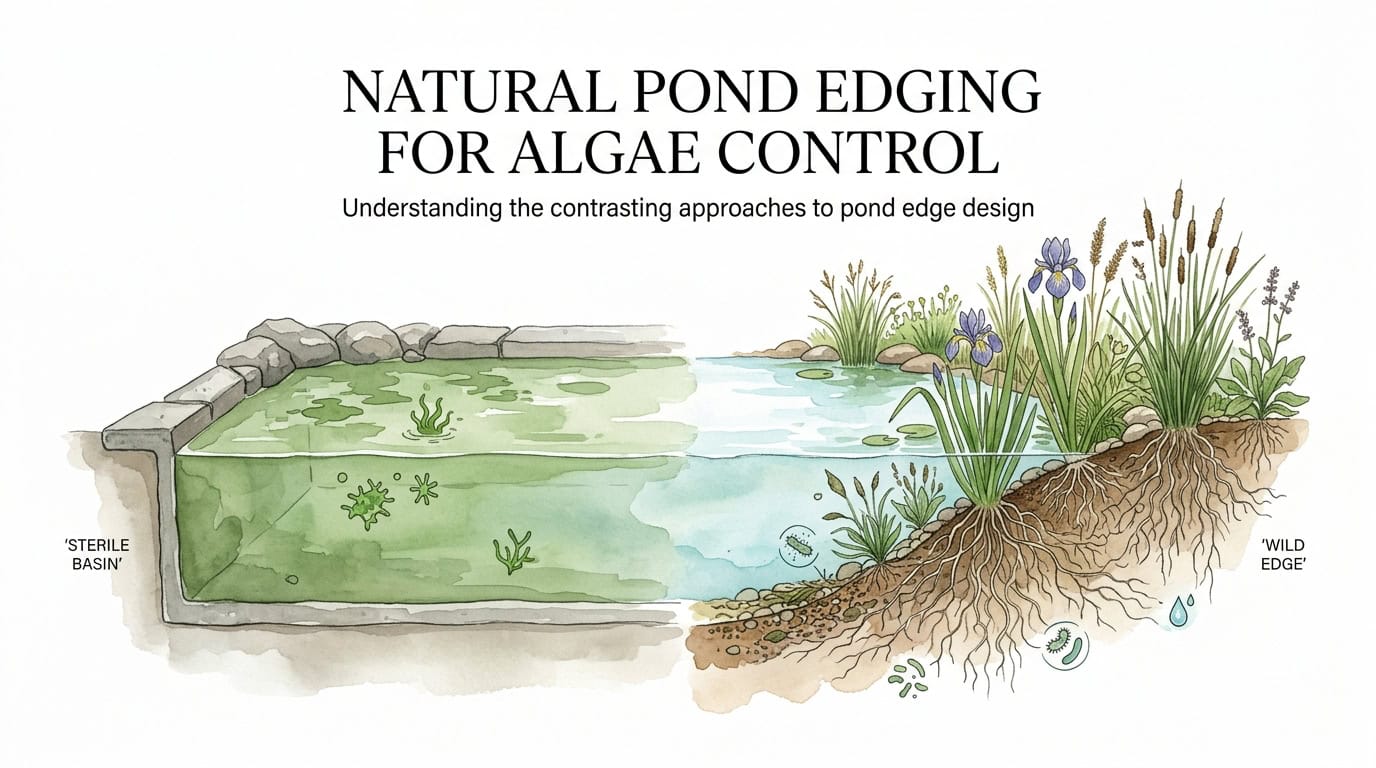
Nature doesn’t use a filter box to stay clear—it uses the wild edge. Sterile, concrete-rimmed ponds are algae factories because they lack the transition zones that filter runoff. Restoring a ‘wild edge’ of rushes and sedges creates a biological curtain that captures nutrients before they can turn your water green. Invite the wild back and watch the algae leave.
Managing a pond often feels like a constant battle against green water and stringy blooms. Most pond owners reach for chemicals or expensive UV sterilizers to solve the problem. These tools address the symptoms but ignore the underlying cause of nutrient imbalance. A pond is a closed system that accumulates nitrogen and phosphorus from fish waste, decaying leaves, and lawn runoff. Without a mechanism to remove these elements, algae will inevitably capitalize on the surplus.
Natural pond edging serves as a functional transition zone between the terrestrial and aquatic environments. This area, often referred to as the riparian buffer, acts as a living filter. This guide examines the technical mechanics of using marginal plants and specific substrate configurations to achieve long-term water clarity. You will learn how to design, implement, and maintain an edge that functions as a high-efficiency biological processor.

Natural Pond Edging For Algae Control
Natural pond edging for algae control is the strategic use of marginal vegetation and porous substrates at the water’s perimeter to manage nutrient levels. This method mimics the “wild edge” found in healthy natural wetlands and marshes. Instead of a hard, vertical barrier like concrete or plastic, the edge is sloped or terraced to support aquatic life. This zone facilitates a complex interaction between plants, microbes, and water chemistry.
The primary function of this edging is nutrient sequestration. Algae thrive when there is an abundance of dissolved nitrates and phosphates. Marginal plants, which grow with their “feet” in the water and their heads in the air, are exceptionally efficient at absorbing these chemicals. Because these plants have access to atmospheric CO2, they grow faster and consume more nutrients than submerged aquatic weeds. They effectively outcompete algae for the limited food supply available in the water column.
In real-world applications, this concept is used in large-scale wastewater treatment wetlands and high-end natural swimming pools. Engineers design these zones to maximize the surface area of plant roots. The roots provide a massive habitat for beneficial nitrifying bacteria. These bacteria break down ammonia into nitrites and then into nitrates, which the plants then absorb. This process ensures that the nitrogen cycle is completed efficiently without leaving behind the fuel that triggers an algae bloom.
The Mechanics of Nutrient Sequestration
Understanding how a wild edge controls algae requires a look at the rhizosphere, which is the area around the plant roots. This zone is a hive of biological activity. Plants leak oxygen and carbon into the substrate through their roots, supporting specialized microbial colonies. These microbes are responsible for the chemical conversion of organic waste into plant-available forms of nitrogen.
Phosphorus management is another critical component. Unlike nitrogen, which can eventually escape into the atmosphere as a gas, phosphorus stays in the system. It binds to sediments and organic matter. A well-designed natural edge uses specific substrates, such as expanded clay or volcanic rock, to physically trap phosphorus particles. The plants then pull this phosphorus from the substrate to build their tissues. Periodic harvesting of the plant growth literally removes the phosphorus from the pond ecosystem.
Mechanical filtration also occurs at the edge. Rainwater running off a lawn carries sediment, fertilizers, and organic debris. A sterile, concrete edge allows this runoff to dump directly into the pond. A wild edge acts as a physical barrier. Dense stems of sedges and rushes slow down the water flow, causing suspended solids to drop out of the water before they reach the main pond body. This prevents the “muck” buildup on the pond floor that often fuels anaerobic conditions and further algae growth.
Hydraulic Residence Time
Efficiency in a natural filter is often determined by hydraulic residence time. This refers to how long the water stays in contact with the plant roots and substrate. A shallow, wide edge with a gentle slope increases this contact time. Designing your pond with a 10-to-1 slope (ten inches of width for every one inch of depth) in the marginal zone creates an ideal environment for maximum filtration. This layout ensures that water moves slowly through the root mats, allowing the biological processes sufficient time to act.
Substrate Selection and Porosity
The material used to anchor the plants in the wild edge is as important as the plants themselves. Large, smooth river stones are popular for aesthetics but offer low surface area for bacteria. Smaller, porous materials like 3/4-inch crushed granite, lava rock, or specialized ceramic media are superior. These materials provide millions of tiny nooks where nitrifying bacteria can colonize. A depth of 6 to 12 inches of porous substrate is usually sufficient to create a high-functioning bio-filter at the edge.
Benefits of the Wild Edge Approach
Choosing a natural edge over a sterile basin offers measurable advantages in water chemistry stability. Sterile basins often experience “yo-yo” water quality, where parameters spike and crash, leading to frequent fish stress and algae outbreaks. The wild edge acts as a buffer, smoothing out these fluctuations. The biological mass in the marginal zone provides a “sink” that can absorb sudden increases in nutrients, such as after a heavy rain or overfeeding.
Maintenance requirements shift from mechanical to biological. Instead of cleaning filter pads every week, maintenance involves thinning out plants once or twice a year. This is often less labor-intensive and more cost-effective over the lifespan of the pond. Furthermore, the natural edge protects the pond liner from UV degradation. Sunlight is the primary cause of liner failure; covering the edges with substrate and plants extends the life of the containment system significantly.
Biodiversity is a secondary but vital benefit. A sterile pond is an ecological desert. A wild edge provides habitat for dragonflies, frogs, and beneficial insects. Many of these organisms prey on mosquitoes, helping to control pests naturally. This creates a balanced ecosystem where no single species, including algae, can dominate the environment.

Challenges and Common Mistakes
One frequent error is the failure to contain the plants. Some marginal species, like common cattails (Typha latifolia), are highly aggressive and can punctuate liners or completely overgrow a small pond in a single season. Designers must choose species appropriate for the pond size or use containers to restrict root spread. Selecting non-invasive, clump-forming species ensures the edge remains a filter and does not become a maintenance nightmare.
Inadequate substrate depth is another common pitfall. If the gravel layer is too thin, plants will not have enough support, and their roots will not have enough surface area to host bacteria. This leads to poor nutrient uptake and plants that are easily uprooted by wind or fish. Ensuring a minimum depth of six inches across the marginal shelves provides the necessary structure for a stable biological community.
Neglecting seasonal “draw-down” or pruning is a major mistake. When plants die back in the winter, the nutrients they absorbed stay in their tissues. If these plants decay in the water, those nutrients are released right back into the pond, fueling an early spring algae bloom. Cutting back dead foliage and removing it from the pond area in late fall is a non-negotiable step for long-term algae control. This physical removal of biomass is what truly “cleans” the system.
Limitations of Natural Edging
Natural edging is not a universal solution for every water feature. In very small ponds or “container gardens,” there may not be enough surface area to support the volume of plants needed to offset the nutrient load. These systems often require supplemental mechanical filtration. The “rule of thumb” is that the marginal plant zone should occupy at least 25% to 30% of the total pond surface area to provide effective algae control. If your design cannot accommodate this footprint, expectations must be adjusted.
Environmental factors like extreme shade can also limit the effectiveness of this method. Most high-uptake marginal plants require at least 4 to 6 hours of direct sunlight to maintain the metabolic rates necessary for rapid nutrient consumption. In a heavily shaded pond, these plants grow slowly and may not compete effectively with certain types of shade-tolerant algae or mosses. In such cases, the “wild edge” serves more as a sediment trap than a nutrient processor.
High fish stocking densities can overwhelm a natural edge. If you are keeping a large number of Koi in a relatively small volume of water, the waste production may exceed the plants’ uptake capacity. Koi are also notorious for digging in substrates and eating the roots of marginal plants. Protecting the wild edge with heavy stones or keeping it in a separate, connected “bog filter” area is often necessary in dedicated fish ponds.
Comparison: Sterile Basin vs. Wild Edge
| Feature | Sterile Basin (Concrete/Liner) | Wild Edge (Natural Buffer) |
|---|---|---|
| Nutrient Management | Relies on chemicals/UV | Biological sequestration |
| Maintenance Level | Frequent (weekly filter cleaning) | Seasonal (pruning/thinning) |
| Algae Resistance | Low (nutrient accumulation) | High (nutrient competition) |
| Initial Cost | Higher (pumps/filters) | Lower (substrate/plants) |
| Lifespan | Equipment fails in 3-5 years | Self-sustaining indefinitely |
Practical Tips for Implementation
Start by creating a shallow shelf around the perimeter of your pond during the excavation phase. This shelf should be roughly 8 to 12 inches deep and at least 12 to 18 inches wide. Slanting the shelf slightly toward the center of the pond helps prevent stagnant pockets of water. This area will become the primary engine for your natural filtration system.
Line the shelf with a heavy-duty EPDM or PVC liner, then cover it with your chosen substrate. Avoid using potting soil or organic compost, as these materials release nutrients into the water, defeating the purpose of the edge. Use “inert” media like pea gravel or calcined clay. These materials hold the plants in place while forcing them to pull all their nutrition directly from the pond water.
Select a mix of plants with different growth habits. Use “verticals” like Blue Flag Iris or Pickerel Weed for structure and deep root penetration. Use “creepers” like Creeping Jenny or Water Forget-Me-Not to cover the surface of the gravel and provide shade to the substrate. This multi-layered approach ensures that every inch of the marginal zone is working to clean the water.
Install a “settling area” where the most runoff enters the pond. This can be a slightly deeper pocket within the marginal shelf filled with larger rocks. This area slows down incoming water and traps the heaviest sediments, making them easier to remove during annual maintenance. Periodically vacuuming this specific spot prevents the rest of the wild edge from becoming clogged with muck.
Advanced Considerations for Water Clarity
Serious practitioners should consider the “Cation Exchange Capacity” (CEC) of their edge substrate. CEC is a measure of how well a substrate can hold and exchange ions like ammonium and potassium. High-CEC materials, such as zeolites or certain types of expanded shale, can chemically bond with nutrients, holding them in place until plant roots can reach them. This adds a chemical layer of protection to the biological and mechanical layers already in place.
Managing the “Redfield Ratio” is another advanced tactic. This is the ratio of carbon, nitrogen, and phosphorus (106:16:1) required by aquatic organisms. Algae blooms often occur when phosphorus levels are high relative to nitrogen. By selecting specific plants that are “luxury consumers” of phosphorus, such as certain species of Carex (sedges), you can manipulate the nutrient ratios in the water to favor higher plants over primitive algae.
Hydraulic forcing can increase the efficiency of a wild edge. Instead of letting the water sit passively, use a small pump to circulate pond water through the marginal gravel bed. This is known as a “constructed wetland” or “bog filter” approach. Forcing water through the substrate ensures that every drop of water comes into contact with the biofilm on the gravel and the plant roots, drastically increasing the nutrient processing rate per square foot.
Example Scenario: Retrofitting a 2,000-Gallon Pond
Imagine a 2,000-gallon pond that has been plagued by pea-soup green water for three years. The pond has a vertical concrete wall and a standard pressurized filter. Despite the filter, nitrate levels remain at 40 ppm (parts per million), fueling constant algae growth. To solve this, the owner decides to implement a wild edge retrofit.
The owner builds a wooden frame around 30% of the pond perimeter to create a “raised” marginal bed that sits just at the water level. This bed is lined and connected to the main pond. The bed is filled with 10 inches of 3/4-inch volcanic rock. They plant 20 Blue Flag Irises and 15 Horsetail Rushes into the rock. A small 500 GPH pump diverts water from the main pond into the bottom of this new marginal bed, allowing it to “upflow” through the roots.
Within four weeks, the irises show significant growth, signaling they are consuming nutrients. Nitrate levels in the water drop from 40 ppm to 5 ppm. The algae, starved of its primary food source, begins to die off. The water clarity increases from 6 inches of visibility to 4 feet. By the end of the first season, the owner no longer needs to use algaecides, and the “wild edge” has become a self-sustaining filtration system that requires only an annual pruning.
Final Thoughts
Achieving a clear pond does not require a complex array of mechanical gadgets or a constant supply of chemicals. Nature provides a blueprint for water quality through the use of marginal transition zones. Establishing a wild edge allows you to harness the power of the nitrogen cycle and the massive nutrient-uptake capabilities of aquatic plants. This approach creates a stable, resilient ecosystem that naturally resists algae blooms.
Success with a natural edge depends on the proper selection of substrates, an understanding of plant growth habits, and the physical removal of dead biomass. While the initial setup requires thoughtful design and labor, the long-term rewards include lower maintenance costs and superior water quality. A functional edge transforms a pond from a high-maintenance chore into a balanced biological system.
Experimenting with different plant species and substrate depths will help you fine-tune the system for your specific climate and nutrient load. As you watch the dragonflies return and the water clear, you will realize that the most effective filter isn’t a box in the shed—it is the living, breathing edge of the pond itself. Consider expanding this concept into dedicated bog filters or floating islands for even greater control over your aquatic environment.
Amazon and the Amazon logo are trademarks of Amazon.com, Inc, or its affiliates.