

Pond Talk is an Amazon Associate. As an Amazon Associate we earn from qualifying purchases.
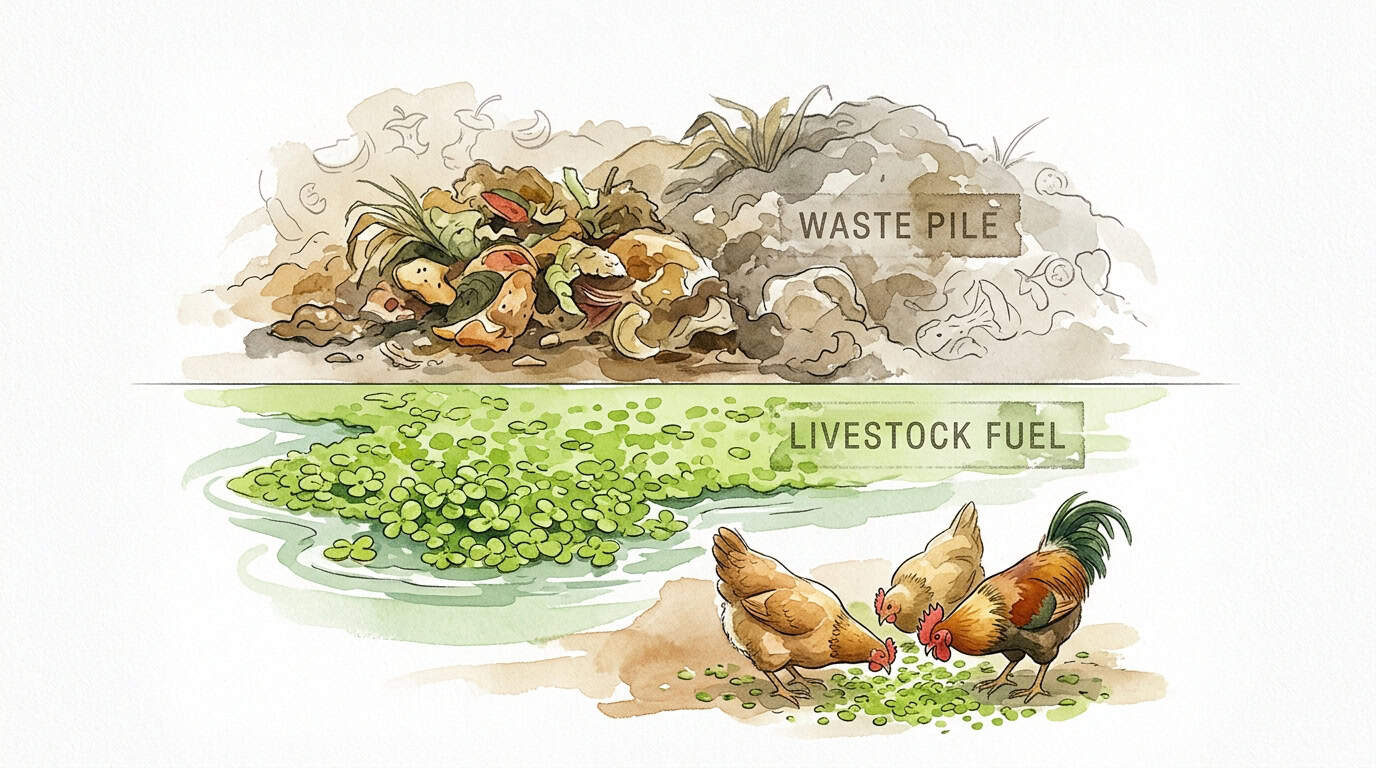
Why are you throwing away the world’s fastest-growing protein source? Most people see a nuisance. Smart homesteaders see free chicken feed. Duckweed grows 20x faster than corn and contains up to 40% protein. Stop skimming and start harvesting your way to a lower feed bill.
Duckweed Chicken Feed Benefits
Duckweed refers to a group of small floating aquatic plants in the family Lemnaceae, comprising genera such as Lemna, Spirodela, and Wolffia. These plants lack traditional leaves and stems, consisting instead of a simplified thallus or frond that floats on the water surface. In a controlled agricultural context, duckweed serves as a high-density protein bioreactor. It functions by absorbing dissolved inorganic nitrogen and phosphorus from the water column and converting these nutrients into plant biomass with a crude protein content ranging from 25% to 45% on a dry matter basis.
The nutritional profile of duckweed is remarkably similar to animal-derived proteins. Unlike many terrestrial plant proteins, duckweed contains a balanced array of essential amino acids, specifically high levels of lysine and methionine. These are often the limiting factors in poultry growth and egg production. Furthermore, the plant is rich in pigments such as carotene and xanthophyll. These compounds directly influence the pigmentation of egg yolks, resulting in the deep orange color often sought in premium pastured eggs.

In real-world poultry operations, duckweed acts as a cost-offsetting supplement. Traditional soy-based feeds are subject to market volatility and logistical costs. Duckweed, however, can be produced on-site using existing wastewater or nutrient-rich runoff. This creates a circular nutrient economy where waste nitrogen from livestock is reclaimed and recycled back into the feed supply, significantly reducing the external input requirements of the homestead.
Technical Cultivation and Harvest Systems
Cultivating duckweed at a scale sufficient for poultry supplementation requires precise management of water chemistry and surface area. The growth rate is exponential, with some species like Lemna minor doubling their biomass every 24 to 48 hours under optimal conditions. To maintain this rate, the water must be kept relatively still. Moving water or high-wind environments disrupt the mat, causing plants to stack or sink, which inhibits photosynthesis and stunts growth.
Nutrient loading is the primary driver of protein concentration. Research indicates that total nitrogen levels between 10 and 40 mg/L are ideal for rapid biomass production. If the nitrogen concentration exceeds 60 mg/L, the plant can reach its maximum theoretical protein density of approximately 43%. Phosphorus is also critical, typically required at levels of 1% to 1.5% of the dry weight of the plant. Common fertilizers include diluted poultry manure, compost tea, or specialized hydroponic solutions.
Water pH must be monitored and maintained within the 6.5 to 7.5 range. While duckweed can survive in pH levels from 5.0 to 9.0, extreme acidity or alkalinity alters nutrient availability. High pH levels specifically increase the concentration of unionized ammonia, which becomes toxic to the plants at levels exceeding 100 mg/L. Optimal harvest protocols involve removing approximately 25% to 33% of the standing crop daily. This prevents overcrowding, which would otherwise lead to nutrient competition and the eventual collapse of the colony.
Surface Management and Algae Control
Maintaining a dense, unbroken mat is essential for suppressing algae growth. Algae compete for the same dissolved nutrients and can raise the water’s pH through carbon dioxide consumption during respiration. A fully covered surface prevents sunlight from penetrating the water column, effectively starving the algae. If the mat becomes too thin, algal blooms will occur, leading to fluctuations in dissolved oxygen and potential toxin production.
Mechanical harvesting is typically performed using fine-mesh skimmers or automated conveyor systems for larger installations. Once harvested, the biomass must be processed according to the intended feeding method. Fresh duckweed contains 92% to 95% water, which presents logistical challenges for storage. Dehydration or pressing can be used to increase nutrient density, though this adds an energy cost to the production cycle.
Advantages of Duckweed Integration
The primary advantage of duckweed is its land-use efficiency. While corn typically yields about 10 to 12 tonnes of dry matter per hectare annually, duckweed can produce 10 to 30 tonnes in the same footprint. In highly optimized vertical or tiered systems, yields can reach up to 50 times that of traditional grain crops. This allows for significant protein production on small-acreage homesteads where large-scale grain farming is impossible.
Feed conversion efficiency is another measurable benefit. Inclusion of duckweed in laying hen diets has shown that birds can maintain or even increase egg production while decreasing their reliance on commercial soy meal. Trial data suggests that duckweed can replace up to 25% of a layer’s total dry matter intake without negative impacts on hen-day production or feed conversion ratios. For meat birds, early-stage growth is best supported by a lower inclusion rate, typically around 5% to 10%.
Environmental benefits extend beyond the feed bill. Duckweed acts as a powerful phytoremediation tool. It can sequester heavy metals and absorb excess nutrients from agricultural runoff, preventing eutrophication in local waterways. By using duckweed to treat pond water or lagoon effluent, a homesteader simultaneously cleans their water supply and produces a high-value feed product. This dual-purpose function maximizes the utility of every gallon of water used on the property.
Challenges and Common Pitfalls
Moisture content is the single largest hurdle in duckweed utilization. Because the plant is over 90% water, chickens must consume a massive volume of fresh duckweed to meet their dry-matter nutrient requirements. This bulkiness can lead to a “gut fill” effect where the bird feels full but has not consumed enough calories or protein to sustain high performance. This is why fresh duckweed is best used as a supplement rather than a total replacement for dry grains.
Pathogen management is a critical safety concern. Duckweed grown on untreated wastewater or manure lagoons can harbor Escherichia coli, Salmonella, or various parasites. These pathogens can be transferred to the poultry and potentially to humans via egg handling. Ensuring that the growth medium is properly composted or treated before use, or utilizing a clean-water hydroponic system, is necessary to mitigate these risks. Some producers use a quick dip in a mild sanitizer or a brief fermentation period to lower the microbial load before feeding.

Bioaccumulation of toxins is another risk factor. Duckweed is exceptionally efficient at absorbing heavy metals like lead, cadmium, and arsenic from the water. If the water source is contaminated, the plants will concentrate these toxins in their tissues. When fed to chickens, these metals can accumulate in the meat and eggs. It is mandatory to test the water source and occasionally the harvested biomass to ensure it meets safety standards for livestock consumption.
Limitations and Constraints
Duckweed performance is highly dependent on environmental temperatures. Growth virtually stops when water temperatures drop below 45°F (7°C), and the plants may die back or go dormant during hard freezes. Conversely, temperatures exceeding 90°F (32°C) can cause heat stress and bleaching. This seasonal variability means that duckweed is not a year-round solution in temperate climates without the use of greenhouses or heated water systems.
The metabolizable energy (ME) of duckweed is lower than that of corn or soybean meal. While it is a protein powerhouse, it is not a high-energy feed. A diet consisting only of duckweed and forage would leave birds energy-deficient, leading to weight loss and a cessation of egg-laying. Duckweed must be balanced with energy-dense sources like cracked corn, wheat, or fats to maintain a complete nutritional profile. Failure to account for this energy gap is a common cause of poor results in duckweed feeding trials.
Young chicks have limited digestive capacity for the high fiber content found in some duckweed species. Research has shown that broiler chicks under three weeks of age may experience stunted growth if duckweed inclusion exceeds 5%. Their developing digestive systems are better suited for highly concentrated, low-fiber diets. As the birds mature and their cecal fermentation capabilities improve, they can handle higher levels of aquatic biomass.
Comparative Analysis: Duckweed vs. Traditional Protein
When evaluating duckweed as a feed component, it is useful to compare its metrics against standard ingredients like soybean meal and corn. The following table highlights the differences in nutrient density and production efficiency.
| Metric | Duckweed (Dry) | Soybean Meal | Corn (Yellow) |
|---|---|---|---|
| Crude Protein (%) | 25 – 43% | 44 – 48% | 8 – 10% |
| Lysine (%) | 1.5 – 2.1% | 2.8 – 3.1% | 0.2 – 0.3% |
| Annual Yield (t/ha) | 10 – 30 (DM) | 2.5 – 4.0 | 8.0 – 12.0 |
| Water Req. | Low (Recycled) | High | Very High |
| Energy (kcal/kg) | ~1,600 | ~2,200 | ~3,300 |
Duckweed matches soybean meal in protein quality and amino acid balance but falls short in energy density. However, its superior annual yield per hectare and ability to grow in non-arable water-filled areas give it a distinct advantage in resource-constrained environments. The lower energy value of duckweed is easily compensated for by the inclusion of small amounts of high-energy grains, making the overall feed formulation more cost-effective.
Practical Tips for Implementation
Start small by using a single IBC tote or a shallow plastic pool. This allows you to monitor the growth rate and nutrient needs without committing large amounts of space. Use a simple aquarium net for harvesting and offer the duckweed to your chickens in a separate trough or as a floating treat in their waterer. This “fresh feeding” method is the easiest way to begin, though you should monitor for signs of watery droppings if they over-consume.
For more consistent results, incorporate duckweed into a fermented feed mix. Fermentation breaks down some of the plant’s fiber and can improve the digestibility of the protein. Simply mix harvested duckweed with your standard grain ration, add water until submerged, and let it sit for 24 to 48 hours. The resulting probiotic-rich mash is highly palatable to chickens and maximizes the nutritional uptake of the aquatic biomass.
If you intend to store duckweed, drying is necessary. Spread the harvested mats on a fine screen in a sunny, well-ventilated area. Once crisp, the duckweed can be crushed into a meal. This meal is much easier to mix into standard feeders and prevents the birds from picking through the feed to find their favorite bits. Dried duckweed meal can be stored in airtight containers for several months without significant nutrient degradation.
Advanced Considerations for Serious Practitioners
Serious producers should consider a multi-stage lagoon system. The first pond receives raw nutrients (such as diluted manure), allowing for initial breakdown by bacteria. The second pond houses the duckweed, which performs the final nutrient extraction. This “polyculture” approach ensures the water reaching the duckweed is high in available nitrates and low in suspended solids that might clog the plants’ roots or shade them out.
Integration with aquaculture (aquaponics) is another high-efficiency strategy. Tilapia or carp can be raised in the same water system, with the duckweed serving as a primary or secondary feed for the fish. The fish waste then provides the nitrogen required for the duckweed growth. This creates a triple-output system: clean water, fish protein, and chicken feed protein, all from a single nutrient input. Scaling this requires careful monitoring of dissolved oxygen and ammonia levels to keep both the fish and plants healthy.
Genetic selection of strains can also improve performance. There are over 30 species of duckweed, each adapted to different light and temperature regimes. Some strains of Wolffia are exceptionally high in starch, while certain Lemna minor ecotypes have been bred for cold tolerance. Identifying and cultivating the specific strain that thrives in your local climate and water chemistry can increase your annual biomass yield by 20% or more.
Scenario: Calculating Yield for a 100-Bird Flock
A typical laying hen requires about 110 to 120 grams of feed per day. For a flock of 100 birds, the daily feed requirement is approximately 12 kg (26 lbs). If you aim to replace 15% of their total dry matter intake with duckweed, you need to provide 1.8 kg of dry duckweed per day.
Assuming a conservative production rate of 10 grams of dry matter per square meter per day, you would need 180 square meters of surface area (about 1,930 square feet). This is roughly the size of a 40×50 foot pond. In an optimized system with better nutrient loading, this footprint could be halved. Because fresh duckweed is 95% water, you would actually be harvesting and feeding about 36 kg (80 lbs) of wet biomass daily to hit that 1.8 kg dry matter target.
While 80 lbs of wet weed sounds like a significant amount, the volume is manageable with a simple skimmer and a few minutes of labor. The cost savings are immediate. By replacing 15% of a commercial ration with home-grown duckweed, you reduce your monthly feed purchase by nearly 54 kg (120 lbs). At current organic feed prices, this can translate to hundreds of dollars in savings annually, while simultaneously improving the nutrient density and yolk quality of your eggs.
Final Thoughts
Duckweed represents a paradigm shift in how we approach homestead nutrient cycles. By treating wastewater not as a liability but as a substrate for protein production, you close the loop on your farm’s nitrogen and phosphorus flows. The technical data supports its use as a high-quality protein supplement that matches or exceeds the performance of traditional terrestrial crops in terms of yield and amino acid balance.
Implementing a duckweed system requires attention to water chemistry, temperature, and harvest frequency. It is not a “set and forget” crop, but the rewards for the diligent practitioner are significant. Reducing feed costs while improving animal health and environmental impact is the hallmark of efficient, modern homesteading. As global grain markets become more unpredictable, the security of an on-site, water-based protein source becomes increasingly valuable.
Begin with a small test plot and observe your flock’s reaction. Every poultry breed and every local duckweed strain will interact differently. Adjust your inclusion rates based on the performance of your birds and the growth rate of your ponds. With a calculated approach and consistent management, duckweed can transition from a pond nuisance to the backbone of your poultry nutrition program.
Amazon and the Amazon logo are trademarks of Amazon.com, Inc, or its affiliates.