

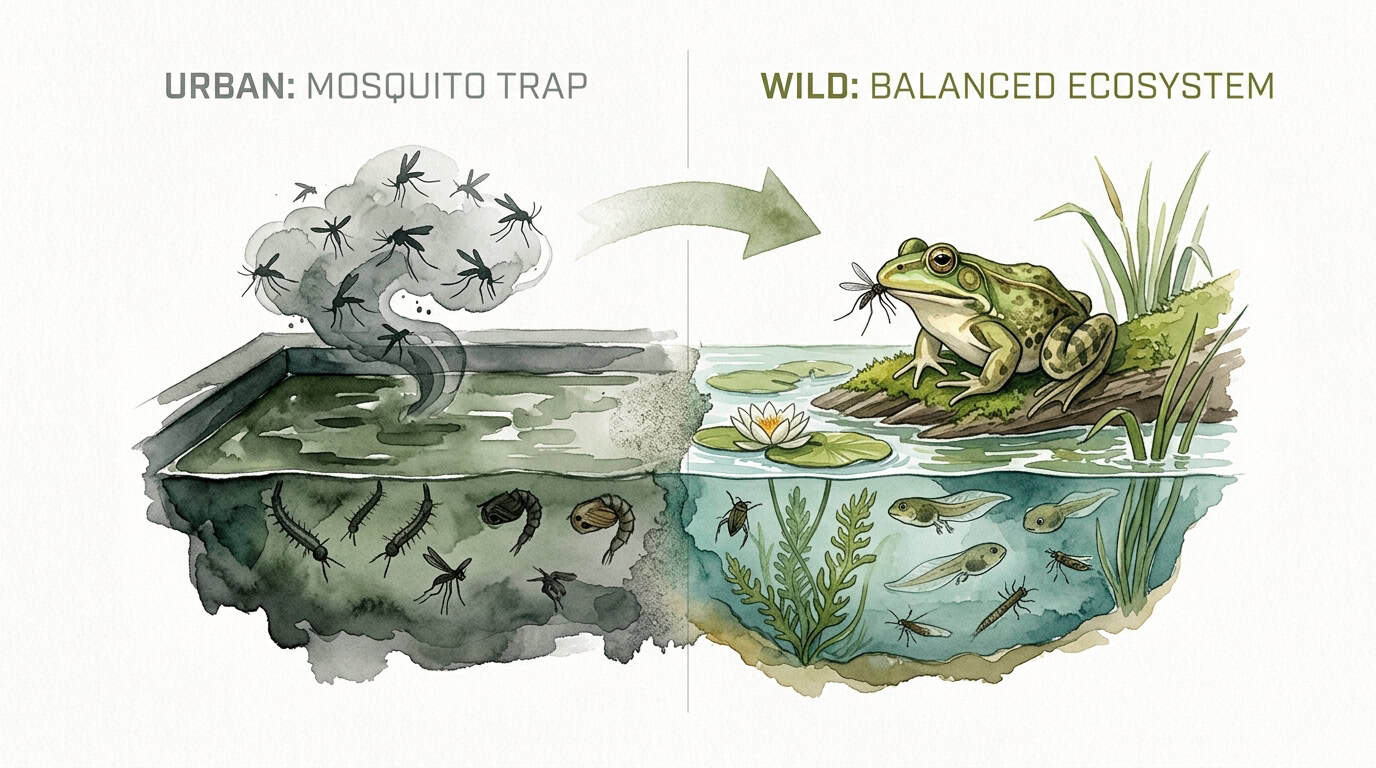
You want the croak, not the itch. Here is how to build a frog haven that kills mosquitoes. Think a frog pond means a mosquito infestation? Think again. By mimicking wild ecosystems with moving water and natural predators, you can host the frogs and skip the bites. #FrogPond #WildlifeGarden #MosquitoControl
Creating a functional amphibian habitat requires more than digging a hole and filling it with water. A poorly designed pond becomes a stagnant breeding ground for *Culex* and *Aedes* species. A technically optimized frog haven utilizes mechanical disruption, biological competition, and specific predatory cycles to maintain a mosquito-free environment. This guide details the engineering and ecological parameters necessary to transition from a high-maintenance urban trap to a self-regulating balanced ecosystem.
Success in mosquito mitigation depends on understanding the life cycle of the target pest. Mosquitoes require stagnant water to complete their transition from egg to adult. Female mosquitoes typically seek out water with low dissolved oxygen and minimal surface disturbance. In contrast, a healthy frog pond maintains high dissolved oxygen levels and continuous surface movement. These conditions attract beneficial amphibians while simultaneously rendering the site inhospitable to mosquito larvae.
How to Build a Dedicated “Frog Pond” That Doesn’t Attract Mosquitoes
A dedicated frog pond is an engineered aquatic system designed to support the life cycles of local amphibians while implementing active “source reduction” techniques for pest control. Unlike traditional ornamental fish ponds, these habitats focus on the specific morphological needs of tadpoles and adult frogs. They function as biological filters that process organic matter, preventing the nutrient buildup that typically supports mosquito larvae development.

Constructing a pond that actively kills mosquitoes involves a two-pronged approach. First, the physical design must prevent stagnant zones. Second, the biological community must include species that outcompete or prey upon mosquito larvae. In many urban environments, “stagnant water” is a byproduct of poor drainage or neglected containers. A frog pond replaces these low-oxygen traps with a high-oxygen, biodiverse system where mosquitoes face 100% mortality rates before reaching the adult stage.
Placement of the pond is critical for thermal regulation and ecosystem stability. Selecting a site with 4 to 6 hours of daily sunlight promotes the growth of submerged aquatic vegetation, which is essential for oxygenating the water column. However, total exposure to high heat must be avoided, as extreme temperatures can decrease dissolved oxygen and stress amphibian populations. A site with a gentle grade—less than a 6% slope—is ideal for maintaining structural integrity and preventing runoff contamination from lawn fertilizers or pesticides.
The Mechanics of a Mosquito-Free Frog Haven
Hydrodynamics play the most significant role in preventing mosquito oviposition. Mosquitoes utilize surface tension to hang their breathing siphons (tubes) during the larval stage. Breaking this surface tension through mechanical means prevents the larvae from breathing, leading to rapid drowning.
Mechanical Surface Disruption
Installing a low-flow pump or “spitter” creates consistent ripples across the water surface. These ripples interfere with the female mosquito’s ability to land and lay eggs. While large, aggressive waterfalls can wash away delicate frog eggs, a gentle recirculating system maintaining a flow of 150 to 300 gallons per hour (GPH) is sufficient to deter pests without disrupting the breeding cycle of frogs.
Biological Competition and Predation
Tadpoles of specific species, such as the North American Spadefoot Toad (*Scaphiopus hammondi*) and the Green Treefrog (*Hyla cinerea*), have been documented as effective predators of mosquito larvae. Beyond direct predation, tadpoles compete with mosquito larvae for microbial food sources. This resource competition significantly reduces the growth rate and survival of any larvae that do manage to hatch.
Bacterial Larvicides (BTI)
Biological control often utilizes *Bacillus thuringiensis israelensis* (BTI). This naturally occurring bacterium produces delta-endotoxins that are highly specific to the larvae of flies and mosquitoes. When ingested, the toxins disrupt the larval gut lining. BTI is non-toxic to frogs, fish, and humans, making it an essential tool for maintaining an “active-kill” zone during the early stages of pond establishment before the frog population is fully resident.

Benefits of a Balanced Amphibian Ecosystem
Transitioning to a frog-based mosquito control system offers measurable advantages over chemical-heavy alternatives. The primary benefit is the reduction of synthetic pesticide use in the immediate vicinity of the home. Standard fogging or spraying often provides only temporary relief and can lead to pesticide resistance in local mosquito populations.
A biodiverse frog pond supports a variety of secondary predators. Odonata (dragonflies and damselflies) are frequently attracted to the same habitats as frogs. Adult dragonflies are prolific hunters of adult mosquitoes, while their aquatic nymphs are voracious predators of mosquito larvae. This creates a multi-tiered defense system that covers all stages of the mosquito life cycle.
Long-term maintenance costs are generally lower for a balanced ecosystem compared to mechanical traps. While an urban mosquito trap requires consistent replacement of attractants (CO2 or octenol) and power consumption for high-speed fans, a frog pond relies on solar-powered aeration and biological processes. Once the nitrogen cycle is established, the pond requires minimal intervention beyond seasonal plant thinning and debris removal.
Challenges and Common Engineering Mistakes
A frequent error in pond construction is the implementation of steep, vertical walls. Amphibians are not proficient at navigating steep, slippery surfaces. If a pond has vertical sides, adult frogs and emerging froglets may find themselves unable to exit the water, leading to exhaustion and drowning. Ensuring a gentle 1:3 or 1:4 slope on at least one side of the pond is vital for the survival of the resident population.
Incorrect Pump Selection
Choosing a pump with an unprotected high-velocity intake is a common mistake that leads to “suction zones.” Small tadpoles and frog eggs can be drawn into the filtration system and destroyed. To mitigate this risk, use a pump with a large-surface-area pre-filter or wrap the intake in a fine mesh. This distributes the suction pressure, preventing the mechanical trauma of local wildlife.
Over-Vegetation and Stagnation
While plants are necessary for filtration, excessive growth can create “pockets” of stagnant water where the pump-driven ripples cannot reach. These micro-environments are ideal for mosquitoes. Regular culling of marginal plants and the removal of excess leaf litter are required to maintain clear water channels and consistent surface movement.
Environmental and Practical Limitations
Frog ponds are not a universal solution for every climate or property. In extremely arid regions, the evaporative loss from a pond may exceed sustainable water usage. Furthermore, some municipal codes have strict regulations regarding standing water, regardless of whether it is an engineered habitat or not. Practitioners must consult local ordinances before beginning excavation.
Chemical sensitivity is a significant constraint for any amphibian-based system. Frogs possess highly permeable skin and are extremely sensitive to pollutants. If your property or your neighbor’s property is subject to regular broad-spectrum pesticide applications, the frog population will likely fail to thrive. This makes frog havens less viable in highly managed agricultural or suburban landscapes where chemical runoff is prevalent.
Urban: Mosquito Trap vs. Wild: Balanced Ecosystem
Understanding the differences between mechanical traps and biological ecosystems is essential for selecting the right pest management strategy.
| Feature | Urban Mosquito Trap (Mechanical) | Wild: Balanced Ecosystem (Frog Pond) |
|---|---|---|
| Primary Mechanism | Suction/Dehydration (Fan-based) | Predation/Surface Tension Disruption |
| Target Range | Localized (usually 0.5 to 1 acre) | Entire property through secondary predators |
| Power Requirement | Constant AC or Battery Power | Low-voltage DC (Solar-compatible) |
| Maintenance Frequency | Weekly (Attractant refill/Cleaning) | Seasonal (Plant thinning/Debris removal) |
| Environmental Impact | Neutral/Synthetic attractants | Positive (Increases biodiversity) |
| Cost (Initial/Annual) | $150–$600 / High (Consumables) | $300–$1,000 / Low (Electricity/BTI) |
Practical Tips for Optimizing Frog Habitation
Optimizing a pond for frogs requires providing adequate cover and breeding sites. Use a mix of native aquatic plants to create a tiered environment. Submerged plants like Hornwort (*Ceratophyllum demersum*) provide oxygenation and hiding spots for tadpoles. Floating plants like Water Lilies (*Nymphaea*) shade the water, preventing rapid temperature spikes.
Attracting Adult Frogs
Adult frogs are primarily nocturnal hunters. Installing a low-intensity solar light near the pond can attract moths and other flying insects, providing a consistent food source for the resident amphibians. Place rocks, logs, and ceramic pipes around the perimeter of the pond. These structures provide essential shelter from daytime heat and terrestrial predators like domestic cats or herons.
Managing Water Chemistry
Test the water pH regularly to ensure it stays within the 6.5 to 8.5 range. High levels of ammonia or nitrates, often caused by decaying organic matter or fish waste, can be toxic to tadpoles. If you choose to add fish to your pond to assist with mosquito control, select small, “frog-friendly” species like Fathead Minnows. Avoid large predatory fish like Goldfish or Koi, as they will consume frog eggs and tadpoles, effectively dismantling your biological control system.
Advanced Considerations: Scaling and Optimization
For larger properties, a single pond may not be sufficient to manage the mosquito population. Implementing a “string of pearls” design—multiple small, interconnected ponds or bog filters—can extend the reach of the frog population. This design increases the total edge habitat, which is the most productive zone for both frogs and their prey.
Advanced practitioners may consider installing a “bog filter” alongside the main pond. A bog filter uses a gravel bed and specialized plants to strip excess nutrients from the water. By reducing the concentration of phosphates and nitrates, you limit the growth of algae, which is a primary food source for mosquito larvae. This mechanical-biological hybrid approach ensures the highest level of water clarity and ecosystem health.
Example Scenario: The 50-Gallon Basin Setup
A small-scale example demonstrates how even a 50-gallon pre-formed liner can be optimized for mosquito control.
1. **Excavation:** Dig a hole to accommodate the 50-gallon liner, ensuring the rim sits slightly above ground level to prevent the intrusion of unwanted species like Cane Toads (if applicable in your region).
2. **Pump Installation:** Place a 200 GPH pump in a protective mesh bag. Run the discharge hose to a small “bubbler” rock in the center of the basin.
3. **Substrate:** Add 2 inches of washed river gravel to the bottom. This provides surface area for beneficial bacteria to colonize, which helps break down nitrogenous waste.
4. **Vegetation:** Plant two pots of Pickerel Weed for cover and one bunch of Anacharis for oxygenation.
5. **Activation:** Fill with de-chlorinated water and add one BTI “dunk” to provide immediate protection while waiting for the local frog population to find the new habitat.
Final Thoughts
Building a dedicated frog pond is an exercise in ecological engineering. By focusing on mechanical surface disruption and biological competition, it is possible to create a landscape feature that actively reduces pest populations without the need for toxic chemicals. The goal is not merely to “have a pond,” but to establish a balanced system where predators outnumber prey and the environment itself is hostile to mosquito development.
A successful frog haven requires patience during the initial establishment phase. As the nitrogen cycle stabilizes and local amphibians move in, the pond will transition into a self-regulating unit. Practitioners should monitor the system for signs of stagnation or predator-prey imbalance, making minor adjustments to water flow or plant density as needed.
Embracing the “wild” approach to mosquito control provides a sustainable, low-maintenance alternative to urban traps. It transforms a potential liability into a functional biological asset, proving that with the right technical design, you can enjoy the natural sounds of the night without the annoyance of the bite.