

Pond Talk is an Amazon Associate. As an Amazon Associate we earn from qualifying purchases.
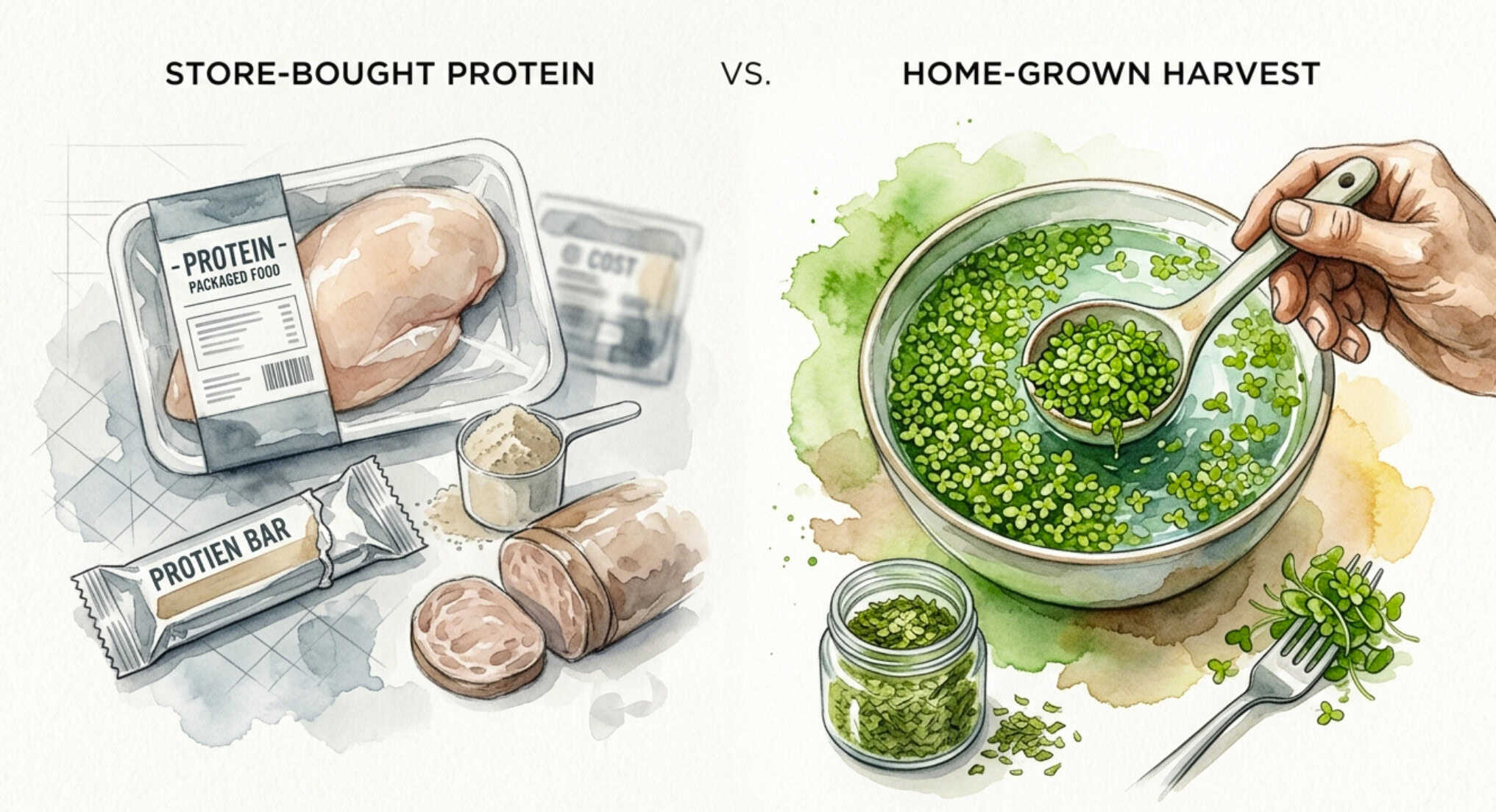
Is this tiny floating plant the future of home-grown nutrition? Forget the grocery store supply chain. This ‘weed’ has more protein than soy, more iron than spinach, and grows in your spare room. Meet the Water Lentil—your new secret to total food autonomy.
The pursuit of food sovereignty often leads practitioners toward traditional gardening or complex hydroponic systems. However, these methods frequently require significant land, time, and external inputs. Water lentils, taxonomically known as members of the Lemnoideae subfamily, offer a high-efficiency alternative for generating dense biomass in controlled environments.
This species represents a shift from conventional agriculture toward high-yield aquatic systems. For those seeking a reliable source of complete protein and micronutrients, understanding the mechanics of water lentil cultivation is essential. This guide provides the technical framework required to transition from a casual observer to a proficient producer of this nutrient-dense aquatic crop.

Growing Duckweed For Human Consumption
Water lentils, or duckweed, are the smallest flowering plants on Earth. They consist of a simple “frond” structure that lacks distinct stems or leaves. In nature, these plants populate still or slow-moving freshwater bodies, forming dense mats that cover the surface. While often categorized as a nuisance in decorative ponds, their biological efficiency makes them a premier candidate for human nutrition.
The term “Water Lentil” is frequently used in commercial contexts to distinguish edible varieties from wild-harvested pond scum. The most common species for human consumption include Lemna minor and Wolffia globosa. These plants are unique because they do not rely on complex root systems for nutrient uptake; instead, they absorb minerals directly through their fronds via specialized cells.
The primary appeal of this crop lies in its growth rate. Under optimal conditions, water lentils can double their biomass in 16 to 48 hours. This exponential growth profile allows for daily harvesting, providing a consistent supply of fresh protein. Unlike terrestrial crops that take months to reach maturity, a water lentil system operates as a continuous production line.
Biochemical analysis reveals that water lentils contain up to 45% protein by dry weight. This protein is considered “complete,” meaning it contains all nine essential amino acids required for human health. Additionally, they are rich in Vitamin B12, iron, and Omega-3 fatty acids, making them an ideal supplement for diets lacking animal-based nutrients.
Establishing a Cultivation System
Establishing a successful cultivation system requires precise control over the aquatic environment. Because water lentils absorb everything from their surroundings, the water quality and nutrient balance are the most critical factors for success. A typical home-scale system involves shallow grow beds, a light source, and a consistent nutrient delivery mechanism.
Grow Bed Configuration
Shallow containers are preferable for water lentil production. A depth of 4 to 6 inches (10 to 15 cm) is sufficient to support growth while maintaining thermal stability. Deeper reservoirs can be used, but they require more energy to heat and manage. The surface area is the primary metric for yield; a larger surface area equates to higher biomass production because the plants grow in a single-layer mat.
Nutrient Solutions
Water lentils require a balance of Nitrogen (N), Phosphorus (P), and Potassium (K), along with trace minerals. For human-grade production, food-safe hydroponic nutrients are mandatory. Avoid using pond water or untreated organic fertilizers like manure, as these introduce pathogens and heavy metals. A standard Hoagland solution or a modified hydroponic mix tailored for leafy greens typically yields the best results.
Lighting and Photoperiod
Indoor systems must replicate the solar spectrum. Full-spectrum LED grow lights are the most efficient option. Aim for a Photosynthetic Photon Flux Density (PPFD) of 200 to 400 µmol/m²/s. A photoperiod of 14 to 16 hours of light followed by 8 hours of darkness prevents light stress while maximizing the growth rate. Excessive light can cause bleaching, while insufficient light leads to slow growth and thin fronds.
Water Circulation
While water lentils thrive in still water, minor circulation prevents stagnant pockets and ensures even nutrient distribution. Use a low-flow air stone or a small submersible pump to create a gentle surface ripple. Avoid high-velocity currents, as these can submerge the fronds, leading to rot and reduced gas exchange.
The Production Process: From Inoculation to Harvest
The cultivation cycle begins with a clean starter culture. It is imperative to source “clean” duckweed from a laboratory or a reputable supplier specializing in human-grade aquatic plants. Wild-sourced plants may carry parasites, heavy metals, or competing algae species that are difficult to eradicate.
Inoculate the grow bed by spreading the starter culture evenly across the surface. Initially, the plants should cover about 50% of the surface area. This allows enough space for rapid expansion without overcrowding. As the plants multiply, they will eventually cover the entire surface, signaling the start of the harvest phase.

Harvesting should occur daily or every other day once the mat is established. Use a fine-mesh sieve to remove approximately 25% to 30% of the biomass. Removing this specific amount maintains the colony in the “exponential growth phase.” If the mat becomes too crowded, growth slows down because of nutrient competition and lack of physical space for new fronds to emerge.
Post-harvest processing is critical for safety. The harvested biomass must be rinsed thoroughly in filtered water to remove residual nutrient salts. For immediate consumption, blanching the water lentils in boiling water for 30 seconds neutralizes potential microbes and softens the cellular walls, making the nutrients more bioavailable. For long-term storage, the biomass can be dehydrated at low temperatures and ground into a fine green powder.
Benefits of Water Lentil Cultivation
The advantages of water lentils extend beyond their nutritional profile. They represent a significant leap in agricultural efficiency, particularly regarding resource management. When compared to traditional livestock or even terrestrial plant proteins, the metrics are starkly in favor of aquatic systems.
Efficiency of Space: Because the system can be stacked in vertical racks, a spare room can produce as much protein as an acre of soy. This makes water lentils the premier choice for urban environments where land is unavailable.
Water Conservation: In a closed-loop system, water loss is limited only to evaporation and the water contained within the harvested plants. This system uses roughly 90% less water than traditional soil-based agriculture to produce an equivalent amount of protein.
Sustainability and Input Control: The grower has absolute control over what goes into the food. There is no need for pesticides or herbicides in a controlled indoor environment. The speed of growth also means that any system crashes or contamination events can be rectified and restarted in a matter of days rather than seasons.
Year-Round Production: Unlike seasonal crops, water lentils do not require specific planting windows. As long as the temperature and light are maintained, the harvest remains constant, providing a reliable hedge against supply chain disruptions or seasonal food shortages.
Challenges and Common Pitfalls
While the growth process is straightforward, maintaining a stable culture for human consumption presents specific technical challenges. New practitioners often fail because they treat the system with the “set it and forget it” mentality used for ornamental ponds.
Contamination is the most significant risk. Because water lentils thrive in nutrient-rich water, so do algae and harmful bacteria. Cyanobacteria (blue-green algae) can produce toxins that are absorbed by the plants. Monitoring the water for clarity and odors is essential. If the water turns pea-green or develops a foul smell, the system must be drained, sterilized with a hydrogen peroxide solution, and restarted with a fresh culture.
Nutrient imbalance often leads to a “crash.” If the Nitrogen levels drop too low, the fronds will turn yellow (chlorosis) and lose their nutritional value. Conversely, excessive nutrients can lead to salt buildup, which burns the plants. Regular testing of the water’s Electrical Conductivity (EC) and pH levels is necessary to keep the system within the optimal range (pH 6.5–7.5).
Temperature fluctuations can also stall production. Water lentils prefer temperatures between 68°F and 86°F (20°C to 30°C). If the water exceeds 90°F, the plants may enter a dormant state or die off rapidly. In colder environments, a simple aquarium heater is usually sufficient to maintain the necessary thermal window.
Limitations and Realistic Expectations
Water lentils are a powerful tool for nutrition, but they are not a “magic bullet” that replaces all other food sources. Understanding the limitations of this crop is vital for integrated food planning. This plant is a source of protein and micronutrients, but it is low in calories and carbohydrates.
Environmental constraints also apply. An indoor system requires a constant supply of electricity for lighting and air pumps. In a long-term grid-down scenario, maintaining the necessary light levels would require a robust solar or battery backup system. Outdoor cultivation is possible but introduces risks of contamination from wild birds, insects, and airborne pollutants, making the harvest less suitable for direct human consumption without extensive processing.
Flavor is another consideration. Fresh water lentils have a mild, slightly peppery or “grassy” flavor, similar to watercress or spinach. While palatable, they are rarely consumed as a standalone meal. Most practitioners use them as an ingredient—adding them to smoothies, soups, or baked goods. Expecting them to replace a steak or a potato in terms of texture and culinary experience is unrealistic.
Nutritional Comparison: Water Lentils vs. Conventional Sources
To understand why water lentils are prioritized in food autonomy circles, it is helpful to compare their metrics against traditional high-protein and nutrient-dense crops. The table below outlines key differences based on dry weight averages.
| Metric (per 100g dry weight) | Water Lentils (Wolffia) | Soybeans | Spinach |
|---|---|---|---|
| Protein Content | 35% – 45% | 36% – 40% | 2.9% (fresh) |
| Essential Amino Acids | Complete Profile | Complete Profile | Incomplete |
| Iron Content | High (Bioavailable) | Moderate | High |
| Growth Cycle | 1 – 2 Days | 80 – 120 Days | 45 – 60 Days |
| Water Requirement | Very Low (Recycled) | High | Moderate |
Practical Tips for System Optimization
Achieving the maximum theoretical growth rate requires fine-tuning the system beyond the basic setup. Small adjustments in maintenance and biology can significantly increase your daily yield.
- Maintain Surface Tension: Ensure the fronds are always in a single layer. If they begin to stack on top of each other, the bottom layer will die from lack of light, causing a spike in ammonia and potential system failure.
- Weekly Water Resets: Even with nutrient dosing, certain trace minerals can deplete while others accumulate. Replace 20% of the system water weekly to reset the mineral balance.
- Harvest Strategy: Use a “continuous loop” harvest. Instead of taking one large harvest once a week, take a small amount every morning. This keeps the population density at the peak of the growth curve.
- Sterilization Protocol: Always wash your hands and tools before touching the water. Introducing skin oils or external bacteria can disrupt the delicate micro-ecosystem of the grow bed.
- CO2 Supplementation: If growing in a sealed room or grow tent, increasing the CO2 levels to 800-1000 ppm can boost growth rates by an additional 20% to 30%, as aquatic surface plants are highly responsive to atmospheric carbon.
Advanced Considerations for Serious Practitioners
For those looking to scale production or integrate water lentils into a larger homesteading system, advanced techniques like aquaponics and strain selection should be considered. Integrating duckweed into a fish-based aquaponic system allows the plants to act as a bio-filter, removing fish waste (nitrates) and turning it into edible biomass. This creates a circular system where the plants clean the water for the fish, and the fish provide the nutrients for the plants.
Genetic selection is another area for optimization. While you may start with a standard Lemna minor, you can select for specific traits over time. By selectively harvesting the smaller or slower-growing fronds and leaving the most robust, largest fronds to reproduce, you can “breed” a strain that is specifically adapted to your local water chemistry and lighting setup.
Processing for shelf-stability is the final frontier of advanced cultivation. Investing in a high-quality freeze-dryer preserves the maximum amount of Vitamin B12 and heat-sensitive enzymes. Freeze-dried water lentil powder can be vacuum-sealed and stored for years, providing a long-term survival protein source that occupies very little space.
Example Scenario: A 10-Square-Meter Home Setup
To visualize the practical output, consider a dedicated rack system occupying 10 square meters (approx. 107 sq. ft.) of floor space in a basement or spare room. Using five-tier shelving, the actual surface area for growth would be 50 square meters.
Under optimal conditions, water lentils can yield roughly 10 to 20 grams of dry biomass per square meter per day. In this 50-square-meter scenario, the daily yield would be approximately 500 to 1,000 grams (0.5 to 1 kg) of dry protein powder. This is enough to provide the full daily protein requirement for 10 to 15 adults from a single room.
The input costs for such a system would include approximately 600-800 watts of LED lighting, a small water pump, and roughly $20-$30 of nutrient salts per month. Compared to the cost of purchasing an equivalent amount of high-quality protein or leafy greens, the system pays for itself within the first few months of operation. This represents a level of nutritional density and ROI that is unmatched by almost any other agricultural endeavor.
Final Thoughts
Water lentils offer a mathematically superior path to food autonomy for those willing to master the technical requirements of aquatic cultivation. By leveraging the exponential growth of the Lemnoideae family, a practitioner can produce high-quality, complete protein in a fraction of the space required by traditional farming. The system is objective, data-driven, and highly scalable.
While the initial setup requires precision and an understanding of water chemistry, the long-term rewards are substantial. A consistent, daily harvest of nutrient-dense biomass provides a level of security that the grocery store supply chain cannot match. Whether used as a supplement or a primary protein source, the water lentil is a cornerstone of modern, efficient self-sufficiency.
Success in this field comes down to consistent monitoring and incremental optimization. Start with a small, manageable container to learn the nuances of your local water and environment. Once you have stabilized the culture and established a harvesting routine, scaling up to a full production rack is a simple matter of replication. The future of nutrition is not found in the field, but on the surface of the water.
Amazon and the Amazon logo are trademarks of Amazon.com, Inc, or its affiliates.