

What Effect Does Pond Dye Have On The Natural Food Chain In A Fish Pond?
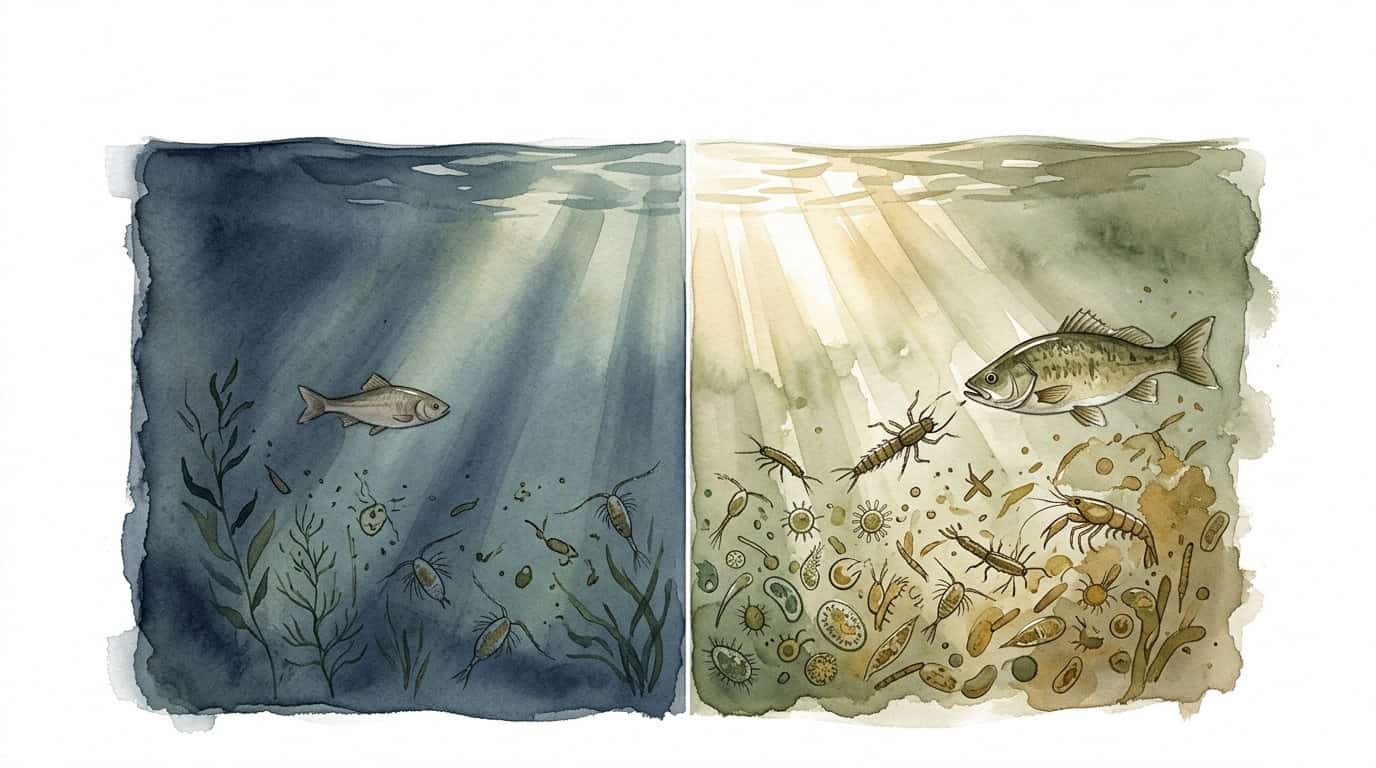
Pond dye affects the natural food chain by attenuating Photosynthetically Active Radiation (PAR), which suppresses the growth of phytoplankton, the primary producers at the base of the aquatic ecosystem. This reduction in base biomass limits the energy available for zooplankton, macroinvertebrates, and forage fish. Consequently, higher trophic levels experience lower growth rates and reduced recruitment due to a significant decrease in the overall biological productivity of the pond.
Is your ‘perfect’ blue pond actually a biological desert? We all love that crystal-blue look, but pond dye works by blocking UV rays—the very energy source your food chain depends on. When you starve the algae, you starve the insects, and eventually, the fish. Is the visual worth the ecological impact? Here is what the science says about balancing beauty and biology.
Managing a pond requires a precise understanding of how light energy translates into fish biomass. Introducing synthetic colorants is not merely a cosmetic choice; it is a mechanical intervention in the lake’s energy budget. Every gallon of dye added shifts the compensation depth—the point where oxygen production from photosynthesis equals oxygen consumption from respiration.
Biological systems rely on the 10-to-1 conversion rule. This metric suggests that ten pounds of nutrients produce one pound of phytoplankton, which in turn supports one pound of zooplankton, eventually yielding a fraction of a pound of apex predator fish. When a synthetic barrier limits the first step of this equation, the entire system must recalibrate its efficiency.

What Effect Does Pond Dye Have On The Natural Food Chain In A Fish Pond?
Pond dye is a concentrated liquid or powder colorant typically composed of Acid Blue 9 and Acid Yellow 23. These chemicals are highly effective at absorbing specific wavelengths of light, particularly in the red-orange and blue-violet spectra. In a natural environment, these wavelengths are critical for the photosynthesis of submerged plants and algae. By filtering these rays, the dye essentially places the pond in a state of “synthetic shading.”
In real-world applications, pond dye is utilized in golf course water hazards, ornamental garden ponds, and recreational lakes where aesthetic clarity is prioritized over maximum fish production. While the dye is chemically inert and non-toxic to aquatic life at standard dosages, its mechanical effect on light penetration serves as a growth inhibitor. It limits the volume of the “photic zone,” the layer of water where enough sunlight penetrates for plants to thrive.
Visualize the pond as a tiered energy factory. At the bottom, sunlight is the raw material. When you install a “filter” over the factory roof, the production of the base material—phytoplankton—slows down. This creates a ripple effect where every subsequent “department” or trophic level receives fewer resources to maintain its population. For a manager focusing on trophy fish, this reduction in primary productivity can be a significant mechanical bottleneck.
How Synthetic Shading Inhibits Biological Productivity
The process of light attenuation via pond dye follows the Beer-Lambert Law, which describes how the intensity of light decreases as it passes through a substance. In a dyed pond, the extinction coefficient of the water is artificially increased. This means that sunlight is absorbed much higher in the water column than it would be in clear or naturally turbid water.
This process directly impacts the “phytoplankton bloom,” a vital suspension of microscopic plants. These organisms are the primary consumers of dissolved nutrients like phosphorus and nitrogen. When light is restricted, these nutrients remain unutilized by beneficial algae, which can lead to a buildup of organic matter at the pond bottom. This creates a shift from an autotrophic-driven system (energy from light) to a heterotrophic-driven system (energy from decomposing matter).
Mechanical monitoring of this process is often conducted using a Secchi disk. In a productive fish pond, a Secchi reading of 18 to 24 inches is ideal for balancing food production and clarity. When dye is applied, the visibility may remain high in terms of clarity, but the “biological visibility”—the depth at which photosynthesis occurs—is severely truncated. This effectively compresses the habitable zone for organisms that rely on visual hunting or photosynthetic energy.

Benefits of Strategic Pond Dye Application
While the impact on the food chain is a primary concern, synthetic shading offers specific mechanical advantages for pond stability. One significant benefit is the reduction of thermal energy absorption in the lower water layers. By reflecting or absorbing light near the surface, the dye can help keep deeper water cooler, which is crucial because cooler water has a higher saturation point for dissolved oxygen.
Furthermore, pond dye serves as a visual barrier against avian and terrestrial predators. Herons, egrets, and otters rely on visual cues to locate fish. By reducing the transparency of the water from an overhead perspective, the dye provides a form of “passive defense” for high-value fish like koi or trophy bass. This can increase the survival rate of adult fish in environments with high predator pressure.
Additional advantages include:
- Suppression of filamentous algae and invasive submerged macrophytes that can clog aeration systems.
- Stabilization of water temperatures during peak summer months, reducing heat stress on sensitive species.
- Improvement of aesthetic value for commercial properties where “blue water” is an expected standard.
Challenges and Common Ecological Mistakes
The most frequent error in pond management is applying dye to a pond that already has an established algae bloom. When the dye blocks the light required by an existing bloom, the algae may undergo a massive “die-off.” As bacteria decompose this dead organic matter, they consume vast amounts of dissolved oxygen. This often leads to a “summer kill,” where fish suffocate due to an oxygen crash.
Another challenge is the timing of application. Applying dye in late spring after the “spring bloom” has already initiated the food chain can be counterproductive. The dye interrupts the peak production period for zooplankton, which are the primary food source for newly hatched fish fry. Without this initial food source, the recruitment rate of the pond—the number of fish that survive to adulthood—can plummet.
Management errors often stem from a lack of volume calculation. Dye dosage is calculated in acre-feet (surface area in acres multiplied by average depth). Over-application doesn’t just make the water darker; it can move the compensation depth so close to the surface that the pond’s net oxygen production becomes negative, requiring constant mechanical aeration to prevent stagnation.
Limitations and Environmental Constraints
Pond dye is ineffective in systems with high water exchange rates. If a pond has a constant inflow from a stream or a large watershed that flushes the basin during rain events, the dye will be diluted too rapidly to maintain a consistent light barrier. This makes it a poor choice for flow-through systems or ponds with frequent overflow.
Environmental trade-offs must also be considered. While dye suppresses “bad” weeds, it also suppresses beneficial native vegetation. These plants provide vital structural complexity and spawning substrate. A pond devoid of submerged vegetation due to excessive shading may suffer from a lack of “habitat niches,” leading to a more homogenized and less resilient ecosystem.
The presence of suspended clay or high natural tannins can also limit the effectiveness of dye. In these cases, the water is already “self-shaded.” Adding synthetic colorants to highly turbid water provides zero biological benefit and may even interfere with the chemical flocculants sometimes used to clear muddy water.
Synthetic Shading vs Natural Sunlight
Understanding the difference between a pond shaded by dye and one receiving full natural sunlight requires looking at efficiency metrics. Natural sunlight provides the full spectrum required for a diverse range of aquatic life, whereas synthetic shading selectively removes the wavelengths most efficient for carbon fixation.
| Metric | Natural Sunlight (Full) | Synthetic Shading (Dye) |
|---|---|---|
| Primary Productivity | High (Maximized Bloom) | Low (Suppressed Bloom) |
| Trophic Efficiency | Optimized 10:1 Ratio | Bottlenecked at Base |
| Surface Temperature | Variable (Heat Absorption) | Stabilized (Lower IR Penetration) |
| Dissolved Oxygen (Day) | High (O2 from Photosynthesis) | Lower (Less Plant O2 Production) |
| Predator Visibility | High (Easy for Herons) | Low (Visual Barrier) |
The choice between these two states depends on the primary goal of the pond owner. If the objective is a “high-yield” fishery, natural sunlight combined with controlled fertilization is the superior mechanical approach. If the goal is low-maintenance aesthetics and weed control, synthetic shading is more efficient.
Practical Tips for Maintaining Food Chain Balance
To use pond dye without destroying the food chain, managers should adopt a “partial shading” strategy. This involves applying dye at the minimum labeled rate to achieve a target Secchi depth of 30 to 36 inches. This allows enough light penetration for a modest phytoplankton population while still suppressing bottom-rooting weeds in deeper areas.
Mechanical aeration is a critical companion to pond dye. Because the dye reduces the pond’s natural ability to oxygenate itself via photosynthesis, a bottom-diffused aeration system should be used to maintain dissolved oxygen levels. This ensures that the aerobic bacteria responsible for breaking down nutrients remain active, preventing the buildup of “muck” that can result from suppressed plant growth.
- Apply dye in very early spring (late February to March) before water temperatures reach 55°F.
- Use “blended” dyes (blue and black) to achieve a more natural look while maximizing UV blocking.
- Monitor fish growth rates annually; if fish appear “stunted,” reduce dye concentration to allow more primary food production.
- Maintain a 20-30% “un-dyed” littoral zone if possible by using targeted spot treatments instead of whole-pond shading.
Advanced Considerations: PAR and Trophic Bottlenecks
For the serious practitioner, the impact of pond dye on PAR (Photosynthetically Active Radiation) is the most critical metric. Most aquatic dyes are designed to specifically target the 600-700nm range (red light). This is the peak absorption area for Chlorophyll-a. When this range is removed, the energy transfer efficiency of the pond drops, creating a “trophic bottleneck.”
In advanced aquaculture, this bottleneck is managed by providing supplemental feed. If you choose to dye a pond, you are essentially removing the “natural grocery store.” To maintain high fish populations, you must replace the missing natural calories with high-protein floating pellets. This shifts the pond from a self-sustaining ecosystem to a managed “feed-and-shading” system, which requires more intensive monitoring of nitrogenous waste.
Another consideration is the impact on phycobiliproteins. Some species of cyanobacteria (blue-green algae) have evolved to use green and yellow light more efficiently than “good” green algae. In some cases, over-dying a pond can accidentally give a competitive advantage to toxic cyanobacteria that can thrive in the altered light conditions, leading to unexpected harmful algal blooms (HABs).
Example: Impact on a Sport Fish Pond
Consider a 1-acre farm pond managed for Largemouth Bass and Bluegill. Under natural conditions with a healthy plankton bloom, the pond might support 300 lbs of Bluegill and 50 lbs of Bass. If pond dye is applied heavily to stop weed growth, and the Secchi depth is reduced to 12 inches of “blue water,” the phytoplankton biomass may drop by 60%.
Following the 10-to-1 rule, this 60% reduction at the base eventually results in a 60% reduction in the carrying capacity of the predators. Over two seasons, the Bass growth rate may slow from 1 lb per year to 0.4 lbs per year. The manager would observe “skinny” fish with large heads, a classic sign of a food chain interruption caused by insufficient primary productivity.
Conversely, if the manager uses the dye only to suppress weeds in the deep center while keeping the shallow “flats” clear for light penetration, the impact on the food chain is minimized. This “zonal management” allows the pond to benefit from weed suppression without collapsing the biological base.
Final Thoughts
Pond dye is a powerful tool for controlling the aesthetics and vegetation of an aquatic system, but it comes at a measurable biological cost. By artificially limiting the light energy that enters the water column, the dye slows the rate of primary production, which can lead to a less productive and less diverse food chain. For ponds where the visual appearance is the primary metric of success, this trade-off is often acceptable.

For those managing a pond for fish health and growth, the use of dye must be balanced with supplemental aeration and potentially supplemental feeding. The goal is to move from a “reactive” management style—adding dye to fix a weed problem—to a “proactive” style where the light budget is carefully monitored and adjusted. Understanding the mechanical relationship between light, algae, and fish is the key to a successful impoundment.
Ultimately, a healthy pond is a balance of inputs and outputs. If you choose to limit the energy input of sunlight, you must be prepared to manage the downstream effects on the ecosystem. Experimenting with different concentrations and observing the response of the “bloom” will help you find the “sweet spot” where beauty and biology coexist.
Frequently Asked Questions About What Effect Does Pond Dye Have On The Natural Food Chain In A Fish Pond?
How does pond dye specifically affect the 10-to-1 food chain conversion ratio?
The 10-to-1 ratio represents the energy transfer efficiency between trophic levels. Since pond dye blocks the wavelengths of light required for photosynthesis, it reduces the total mass of phytoplankton produced. If the base of the pyramid is reduced by 50% due to light limitation, there is 50% less energy available for zooplankton. This bottleneck continues up the chain, meaning the pond can physically support fewer pounds of forage fish and predators. It doesn’t change the ratio itself, but it drastically reduces the “starting number” at the bottom of the calculation.
Does pond dye significantly reduce dissolved oxygen levels during peak summer?
Pond dye can indirectly reduce dissolved oxygen (DO) levels. In a healthy pond, much of the daytime oxygen is produced by algae and plants through photosynthesis. By inhibiting this process, the dye reduces the amount of “new” oxygen entering the water. Furthermore, if dye is applied to an active bloom, the resulting die-off of organic matter leads to increased bacterial respiration, which can consume DO rapidly. While the dye keeps the water cooler (which helps hold more oxygen), the net effect is often a reduction in daytime oxygen peaks, making aeration essential.
Can certain algae species adapt to the light filtering provided by pond dyes?
Yes, some species, particularly certain cyanobacteria (blue-green algae), possess specialized pigments called phycobiliproteins. These pigments allow them to capture light in the green and yellow parts of the spectrum that blue dyes do not block as effectively as red light. This can create an ecological imbalance where “beneficial” green algae are suppressed because they rely heavily on the red-blue spectra, while less desirable cyanobacteria thrive. This is why some managers notice that a dyed pond may still develop “scum” or off-flavor issues despite the water looking blue.
What is the impact of synthetic shading on the survival rate of newly hatched fish fry?
Newly hatched fish fry rely almost entirely on “rotifers” and small zooplankton for their first few weeks of life. These zooplankton, in turn, feed on specific types of phytoplankton. When pond dye is applied heavily in the early spring, it can suppress the “spring bloom” of phytoplankton. This leads to a crash in the zooplankton population just as the fish fry are hatching. Without this critical protein source, the “recruitment” of new fish into the population can fail, leading to a gap in the pond’s age structure and eventual population decline.
How does pond dye influence the thermal stratification of a small impoundment?
Pond dye increases the absorption of solar energy in the top few feet of the water column. This results in the surface water warming more quickly while the deeper water remains significantly cooler and shaded. This intensifies “thermal stratification,” creating a sharp “thermocline” where the warm upper layer (epilimnion) does not mix with the cold bottom layer (hypolimnion). While this can protect fish from heat, it also means the bottom water can become “anoxic” (devoid of oxygen) more quickly, as it is cut off from surface mixing and photosynthesis.