

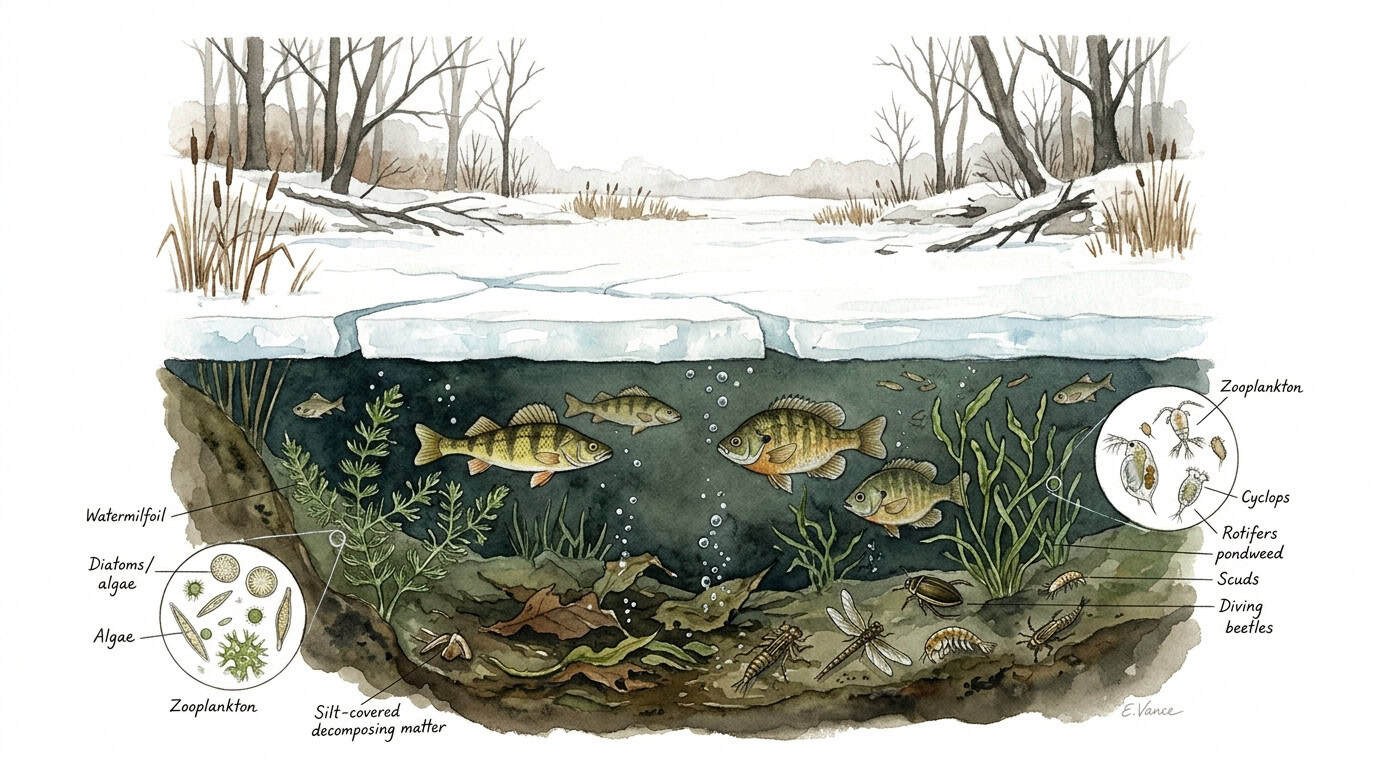
Winter pond biology is a system of slowed metabolic rates and thermal stratification governed by the physical properties of water. Under the ice, water reaches its maximum density at 4°C (39.2°F) and sinks to the bottom, creating a stable thermal refuge for aquatic life. While surface ice provides insulation, it also halts gas exchange, requiring maintained openings to prevent the accumulation of toxic gases and ensure sufficient dissolved oxygen levels for overwintering organisms.
The pond isn’t dead; it’s just in slow motion. Most people think winter means the pond ‘stops’. The truth is much more fascinating. Life continues in a delicate balance of oxygen and gases. Here is how to help your pond breathe in the cold.
Understanding the mechanics of a frozen ecosystem is essential for any serious practitioner. Managing a pond during the winter months requires more than just keeping a hole in the ice; it requires an understanding of the chemical and physical shifts that occur when the atmosphere is sealed off. The ‘Dormant’ Myth vs The Living Reality highlights that while activity is minimized, biological processes such as decomposition and respiration continue to consume resources.
Winter Pond Biology: What Happens Under the Ice?
Winter pond biology is defined by the transition from an open, mixing system to a closed, stratified system. When air temperatures drop, the surface water cools and becomes denser, eventually reaching its maximum density at 4°C. This dense water sinks to the benthic zone, while colder, less dense water (approaching 0°C) remains at the surface to eventually freeze. This anomaly in water density is the primary reason why ponds do not freeze from the bottom up, allowing fish and other organisms to survive in the relatively warmer 4°C layer at the bottom.

In real-world applications, this stratification creates a refuge for poikilothermic (cold-blooded) organisms. However, once a solid layer of ice forms, the pond becomes a closed vessel. Atmospheric oxygen can no longer diffuse into the water, and metabolic byproducts such as carbon dioxide, methane, and hydrogen sulfide can no longer escape. The biology of the pond then shifts from a state of production to a state of slow, calculated consumption.
How Thermal Stratification and Gas Exchange Work
The physical structure of the water column changes as temperatures fall. Understanding this process is critical for mechanical optimization of aeration systems.
The Density Anomaly and Stratification
Water is unique because its solid state is less dense than its liquid state at 4°C. This allows the formation of an insulating ice sheet.
- Epilimnion: The top layer, which stays near 0°C (32°F) and eventually turns into ice.
- Metalimnion/Thermocline: The transition zone where temperature changes rapidly.
- Hypolimnion: The bottom layer, which remains at 4°C (39.2°F). This is where fish spend the majority of their winter.
Metabolic Depression (Torpor)
Fish and invertebrates enter a state of torpor, a physiological state where metabolic rates are suppressed to conserve energy. The Q10 temperature coefficient—the factor by which a biological process rate changes for every 10°C change in temperature—is a key metric here. In koi and goldfish, metabolic activity can drop by 50% or more when moving from 15°C to 5°C. During this phase, the heart rate slows, digestion virtually stops, and the immune system becomes less active.
Gas Diffusion Metrics
Gas exchange at the surface is governed by Fick’s Law of Diffusion. Without an open area of water, the concentration of dissolved oxygen (DO) begins to deplete. Conversely, the partial pressure of waste gases increases. For instance, anaerobic decomposition of organic muck at the bottom continues to release methane and hydrogen sulfide even in freezing conditions.
The Biological Advantages of Winter Dormancy
The primary benefit of the winter cycle is the conservation of energy and the natural culling of weaker organisms, which maintains long-term population health.

Energy Efficiency
By entering torpor, aquatic organisms reduce their caloric requirements to almost zero. This allows them to survive on stored fats (lipids) for several months without external food sources. Attempting to feed fish during this time is counterproductive, as their digestive enzymes are largely inactive at temperatures below 10°C (50°F).
Oxygen Solubility at Low Temperatures
Cold water has a significantly higher capacity for holding dissolved oxygen than warm water.
| Temperature (°C) | DO Saturation (mg/L at 1 atm) |
|---|---|
| 0 | 14.62 |
| 4 | 13.11 |
| 10 | 11.29 |
| 20 | 9.09 |
This higher saturation potential provides a “buffer” that buys the pond time before oxygen levels reach critical hypoxic thresholds.
Common Challenges and Pitfalls in Winter Management
Maintaining a healthy pond in winter is prone to several technical errors that can lead to “winterkill”—the mass mortality of fish due to environmental stress.
Winterkill and Hypoxia
Winterkill occurs when the oxygen demand of the pond’s biomass and decomposing organic matter exceeds the available dissolved oxygen supply. This is most common in shallow ponds with high organic loads (muck). Snow cover on ice worsens this by blocking sunlight, which prevents any remaining algae or aquatic plants from performing photosynthesis to produce oxygen.
Gas Toxicity
If waste gases cannot vent through a hole in the ice, they reach toxic concentrations. Hydrogen sulfide (H2S), characterized by a rotten-egg smell, is highly lethal to fish even at low concentrations. It interferes with cellular respiration, effectively suffocating the fish even if oxygen is technically present.
Mechanical Over-Cooling
One of the most frequent mistakes is placing aerator diffusers too deep in the pond. This disrupts the 4°C bottom layer, mixing the warmer water with the sub-freezing surface water. This process, known as “super-cooling,” can drop the entire pond temperature to near 0°C, which is often fatal for species like koi that require that 4°C refuge.
Limitations of Winter Pond Survival
Biological and physical constraints dictate the limits of what a pond can support during the winter months.
Pond Depth Constraints
Ponds shallower than 3–4 feet (depending on the climate zone) are at high risk of freezing solid or losing their thermal stratification. Without a sufficient volume of 4°C water, the benthic life has no refuge. Deep ponds (8+ feet) are significantly more stable but require specialized aeration strategies to ensure gas exchange reaches the lower depths without causing thermal inversion.
Climate Zone Variability
In regions with sustained sub-zero temperatures (Zone 4 and lower), the energy required to keep a hole open increases exponentially. In these areas, passive methods like floating logs or standard aerators may fail, necessitating high-wattage pond heaters/de-icers.
Comparing Management Tools: Aerators vs. De-Icers
Deciding between an aeration system and a de-icer depends on the primary goal: oxygenation vs. gas venting.
| Metric | Pond Aerator | Pond De-Icer (Heater) |
|---|---|---|
| Primary Function | Active Oxygenation & Agitation | Thermal Hole Maintenance |
| Energy Consumption | Low (15–60 Watts) | High (100–1500 Watts) |
| Operational Strategy | Mechanical Agitation | Electrical Resistance Heating |
| Best For | High fish loads/Large Ponds | Severe ice/Small Ponds |
| Risk Factor | Can super-cool if too deep | High cost; doesn’t add oxygen |
Practical Tips and Best Practices
Optimization of winter pond systems requires adherence to specific mechanical and biological guidelines.
- Diffuser Placement: Set aerator diffusers at approximately 25% to 50% of the pond’s total depth. This maintains an open hole and adds oxygen while leaving the bottom thermal layer undisturbed.
- Snow Removal: Keeping the ice clear of snow allows sunlight to penetrate. This supports the survival of submerged plants and algae, which can provide a small but vital amount of supplemental oxygen.
- Hole Maintenance: Never strike the ice with a hammer or heavy object to create a hole. The resulting shockwaves (pressure waves) can damage the sensitive swim bladders and lateral line systems of dormant fish. Use boiling water or a dedicated de-icer to melt through.
- Pre-Winter Cleanup: Removing excess leaf litter and organic debris in the fall reduces the biological oxygen demand (BOD) and limits the production of toxic methane during the winter.
Advanced Considerations: Calculating Oxygen Depletion
For the advanced practitioner, calculating the rate of oxygen depletion can predict the risk of winterkill. The total amount of dissolved oxygen available is the product of the pond volume and the saturation level (mg/L).
In a 10,000-gallon pond (approx. 37,854 liters) at 4°C, the total available oxygen is roughly 496 grams (13.1 mg/L × 37,854). If the combined respiration of fish and bacteria consumes 5 grams per day, the pond has approximately 99 days of oxygen if completely sealed. However, once DO levels drop below 3 mg/L, most pond fish enter critical stress. Therefore, the “safety window” is actually much shorter, highlighting why mechanical gas exchange is a non-negotiable requirement for high-density koi ponds.
Final Thoughts
Winter pond biology is a testament to the resilience of aquatic ecosystems. While the surface may appear dormant, the complex interaction of thermal density, gas diffusion, and metabolic suppression ensures that life persists under the most extreme conditions. Successful management hinges on respecting the 4°C thermal refuge while facilitating the essential exchange of gases through the ice barrier.
By implementing strategic aeration and maintaining a clear vent for toxic byproducts, pond owners can prevent the common pitfalls of hypoxia and gas toxicity. Understanding these technical metrics allows for a proactive rather than reactive approach to pond care. Ultimately, the goal is to provide a stable, oxygenated environment that allows the biological system to resume full activity as temperatures rise in the spring.
Frequently Asked Questions About Winter Pond Biology: What Happens Under the Ice?
Why do fish stay at the bottom of the pond during winter?
Fish congregate at the bottom of the pond because of the density anomaly of water. Fresh water is densest at 4°C (39.2°F), and this dense water sinks to the deepest part of the pond, creating a stable thermal layer. The water near the frozen surface is actually colder (closer to 0°C) and less dense. For poikilothermic animals like koi and goldfish, this bottom layer is the warmest and most stable environment available, allowing them to maintain a baseline metabolic rate without freezing. Staying in this refuge is a critical survival strategy to avoid the sub-freezing temperatures found immediately under the ice sheet.
Is it necessary to feed fish when the pond is frozen?
Feeding fish when water temperatures are below 10°C (50°F) is biologically detrimental. As the water cools, a fish’s metabolism slows significantly, and their production of digestive enzymes decreases or ceases entirely. Food consumed during this time can sit in the gut without being digested, leading to bacterial infections, rot, and potential mortality. Most pond fish possess sufficient lipid (fat) stores to survive the winter without external food sources. It is technically more efficient to let the fish rely on their stored energy than to risk polluting the water with undigested protein and waste.
Does a hole in the ice provide enough oxygen for all the fish?
A hole in the ice serves two primary functions: allowing atmospheric oxygen to diffuse into the water and allowing toxic gases like carbon dioxide and methane to escape. While a single hole may be sufficient for small ponds with low fish loads, it may not be enough for larger or overstocked ponds. The rate of gas exchange is limited by the surface area of the opening. Using an aerator in conjunction with a de-icer increases the efficiency of this exchange by physically moving oxygenated water and keeping the opening larger through mechanical agitation, which is essential for high-biomass systems.
What is “winterkill,” and how can I prevent it?
Winterkill is the mass death of aquatic life caused by the depletion of dissolved oxygen or the accumulation of toxic gases under ice. It typically occurs when a pond is completely sealed by ice and snow, preventing photosynthesis and gas exchange. To prevent this, you must maintain an opening in the ice throughout the season. Furthermore, removing snow from the ice can help by allowing light to reach submerged plants, enabling them to produce oxygen through photosynthesis. Reducing the amount of organic “muck” at the bottom before winter also helps by lowering the biological oxygen demand (BOD).

Can I use a standard water pump to keep a hole open in the ice?
Using a standard water pump or waterfall pump is generally not recommended as the primary winterization strategy. While a pump moving water toward the surface can keep an area open, it often causes excessive splashing, which leads to “super-cooling.” This happens when the 4°C bottom water is mixed with freezing air, dropping the entire pond’s temperature toward 0°C and potentially killing the fish. Additionally, if the pump’s intake or lines freeze, the pump can burn out or even drain the pond if a leak develops in an ice dam. A dedicated aerator or floating de-icer is a much more technically sound solution.