

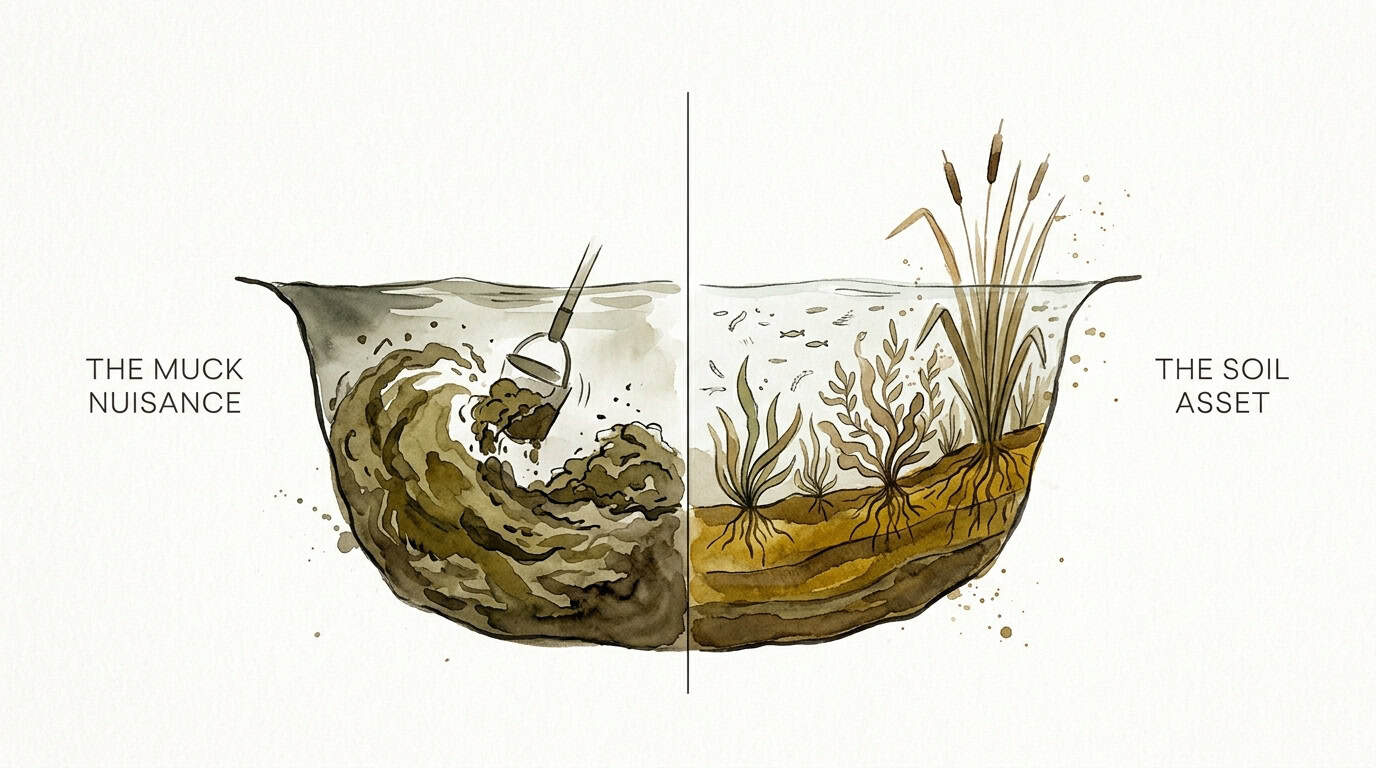
Whether to remove pond sediment or manage it naturally depends on the sediment’s composition and the pond’s functional requirements. Mechanical removal is necessary when inorganic silt significantly reduces water volume or structural integrity. Natural management via bio-augmentation and aeration is superior for organic muck, as it cost-effectively reduces nutrient loading and prevents eutrophication without the high mobilization costs and ecological disruption associated with dredging equipment.
That ‘gross’ pond muck is actually liquid gold. Sediment isn’t waste; it’s a concentrated cocktail of organic nutrients. Whether you digest it in the pond with microbes or harvest it for your garden, stop treating it like trash.
Managing a water body requires understanding the distinction between mechanical siltation and biological muck. Ponds naturally act as basins for every organic and inorganic particle that enters the watershed. Over decades, this accumulation transitions from a thin film to a thick, anaerobic layer that dictates the chemistry of the entire system.
Practitioners must choose between the immediate, energy-intensive process of dredging or the gradual, biologically-driven process of bioremediation. This decision impacts long-term maintenance budgets and the overall ecological stability of the aquatic environment.

Should You Remove Pond Sediment or Manage It Naturally?
Pond sediment is a heterogenous mixture of inorganic minerals—such as sand, clay, and silt—and organic detritus, including decaying aquatic plants, leaf litter, and fish waste. Understanding the ratio between these components is the first step in determining a management strategy.
Inorganic sediment enters the pond primarily through shoreline erosion and surface runoff. Once these heavy particles settle, they cannot be broken down biologically. If your pond is losing depth due to sand and clay, mechanical removal is the only viable solution to restore original basin capacity.
Organic muck, often referred to as “the benthic layer,” is a different challenge. This material is primarily carbon-based and serves as a massive nutrient reservoir. Left unmanaged, it undergoes anaerobic decomposition, releasing hydrogen sulfide (H2S) and methane (CH4), while fueling massive algae blooms through internal phosphorus loading. In these cases, natural management through aerobic digestion is often more efficient than physical extraction.
Real-world applications of these strategies vary based on pond use. A stormwater retention pond in an urban setting often requires mechanical dredging to maintain flood control capacity. Conversely, a recreational koi pond or a farm pond is a better candidate for natural management to maintain water clarity and fish health.
Mechanism of Sediment Accumulation and Decomposition
The rate at which sediment accumulates is a function of the pond’s watershed ratio and its internal biological productivity. A pond with a high watershed-to-surface-area ratio will experience faster sedimentation due to increased runoff.
The Aerobic Pathway
Aerobic decomposition occurs in the presence of dissolved oxygen. Bacteria such as Bacillus subtilis utilize oxygen as an electron acceptor to oxidize organic carbon into carbon dioxide and water. This process is highly efficient and occurs at the sediment-water interface where oxygen levels are highest.

Maintaining a dissolved oxygen (DO) concentration above 5 mg/L at the bottom of the pond is critical for this pathway. When aerobic conditions are met, organic muck can be reduced at a rate of 1 to 2 inches per month depending on temperature and microbial density.
The Anaerobic Pathway
When oxygen is depleted—a common occurrence in the deep zones of stratified ponds—anaerobic bacteria take over. These organisms use nitrate, sulfate, or carbon dioxide as electron acceptors. This process is significantly slower than aerobic digestion.
Anaerobic decomposition leads to the accumulation of partially decomposed organic matter, which increases the “soft” sediment depth. It also results in the release of orthophosphates back into the water column, creating a feedback loop that promotes further algae growth and subsequent muck accumulation.
Mechanical Removal: Dredging Methods and Logistics
When the benthic layer reaches a depth where it interferes with the pond’s primary function, mechanical removal becomes necessary. This is a high-cost, high-impact intervention.
Mechanical Excavation (Dry Dredging)
Mechanical excavation involves draining the pond and using standard heavy equipment, such as excavators or front-end loaders, to scoop out the sediment. This method is the most thorough, as it allows operators to see the original pond floor and remove both organic and inorganic material.
The primary disadvantage is the total disruption of the aquatic ecosystem. Fish must be relocated, and the pond must be completely dewatered, which can take weeks depending on soil conditions and weather. Costs for this method typically range from $20 to $60 per cubic yard, plus mobilization fees.
Hydraulic Dredging (Wet Dredging)
Hydraulic dredging uses a floating barge equipped with a cutterhead and a powerful suction pump. The cutterhead agitates the sediment, creating a slurry that is pumped through a pipeline to a dewatering site.
This method is less disruptive to the ecosystem as it does not require draining the pond. However, it generates a high volume of water-rich slurry that requires significant land area for dewatering. The efficiency of hydraulic dredging is measured in gallons per minute (GPM) and the percentage of solids in the slurry, which usually averages between 10% and 20%.
Natural Management: Bioremediation and Bio-augmentation
Natural management, often called “bio-dredging,” focuses on accelerating the biological breakdown of organic matter. This approach is proactive rather than reactive.
Microbial Inoculation
Bio-augmentation involves the regular addition of concentrated bacterial blends and enzymes. These products are designed to out-compete opportunistic pathogens and rapidly consume the organic carbon in the muck layer.
For maximum efficiency, these microbes are often delivered in pellet form, allowing them to sink directly into the sediment where they are most needed. Dose rates for professional-grade probiotics like MuckBiotics typically average 33 lbs per acre per month during the growing season.
Aeration as a Catalyst
Microbes require oxygen to function at peak metabolic rates. Bottom-diffused aeration systems are the primary tool for natural management. By pumping compressed air to diffusers on the pond floor, these systems break the thermocline and ensure the entire water column is oxygenated.
Increasing the redox potential at the sediment interface prevents the chemical release of phosphorus, effectively “locking” it in the sediment while the bacteria digest the organic portion of the muck.
Benefits of Natural Management
Choosing natural management over dredging offers several measurable advantages in terms of cost and ecological stability.
* Cost Efficiency: Bio-augmentation programs generally cost a fraction of a dredging project. While dredging a one-acre pond might cost $25,000 to $40,000, a comprehensive annual biological program might cost only $1,500 to $3,000.
* Nutrient Reduction: Biological management actively removes the nitrogen and phosphorus stored in the muck, whereas dredging simply moves the problem to a disposal site.
* Minimal Disruption: There is no need for heavy equipment, road damage from hauling trucks, or the destruction of shoreline landscaping.
* Sustainability: Natural management addresses the cause of the muck—excessive organic loading—rather than just the symptom.
Challenges and Common Mistakes
The most frequent error in pond management is failing to distinguish between muck and silt. Many pond owners invest thousands in bacterial treatments only to find that the “muck” is actually clay or sand that will never disappear biologically.
Another common pitfall is the “set it and forget it” mentality with aeration. If an aeration system is sized incorrectly for the pond’s depth or volume, it may fail to provide enough oxygen to support the aerobic bacteria, leading to stagnant results.
Temperature also plays a critical role. Microbial activity slows down significantly when water temperatures drop below 50°F (10°C). Attempting to “bio-dredge” in the winter is an inefficient use of resources and capital.
Limitations of Natural Management
Natural management is not a universal solution. There are specific environmental and physical constraints where this method fails.
If a pond has lost 50% or more of its original depth to inorganic silt, biological treatments will not restore the capacity. The volume of inorganic material is physically taking up space, and no amount of bacteria can “eat” a rock or a grain of sand.

Furthermore, ponds with extremely high flow-through rates (such as those fed by large streams) may wash away microbial treatments before they can colonize the benthic layer. In these high-flushing systems, the contact time between the bacteria and the sediment is too short for significant digestion to occur.
Comparative Analysis: The Muck Nuisance vs The Soil Asset
The following table compares the two primary approaches based on operational metrics.
| Factor | Mechanical Removal (Dredging) | Natural Management (Bioremediation) |
|---|---|---|
| Initial Cost | High ($15,000 – $75,000+) | Low ($500 – $3,000) |
| Time to Result | Immediate (Days/Weeks) | Gradual (Months/Years) |
| Ecological Impact | High (Total reset) | Low (Stable improvement) |
| Target Material | All (Inorganic + Organic) | Organic Only |
| Long-term Maintenance | Requires periodic repeat | Ongoing preventative process |
Practical Tips for Practitioners
To optimize pond sediment management, follow these technical best practices:
* Perform a Muck Survey: Use a “Sludge Judge” or a graduated pole to measure the depth of soft sediment at 10-15 points across the pond. This establishes a baseline for measuring progress.
* Test for Organic Content: Send a sediment sample to a lab for “Loss on Ignition” (LOI) testing. If the organic content is higher than 20%, bio-augmentation will likely be effective.
* Monitor Dissolved Oxygen: Use a DO meter to ensure that bottom-water oxygen levels stay above 3 mg/L. Below this threshold, aerobic digestion stops.
* Control External Loading: Install riparian buffers (tall grass or plants) around the pond to filter out grass clippings and leaves before they reach the water.
The Nutrient Profile: Harvesting for Soil Health
If you choose to remove sediment mechanically, do not treat the spoils as waste. Pond sediment is a highly effective soil amendment. Research indicates that pond silt typically contains 0.1% to 0.5% total nitrogen and up to 0.6% phosphorus.
The Carbon-to-Nitrogen (C/N) ratio of pond muck usually falls between 15:1 and 25:1, which is ideal for plant availability. Additionally, the high iron content in many pond sediments helps bind phosphorus in a form that is slowly released to plant roots, acting as a natural slow-release fertilizer.
When applying dredged material to land, it is essential to allow it to dewater and “mellow” for several months. This allows any salts or anaerobic byproducts to leach out or oxidize before the material is incorporated into garden or agricultural soil.
Examples and Scenarios
Consider a 1-acre pond with an average of 12 inches of organic muck. The total volume of muck is approximately 1,613 cubic yards.
If you choose mechanical dredging at $30 per yard, the cost would be $48,390, excluding mobilization and disposal.
If you choose natural management, you might apply 30 lbs of microbial pellets per month for 6 months, costing approximately $1,200 in product and $500 in labor/equipment. If the bacteria reduce the muck by 6 inches in the first season (a realistic metric for high-organic systems), you have effectively “removed” 806 cubic yards of material for $1,700—a cost of just $2.11 per cubic yard.
Final Thoughts
Effectively managing pond sediment requires a move away from the “out of sight, out of mind” philosophy. By treating sediment as a manageable biological component rather than a permanent waste product, pond owners can maintain healthier, deeper water bodies at a lower cost.
The choice between removal and natural management is not always binary. Many successful practitioners use a hybrid approach: dredging to restore structural depth, followed by a permanent bio-augmentation and aeration program to prevent the muck from ever returning to problematic levels.
Ultimately, data-driven decisions based on sediment testing and volumetric surveys will yield the best return on investment. Stop viewing your pond bottom as trash and start managing it as the valuable nutrient asset it truly is.
Frequently Asked Questions About Should You Remove Pond Sediment or Manage It Naturally?
How do I know if my pond muck is organic or inorganic?
To differentiate between organic muck and inorganic silt, you can perform a simple “jar test” or a professional “Loss on Ignition” (LOI) laboratory analysis. For a DIY approach, take a sample of the sediment and place it in a clear jar with water, shake it, and let it settle. Inorganic materials like sand and silt will settle quickly and maintain their structure, while organic muck is light, dark, and often has a visible “fluffy” appearance. A professional LOI test measures the weight of the sample before and after heating it to high temperatures; the weight lost represents the organic fraction. If the organic content is above 20-30%, natural management through bio-augmentation is likely to be successful.
Can I use a pond vacuum to remove sediment instead of dredging?
Pond vacuums are highly effective for small, ornamental water features and koi ponds where the sediment volume is relatively low. They allow for the targeted removal of leaf litter and fish waste without the need for heavy machinery. However, for ponds larger than 0.25 acres or those with sediment depths exceeding 6 inches, a standard pond vacuum is generally inefficient. The limited flow rate and small intake diameters of consumer-grade vacuums make them unsuitable for large-scale sediment management. In larger systems, you must choose between a professional hydraulic dredge or a long-term biological treatment plan.
How long does it take for bacteria to reduce pond muck?
Biological muck reduction is a gradual process that depends on water temperature, oxygen levels, and the organic content of the sediment. Under optimal conditions—water temperatures above 65°F and dissolved oxygen levels above 5 mg/L—you can expect a reduction of 1 to 2 inches of organic muck per month. It is important to note that this process has a “lag phase” while the microbial colonies establish themselves. Most practitioners see significant results after one full growing season of consistent treatment. If the sediment is highly compacted or has a high inorganic content, the reduction rate will be significantly slower.
Is pond sediment safe to use in my vegetable garden?
In most residential and agricultural settings, pond sediment is an excellent soil amendment rich in nitrogen, phosphorus, and organic carbon. However, caution is required if the pond receives runoff from urban streets, industrial sites, or heavily treated lawns. These sediments can accumulate heavy metals (like lead and copper) or persistent pesticides. Before applying large quantities of dredged material to food crops, it is technically prudent to test the sediment for heavy metals and hydrocarbons. If the pond is a clean, natural system, the sediment can improve soil structure, increase water retention, and provide a slow-release nutrient source for your plants.
Does aeration alone remove pond muck?
Aeration does not physically remove muck, but it acts as a critical catalyst for the natural decomposition process. By increasing the dissolved oxygen at the pond bottom, aeration shifts the environment from an anaerobic state to an aerobic one. This allows the native aerobic bacteria to function significantly faster and more efficiently. While aeration alone can slow the accumulation of new muck and slightly reduce existing layers over several years, it is most effective when paired with bio-augmentation (adding supplemental bacteria). The combination of high oxygen levels and a high-density microbial population provides the fastest possible “bio-dredging” results.