

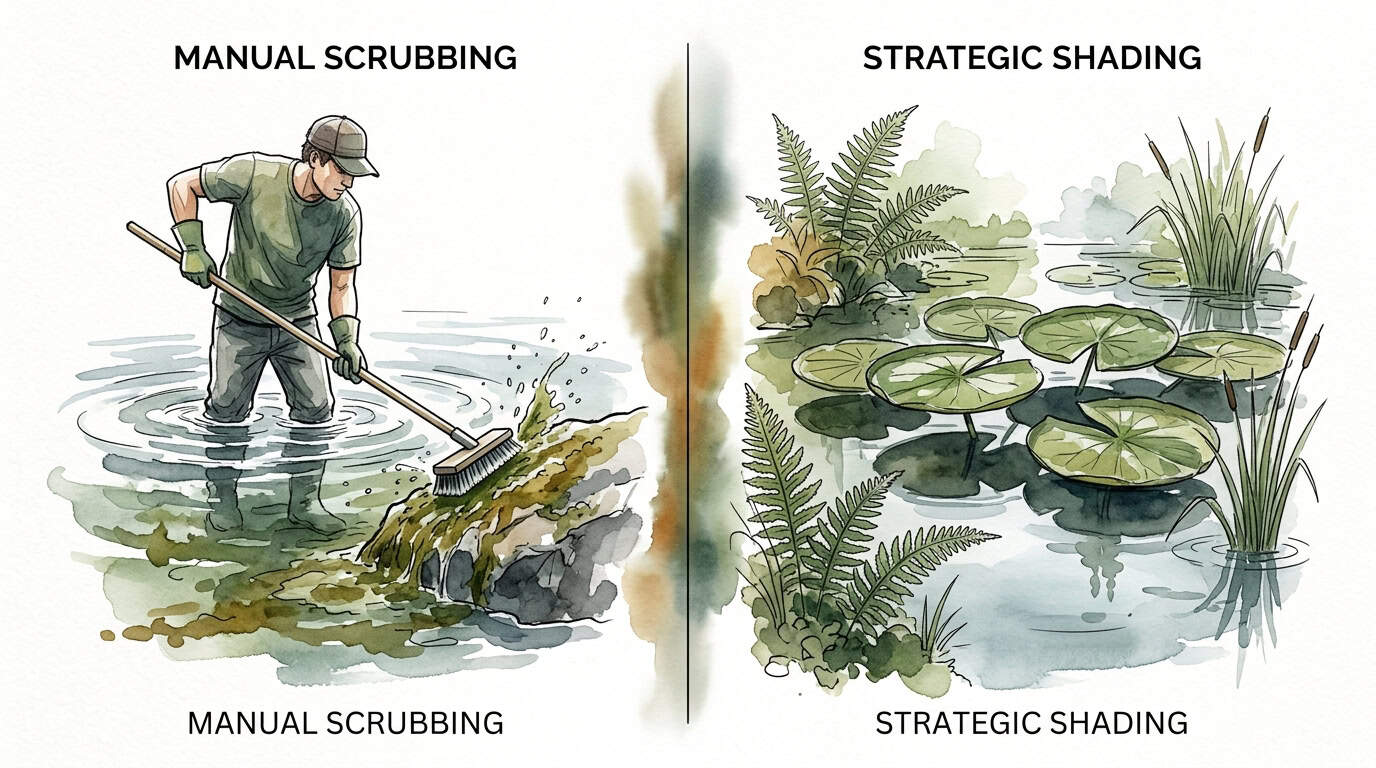
Why spend your weekends scrubbing rocks when a few well-placed lily pads can starve the algae for you? Manual scrubbing is a temporary fix that leaves you exhausted. Algae thrives on sunlight and excess nutrients. Introducing floating plants strategically blocks the light and absorbs the food algae needs to grow. It is time to work with nature’s design instead of fighting it with a brush.
Establishing a balanced pond ecosystem requires a shift from reactive maintenance to proactive mechanical and biological optimization. Traditional pond care often relies on the physical removal of filamentous algae, a process known as manual scrubbing. This method is labor-intensive and fails to address the root causes of algal proliferation: high solar irradiance and elevated nutrient concentrations. Implementing a strategy of strategic shading and nutrient sequestration provides a more efficient, long-term solution.
Natural Pond Algae Control Methods
Natural pond algae control refers to the use of biological and physical mechanisms to suppress the growth of phytoplankton and filamentous algae without the use of synthetic chemicals. This approach prioritizes ecological balance by managing the inputs that drive algal blooms. In a closed aquatic system, algae function as opportunistic colonizers that exploit niches where light and nutrients (primarily nitrogen and phosphorus) are abundant.
Biological control utilizes higher-order aquatic plants—specifically floating and emergent species—to outcompete algae for resources. These plants act as living filters and sunscreens. For example, in a residential koi pond or a decorative water feature, floating plants such as Nymphaea (water lilies) or Pistia stratiotes (water lettuce) serve as the primary defensive line. These organisms occupy the same ecological tier as algae but possess more complex structures that allow for more efficient nutrient storage and light capture.

The efficacy of these methods is measured by the reduction in “Green Water” (suspended algae) and “String Algae” (filamentous growth). Unlike chemical algaecides, which cause a rapid die-off and subsequent nutrient release, natural methods provide a gradual stabilization of the water column. This ensures that dissolved oxygen (DO) levels remain within safe parameters for fish and beneficial microbes.
How Strategic Shading and Nutrient Uptake Works
The suppression of algae through floating plants operates on two primary mechanical principles: light attenuation and nutrient sequestration. Understanding these mechanisms allows for precise management of pond clarity.
The Mechanism of Light Attenuation
Algae are photosynthetic organisms that require specific wavelengths of light to produce energy. Floating plants provide physical shading that blocks the penetration of solar radiation into the water column. This process, often referred to as strategic shading, limits the available energy for algal photosynthesis. When surface coverage reaches the optimal threshold—typically between 50% and 70%—the reduction in photosynthetically active radiation (PAR) at deeper levels is sufficient to halt the growth of bottom-dwelling filamentous species.
The Nutrient Sequestration Process
Floating plants are highly efficient at “mining” the water for dissolved nutrients. Unlike submerged plants that may take up nutrients from the substrate, floating species extract nitrogen (in the form of nitrates and ammonia) and phosphorus directly from the water column through their hanging root systems.
Research indicates that high-performance species like Eichhornia crassipes (Water Hyacinth) can achieve nitrogen absorption rates between 416 and 2,316 mg N/m²/day. Phosphorus uptake is similarly aggressive, with rates ranging from 50 to 542 mg P/m²/day. These plants effectively lock these elements into their biomass, preventing algae from accessing the fuel needed for rapid multiplication.
Biofilm Synergy
The submerged root systems of floating plants also provide a massive increase in surface area for beneficial nitrifying bacteria. These microbes form a biofilm that further processes ammonia into less toxic nitrates. This symbiotic relationship between the plant roots and the microbial community creates a biological “scrubber” that functions 24 hours a day, far exceeding the efficiency of periodic manual intervention.

Benefits of Natural Plant-Based Control
Transitioning to a plant-based control system offers measurable advantages in terms of system stability and maintenance efficiency.
Reduction in Labor Intensity
Manual scrubbing requires significant physical effort and must be repeated every 7 to 14 days during peak growing seasons. A well-established plant canopy maintains itself. Once the desired surface coverage is achieved, the primary maintenance task shifts from scrubbing to occasional thinning of the plant biomass.
Thermal Stabilization
Floating plants act as thermal insulators. By blocking direct sunlight, they reduce the rate of water temperature increase during summer months. Cooler water has a higher capacity for dissolved oxygen, which is critical for the health of fish populations and aerobic bacteria. Data shows that shaded ponds can maintain temperatures 5-10 degrees Fahrenheit lower than unshaded systems during peak solar noon.
Enhanced Ecosystem Biodiversity
Floating plants provide essential habitat for various organisms. The root zones serve as nurseries for small fry and refugia for zooplankton like Daphnia, which are natural predators of suspended algae. This creates a multi-tiered defense system that is self-sustaining.
Challenges and Common Mistakes
While natural control is highly effective, improper implementation can lead to system imbalances.
The Trap of Over-Coverage
A common error is allowing floating plants to cover 100% of the pond surface. This creates an anoxic environment by preventing gas exchange at the surface. Without a clear “breathing” area, dissolved oxygen cannot enter the water, and carbon dioxide cannot escape. This can lead to fish kills and the death of beneficial aerobic bacteria.
Ignoring Biomass Accumulation
Failing to harvest excess plant growth is a significant pitfall. When floating plants die and decay in the water, they release all the sequestered nutrients back into the system. This “internal loading” can trigger a massive algae bloom that is harder to control than the original problem. Regular thinning of the plants is required to permanently remove nutrients from the system.
Species Selection Errors
Selecting invasive species or plants not suited for the local climate can lead to rapid overgrowth or total plant failure. In many regions, plants like Water Hyacinth are prohibited due to their invasive nature in local waterways. It is essential to use species that are both legal and manageable within the specific pond dimensions.
Limitations of Natural Algae Control
Natural methods are not a universal panacea and have specific operational boundaries.
Slow Initial Response Time
Unlike chemical treatments that can clear a pond in 48 hours, biological control takes weeks or months to reach peak efficiency. During the “startup” phase in spring, algae often grow faster than the plants can establish themselves. Supplemental methods may be needed during this transition period.
Seasonal Variability
In temperate climates, floating plants go dormant or die back during winter. This leaves the pond vulnerable to early spring algae blooms before the plants regrow. The nutrient cycle is tied to the growing season, meaning the system is less stable during the shoulder months.
Physical Constraints of Deep Water
In extremely deep ponds where floating plants cannot be easily anchored or where water movement is too high, maintaining a stable plant canopy is difficult. High-flow environments can wash floating plants into skimmers or overflows, reducing their effectiveness.
MANUAL SCRUBBING vs STRATEGIC SHADING
A direct comparison of these two approaches highlights the differences in efficiency and long-term sustainability.
| Metric | Manual Scrubbing | Strategic Shading |
|---|---|---|
| Labor Requirements | High (Weekly/Bi-weekly) | Low (Monthly thinning) |
| Nutrient Impact | Increases (stirs up sediment) | Decreases (sequestration) |
| Water Clarity | Fluctuates (immediate clear/cloudy) | Stable (long-term clarity) |
| System Cost | Low initial / High labor cost | Moderate initial / Low maintenance |
| Fish Safety | Moderate (stress from movement) | High (shelter and shade) |
Practical Tips for Implementation
Successful algae management requires precision in plant placement and care.
- Target 60% Coverage: Aim to cover roughly two-thirds of the pond surface with floating leaves. This provides maximum shading while allowing for sufficient oxygen exchange.
- Use Floating Rings: Contain plants like duckweed or water lettuce in floating hula hoops or plastic rings. This prevents them from being sucked into the filtration system and allows for easy harvesting.
- Stagger Your Harvest: Never remove all the excess plants at once. Instead, remove 20% of the biomass every few weeks to keep the nutrient uptake rates consistent.
- Monitor Nitrate Levels: Use a standard water testing kit to track nitrates. A drop in nitrates after adding plants confirms that the sequestration process is active.
- Introduce Plants Early: Add floating plants as soon as the water temperature reaches 55-60°F. Early introduction allows them to establish before the peak summer algae blooms.
Advanced Considerations for Professionals
For serious practitioners or those managing larger systems, advanced techniques can further optimize results.
Floating Treatment Wetlands (FTWs)
In larger ponds or those with heavy fish loads, simple floating plants may not be enough. Floating Treatment Wetlands are buoyant mats planted with high-uptake emergent species like Juncus effusus (Soft Rush) or Carex (Sedge). These systems provide significantly more root surface area and are much more durable than simple floating lilies. Research shows that FTWs can remove up to 13.5 g of nitrogen per square meter annually.
Synergy with UV Sterilization
While plants manage the nutrient load, a UV-C clarifier can be used to target single-celled phytoplankton that cause green water. Combining biological competition with mechanical sterilization creates a “redundant” system that ensures clarity even during extreme heat waves or nutrient spikes.
Managing the N:P Ratio
The ratio of Nitrogen to Phosphorus (N:P) in the water dictates which species will thrive. Algae often dominate when the ratio is skewed. Advanced pond keepers can use specific plant species to balance this ratio. For instance, Water Hyacinth is particularly effective at removing phosphorus, which is often the limiting nutrient for algae growth.
Example Scenario: The 1,000-Gallon Koi Pond
Consider a 1,000-gallon pond located in a full-sun area. Without plants, the owner must scrub the rocks every Saturday to manage string algae. The water often turns green by Tuesday.
By introducing five large Nymphaea (Water Lilies) and a small colony of Azolla (Fairy Moss), the owner can cover 600 square feet of the surface. Within three weeks, the lilies provide enough shade to kill off the string algae on the pond floor. The Azolla, which reproduces rapidly, begins sequestering nitrates at a rate of approximately 0.5 grams per day. By the end of the month, the water clarity improves from 12 inches of visibility to over 48 inches. The Saturday scrubbing routine is replaced by a five-minute task of netting out excess moss.

Final Thoughts
The shift from manual scrubbing to natural algae control is an evolution from brute-force maintenance to ecological engineering. Utilizing the natural properties of floating plants allows a pond owner to address the fundamental drivers of algae: light and nutrients. This method produces a more stable, resilient, and aesthetically pleasing environment.
Success in this approach requires a disciplined adherence to surface coverage ratios and regular biomass harvesting. While the results are not instantaneous, the long-term reduction in labor and the increase in water quality are undeniable. Practitioners should view their pond not as a swimming pool to be kept sterile, but as a living system that can be optimized for clarity.
Applying these principles will significantly reduce the time spent on repetitive cleaning tasks. This allows more time for the observation and enjoyment of the aquatic ecosystem. Experiment with different species and monitor your water chemistry to find the ideal balance for your specific environment.