

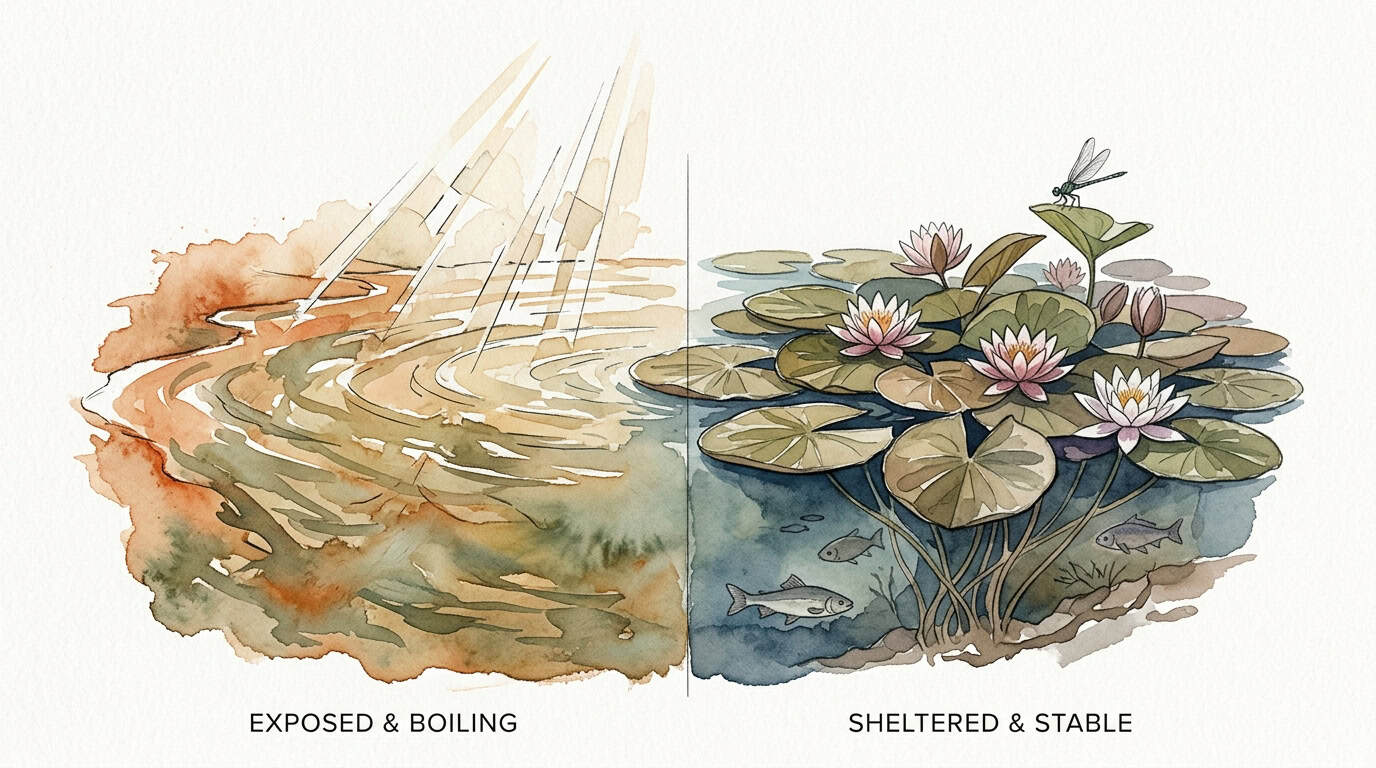
Lilies aren’t just flowers; they are your pond’s biological sunscreen. High water temps kill fish and explode algae. Water lilies provide the essential shade needed to keep water cool and oxygen levels stable. Here is why every healthy pond needs them.
Establishing a balanced aquatic ecosystem requires more than mechanical filtration and water movement. It demands a biological component capable of regulating thermal energy and nutrient concentrations. Water lilies, primarily those in the Nymphaeaceae family, serve as the primary structural tool for achieving this balance.
Managing a pond without surface vegetation often leads to a cycle of chemical interventions and mechanical failures. Introducing lilies shifts the burden of maintenance from the pump to the plants. This guide examines the technical specifications and biological mechanisms that make these plants indispensable for pond health.
Are Water Lilies Good For Pond Health?
Water lilies are essential biological filters and thermal regulators for closed aquatic systems. They exist as perennial herbs rooted in the substrate with floating leaves, known as pads, that interface with the water-air boundary. In real-world applications, these plants function as a living canopy for the pond environment.

Ponds are susceptible to rapid fluctuations in temperature and chemical composition due to their relatively low volume-to-surface-area ratio. Water lilies stabilize these variables by providing a physical barrier against solar irradiance. This barrier limits the energy available for photosynthetic algae and prevents the water column from reaching lethal temperatures for nitrifying bacteria and fish.
Consider the analogy of an attic without insulation; the temperature inside will mirror the exterior extremes. Water lilies act as the insulation for the pond. They create a microclimate beneath the surface that remains significantly more stable than the surrounding environment, fostering a habitat where delicate biological processes can proceed without interruption.
These plants are used in ornamental koi ponds, natural swimming ponds, and large-scale retention basins to manage water clarity and quality. Their presence indicates a mature ecosystem where nutrient inputs are sequestered rather than remaining available for opportunistic organisms like cyanobacteria.
Mechanisms of Thermal Regulation and Shading
Solar radiation consists of various wavelengths, including infrared, which directly contributes to the heating of the water column. Unobstructed sunlight penetrates several feet into the water, heating the lower depths and disrupting thermal stratification. Floating lily pads reflect a portion of this radiation and absorb the remainder for photosynthesis, preventing it from entering the water.
Reducing the heat gain of a pond is critical because of Henry’s Law, which dictates that the solubility of a gas is inversely proportional to the temperature of the liquid. As water temperatures rise, its capacity to hold dissolved oxygen (DO) decreases. During peak summer months, an unshaded pond may reach 85°F (29°C), a temperature where oxygen levels can drop below the threshold required for fish survival. Lilies maintain cooler temperatures, effectively increasing the oxygen-carrying capacity of the pond.
Evaporation rates also decrease significantly under a canopy of lily pads. Wind and direct sun accelerate the transition of liquid water to vapor. By covering 50% to 70% of the surface area, water lilies reduce the surface area exposed to these evaporative forces. This preservation of water volume helps maintain stable mineral concentrations, preventing the “thickening” of water that occurs when minerals become over-concentrated due to evaporation.

Nutrient Sequestration and Allelopathy
Nutrient management in a pond involves controlling the levels of nitrogen (N) and phosphorus (P). High levels of these elements lead to eutrophication, a state characterized by excessive algae growth and subsequent oxygen depletion. Water lilies function as high-efficiency nutrient sponges. They extract nitrates and phosphates directly from the water and the substrate through their extensive root systems.
Nitrifying bacteria living on the surfaces of lily stems and roots facilitate the nitrogen cycle. These bacteria convert ammonia into nitrites and eventually into nitrates. The lilies then consume these nitrates to build plant tissue, effectively removing them from the system. This competition for nutrients is the primary reason why ponds with healthy lily populations rarely suffer from severe “pea soup” green water blooms.
Evidence suggests that some species of Nymphaea exhibit allelopathy. They release biochemicals into the water that inhibit the growth of other plants or algae. While the research is ongoing, the observation that algae growth is stunted even in areas not directly shaded by the lily pads supports the existence of these chemical defense mechanisms. This dual approach of nutrient competition and chemical inhibition makes lilies superior to many mechanical filtration systems.
The Gas Exchange Paradox: Oxygenation and Respiration
Understanding the role of lilies in oxygenation requires a nuanced look at biological cycles. During daylight hours, water lilies perform photosynthesis, absorbing carbon dioxide (CO2) and releasing oxygen (O2). While much of this oxygen is released into the atmosphere through the stomata on the upper surface of the leaves, some is transported down to the rhizomes and roots, where it can enter the water column and the substrate.
Night-time respiration presents a different scenario. In the absence of sunlight, plants consume oxygen and release CO2. If a pond is 100% covered in vegetation, the night-time oxygen demand can lead to a crash in DO levels, stressing or killing fish. This is why maintaining the 50% to 70% coverage rule is vital. Sufficient open surface area must remain to allow for passive gas exchange between the water and the atmosphere.
Submerged plants are often cited as the primary oxygenators, but they rely on clear water to receive light. If algae blooms cloud the water, submerged plants die and rot, further depleting oxygen. Water lilies, by clearing the water through nutrient uptake and shading, create the necessary conditions for submerged oxygenators to function efficiently. This synergy is the hallmark of a healthy pond.
Benefits of Water Lily Integration
Practical advantages of incorporating water lilies include measurable improvements in water metrics and biological stability. These benefits are not merely aesthetic; they are mechanical and chemical in nature.
- Significant Algae Suppression: Reducing Photosynthetically Active Radiation (PAR) reaching the water column limits the growth of both filamentous and unicellular algae.
- Thermal Buffering: Ponds with lilies experience fewer temperature spikes during heatwaves, protecting sensitive aquatic life.
- Toxin Mitigation: Lily roots are capable of absorbing certain heavy metals and organic pollutants, acting as a natural phytoremediation system.
- Predation Protection: The physical barrier of the pads provides hiding spots for fish, shielding them from aerial predators like herons.
- Biological Surface Stability: The presence of pads reduces surface agitation caused by wind, which can help keep debris from sinking and encourage its migration to a mechanical skimmer.
Challenges and Common Management Mistakes
Errors in water lily management usually stem from a lack of understanding of the plant’s growth habits and requirements. Neglecting these factors can lead to the plants becoming a liability rather than an asset.
Overcrowding is the most frequent issue encountered by pond owners. When lilies cover the entire surface, they prevent light from reaching the lower depths entirely. This kills off beneficial submerged plants and prevents oxygen from entering the water through surface contact. Maintaining a clear space for gas exchange is non-negotiable for fish health.
Using the wrong planting medium is another common pitfall. Traditional potting soil contains organic matter that floats and decomposes, adding excess nutrients to the water and causing murky conditions. Using high-phosphorus fertilizers can also backfire, as any leached fertilizer will immediately fuel algae growth. Successful practitioners use heavy clay soil and specialized slow-release aquatic fertilizer tabs pushed deep into the root zone.
Ignoring the depth requirements of specific varieties leads to poor performance. Planting a pygmy lily in six feet of water will result in the plant drowning, as its stems cannot reach the surface. Conversely, planting a vigorous large variety in a shallow container will cause it to quickly become root-bound and stop flowering.
Limitations and Environmental Constraints
Water lilies are not universal solutions and have specific environmental boundaries that must be respected. They are not effective in high-flow environments. Rapid currents or heavy splashing from waterfalls can submerge the pads, leading to rot. They prefer “still” water or areas with very low circulation speeds.
Seasonal dormancy is a significant limitation in temperate climates. During winter, hardy lilies die back to the rhizome. This means their shading and nutrient-uptake benefits are absent during the early spring when the sun begins to warm the water but the plants have not yet reached the surface. This “spring gap” is often when algae blooms occur, requiring supplemental management strategies.
Depth and light requirements also limit where lilies can be placed. Most varieties require a minimum of six hours of direct sunlight to bloom. In heavily shaded ponds, lilies will produce small, weak pads and no flowers. In such cases, they fail to provide the biomass necessary for effective nutrient sequestration.
Comparative Analysis: Pond Thermal and Biological States
The following table illustrates the typical differences between a pond with no surface cover and one with 60% water lily coverage during a standard summer cycle.
| Metric | Exposed & Boiling (0% Cover) | Sheltered & Stable (60% Cover) |
|---|---|---|
| Peak Water Temperature | 85°F – 90°F | 72°F – 78°F |
| Algae Growth Potential | Extreme (High PAR + High Temp) | Low (Low PAR + Low Temp) |
| Dissolved Oxygen Capacity | Low (High Temp reduces solubility) | High (Cooler water holds more gas) |
| Nitrate Concentration | Variable (Accumulates if no plants) | Low (Sequestration by root systems) |
| Evaporation Rate | High (Direct Sun/Wind) | Low (Physical Barrier) |
Practical Tips and Best Practices
Optimizing lily growth requires a disciplined approach to planting and maintenance. Follow these guidelines to ensure the plants contribute positively to the ecosystem.
Select the correct pot size to match the variety. A standard hardy lily requires a container of at least 10 to 15 quarts. Using a wide, shallow pot is better than a deep, narrow one, as lily rhizomes tend to grow horizontally across the surface of the soil. Plastic mesh baskets designed for aquatic plants allow for better water and oxygen flow to the roots while keeping the soil contained.
Line the bottom of the pot with a piece of burlap or landscape fabric if you are using mesh baskets. Fill the pot with heavy garden soil or specialized aquatic clay. Avoid any mixes containing peat, vermiculite, or compost. Place the rhizome at a 45-degree angle with the growing tip (the crown) exposed above the soil surface. Top the soil with an inch of heavy gravel or pea shingle to prevent fish from digging and to keep the soil from washing away.
Prune the plants regularly to maintain health. Remove yellowing or decaying leaves by cutting the stems as close to the rhizome as possible. This prevents dead organic matter from decomposing in the pond and releasing nutrients back into the water. If the plant stops flowering or the pads begin to rise out of the water, it is likely root-bound and needs to be divided.
Advanced Considerations: Varietal Selection and Metabolism
Serious practitioners distinguish between hardy and tropical lilies based on their metabolic rates and thermal requirements. Hardy lilies (Nymphaea species) are native to temperate zones and survive winter by going dormant in the substrate. They begin growing when water temperatures reach 50°F and are excellent for early-season nutrient uptake.

Tropical lilies are significantly more aggressive in their growth and nutrient consumption. They do not begin active growth until water temperatures consistently stay above 70°F. Tropicals are categorized into day-blooming and night-blooming varieties. Night-blooming lilies are particularly valuable for owners who want to enjoy their pond in the evening, and they provide a different aesthetic and biological profile.
Bio-available carbon (CO2) can become a limiting factor in heavily planted ponds. Lilies solve this by accessing CO2 from the atmosphere rather than the water. This allows them to maintain high growth rates even when submerged plants have exhausted the CO2 in the water column. This atmospheric “bridge” makes them more resilient than submerged oxygenators during periods of high biological activity.
Scenario: Rehabilitating a “Green” 1000-Gallon Pond
Imagine a 1,000-gallon pond with full sun exposure and no plants. The water is murky, and nitrate levels are at 40 ppm. A technician introduces four large hardy water lilies. Within four weeks, the lilies have established a 50% surface cover.
Step one: The pads block approximately 500 square feet of solar energy from entering the water. Water temperatures drop by 6°F. Step two: The root systems begin actively pulling nitrates. By the end of the second month, nitrate levels drop to 10 ppm. Step three: The unicellular algae, starved of both light and nitrogen, begin to die off. The water clears, allowing the mechanical filter to remove the remaining particulates.
This transition demonstrates that the lilies are not just decorations; they are active participants in the chemical engineering of the pond. The reduction in water temperature alone increases the oxygen potential of the pond, providing a safer environment for the fish during the peak of summer.
Final Thoughts
Water lilies are the cornerstone of a functional pond ecosystem. They provide the mechanical shading necessary to prevent thermal stress and the biological filtration required to manage nutrient loads. By acting as a biological sunscreen, they protect every other inhabitant of the pond from the volatility of the external environment.
Maintaining a pond without these plants is an uphill battle against physics and chemistry. Incorporating lilies allows the natural cycles of nutrient sequestration and thermal regulation to take over, resulting in a more stable and resilient system. Success lies in choosing the right varieties, maintaining proper coverage percentages, and managing the substrate effectively.
Experimenting with different species and monitoring the resulting changes in water clarity will provide deep insights into the specific needs of your pond. Whether you are managing a small koi pond or a large natural basin, water lilies are the most efficient tool at your disposal for achieving long-term aquatic health.