

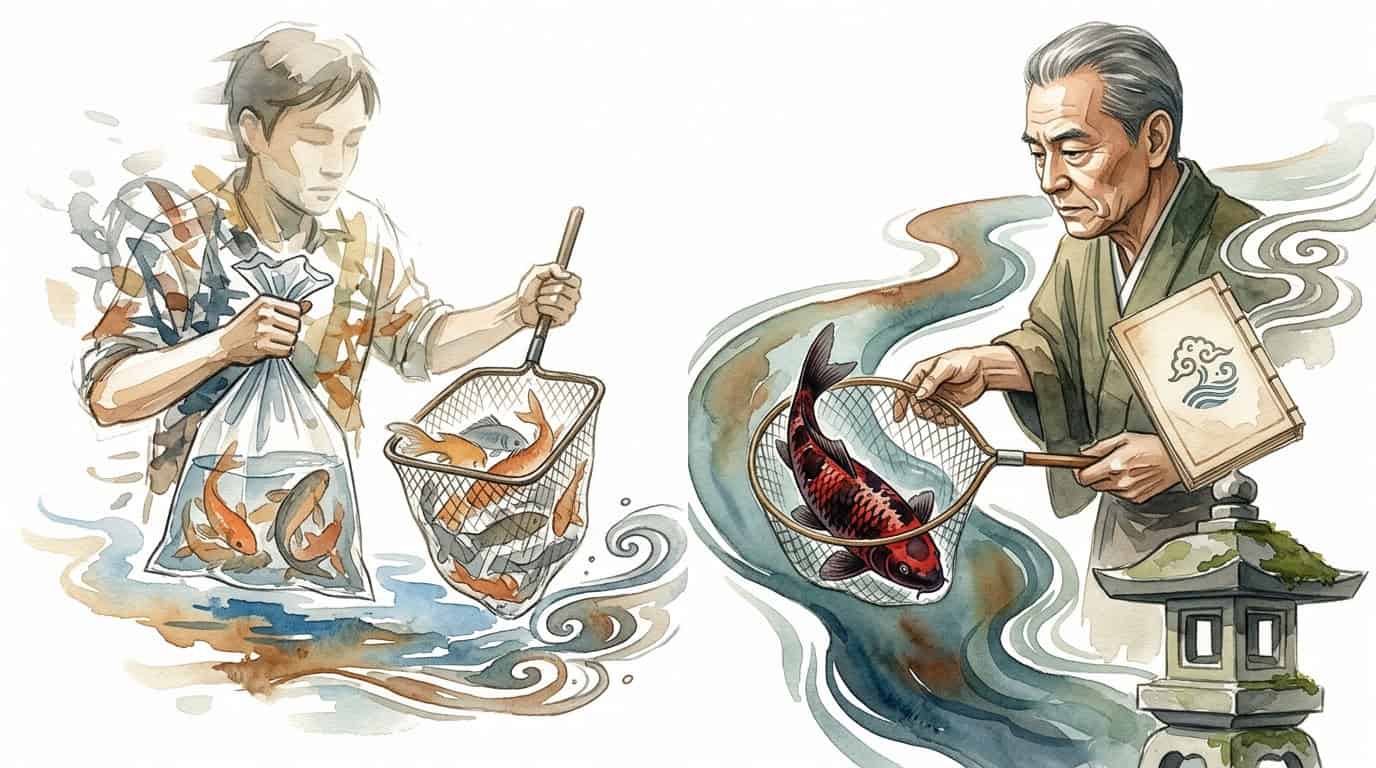
Are you just keeping fish, or are you cultivating a living legacy that can outlive its owner? Most people see a fish; the master sees a multi-generational investment in beauty and tranquility. Discover why Koi are the ‘living jewels’ of the regenerative homestead.
Koi are unique due to their exceptional longevity, often exceeding 40 years, and their complex genetic lineages which allow them to function as high-value biological assets. Unlike standard ornamental fish, high-grade Nishikigoi appreciate in value with age and size, serving as functional bio-converters that transform high-protein inputs into nutrient-dense waste for regenerative agricultural systems. Their status as “living jewels” is derived from centuries of selective breeding in Japan, resulting in specific color patterns and body structures that are recognized globally as a form of mobile investment and biological art.
What’s So Special About Koi?
Koi, or more accurately Nishikigoi, represent the pinnacle of selective aquatic breeding. Originally domesticated from common carp (Cyprinus carpio) in the Niigata prefecture of Japan during the 19th century, these fish were transformed from a survival food source into a sophisticated asset class. The “special” nature of Koi lies in the intersection of their genetic plasticity and their mechanical role within a closed-loop ecosystem.
From a technical perspective, Koi are distinguished by their growth potential and metabolic efficiency. A well-bred specimen from a reputable Japanese lineage, such as those from the Sakai or Dainichi farms, can reach lengths exceeding 35 inches. This growth is not merely aesthetic; it represents the accumulation of biological mass that stabilizes the aquatic environment.

The cultural and economic value of Koi is tiered based on varieties. The “Gosanke” group—comprising Kohaku (white with red), Taisho Sanke (white with red and black), and Showa Sanshoku (black with red and white)—forms the backbone of the hobby. These varieties are judged on strict criteria including skin quality, pattern symmetry, and “kigoi” or presence.
In real-world applications, Koi serve as the primary drivers of nutrient cycling in high-end aquaponic and regenerative systems. Their large size and high waste production make them superior to smaller species for generating the ammonia levels required to support intensive plant growth. This functional utility, combined with their long-range lifespan, positions them as a permanent fixture rather than a temporary pet.
Technical Operation: How Koi Systems Work
Maintaining a Koi population requires an understanding of the nitrogen cycle and fluid dynamics. Because Koi are heavy feeders and significant waste producers, the pond must function as a high-performance biological reactor. The system typically consists of mechanical filtration, biological filtration, and gas exchange components.
Mechanical filtration is the first line of defense, designed to remove solid waste before it can break down into dissolved toxins. Modern high-efficiency systems utilize Rotary Drum Filters (RDF) or sieve filters. These devices use fine mesh—often 40 to 100 microns—to trap feces and uneaten food, automatically flushing them out of the water column to prevent heterotrophic bacteria from consuming oxygen while decomposing solids.
Biological filtration follows, focusing on the conversion of toxic ammonia (NH3) into nitrite (NO2) and finally into relatively harmless nitrate (NO3). This is achieved through colonized media in Moving Bed Biofilm Reactors (MBBR) or Bakki Showers. Bakki Showers are particularly effective for Koi because they simultaneously provide biological filtration and massive aeration, stripping carbon dioxide and replenishing dissolved oxygen.
Water chemistry parameters must be maintained within tight tolerances for optimal health. The pH should remain stable between 7.2 and 8.3, as sudden swings can cause “pH shock.” Total Ammonia Nitrogen (TAN) and Nitrite should always measure at 0 ppm. Carbonate Hardness (KH) is a critical metric often overlooked; it must be high enough (minimum 80-100 ppm) to buffer against acidity produced during the nitrification process.

Practical Benefits and Advantages
The primary advantage of integrating Koi into a homestead is the creation of an intergenerational biological asset. Japanese Koi lineages are documented to live between 30 and 70 years, with some historically noted outliers reaching much greater ages. This longevity allows a steward to develop a deep understanding of specific individuals and their growth trajectories over decades.
Economic appreciation is another tangible benefit for those focusing on high-grade specimens. While a “pond grade” Koi may remain static in value, “show grade” fish often increase in value as they develop. A two-year-old (Nisai) fish purchased for several hundred dollars can, with proper nutrition and water management, grow into a four-year-old (Yonsai) specimen worth several thousand dollars.
Ecological efficiency is maximized in systems that utilize Koi waste for plant production. In an aquaponic context, Koi provide a more consistent and voluminous nutrient stream than goldfish or tilapia. Their high protein requirements mean their waste is rich in the nitrogen compounds necessary for leafy greens and fruiting crops, reducing the need for external fertilizers.
Furthermore, Koi possess a unique level of “tameness” or intelligence compared to other teleost fish. They can be trained to recognize their feeders and even feed from the hand. This reduces the stress levels of the fish during health inspections and allows for more precise monitoring of individual health and appetite.
Challenges and Common Pitfalls
The most significant challenge in Koi management is biosecurity. The introduction of a single infected fish can decimate a collection through diseases like Koi Herpes Virus (KHV) or Spring Viraemia of Carp (SVC). These viral agents are highly contagious and often have high mortality rates, making a strict quarantine protocol mandatory for any new acquisition.
Water quality management is a constant operational demand. Because Koi grow rapidly, a system that was adequate for juvenile fish (Tosai) will likely become undersized within two years. Failure to scale filtration capacity in proportion to fish biomass leads to “Old Pond Syndrome,” characterized by dropping pH and rising nitrate levels, which stunts growth and weakens the immune systems of the fish.
Predation is a physical challenge that requires structural solutions. Herons, raccoons, and even large birds of prey view a Koi pond as a concentrated food source. Protecting “living jewels” requires a minimum pond depth of four feet to allow fish to dive out of reach, and often necessitates the use of motion-activated deterrents or overhead netting.
Overstocking is perhaps the most frequent error made by beginners. While a small pond may look empty with only three or four fish, those fish will eventually reach 30 inches each. Overstocking stresses the biological filter and reduces the available dissolved oxygen, leading to emergency situations during power outages or high-temperature summer months.
Environmental and Practical Limitations
Space is the most immediate limitation for potential Koi stewards. A functional Koi pond should have a minimum volume of 1,000 gallons for a small group, though 3,000 to 5,000 gallons is considered the baseline for serious practitioners. This footprint requires significant land area and professional-grade excavation.
Climate plays a decisive role in system design. In cold regions, ponds must be deep enough to ensure a “warm zone” at the bottom that does not freeze, typically requiring a depth of five feet or more. In excessively hot climates, the high metabolic rate of Koi combined with lower oxygen solubility in warm water requires massive aeration and potentially the use of chillers.
Power dependency is a critical vulnerability. High-density Koi systems rely on continuous water circulation and aeration. A power failure of even a few hours can result in mass mortality due to oxygen depletion, especially in heavily stocked ponds. Redundant power supplies, such as battery backups or automated generators, are necessary for risk mitigation.
Financial constraints must also be considered. Beyond the initial purchase price of the fish, the operational costs of high-quality feed (often 35-42% protein), electricity for pumps, and water for regular changes are non-trivial. Maintenance of high-grade Nishikigoi is a high-OPEX (operating expense) endeavor that requires a long-term budget.
Comparison: Heritage Steward vs. Transient Consumer
The distinction between a serious practitioner and a casual hobbyist is best seen in the approach to system design and fish selection.
| Feature | Transient Consumer (Casual) | Heritage Steward (Advanced) |
|---|---|---|
| Filtration | Submersible all-in-one units. | External RDF and Bakki Showers. |
| Stocking | High density, mixed varieties. | Low density, selected bloodlines. |
| Monitoring | Visual check only. | Daily water testing and microscopy. |
| Goal | Short-term decoration. | Long-term asset appreciation. |
Practical Tips and Best Practices
Establish a rigid water testing schedule. Use liquid reagent kits rather than test strips to monitor Ammonia, Nitrite, Nitrate, pH, and KH at least once a week. Maintaining a digital log of these parameters allows you to spot trends before they become lethal events.
Invest in a quality microscope (400x magnification). Most Koi ailments are parasitic—such as Costia, Chilodonella, or Flukes—and cannot be identified with the naked eye. Identifying the specific pathogen allows for targeted treatment rather than “shotgunning” the pond with multiple chemicals that can crash the biological filter.
Feed according to water temperature. Koi do not have stomachs; their digestion is purely enzymatic and highly dependent on temperature. Below 50°F (10°C), stop feeding entirely as their metabolism slows to a point where food can rot in their gut. Between 50°F and 65°F, use wheatgerm-based, low-protein feeds. Above 65°F, switch to high-protein growth formulas.
Implement a mandatory 4-6 week quarantine for all new arrivals. A dedicated quarantine tank with its own separate filtration and equipment prevents the spread of pathogens. This period allows the fish to recover from the stress of transport and for any latent diseases to manifest in a controlled environment.
Advanced Considerations in Koi Management
Serious practitioners often move beyond keeping fish to the study of genetics and bloodlines. Understanding the parentage of a fish—such as the ‘Mako’ or ‘Eagle’ lines—provides insight into how the fish will develop. This is crucial because a Koi’s pattern can change significantly as it grows; a “finished” looking young fish often has less potential than an “unfinished” one with thick, high-quality skin.
Osmoregulation management is another advanced technique. Keeping a baseline salinity of 0.1% to 0.3% can reduce the osmotic stress on the fish, especially during periods of transition or minor illness. However, this must be balanced with the health of any integrated plants in an aquaponic system, as most crops cannot tolerate even low levels of salt.
Scaling for performance involves optimizing the “turnover rate” of the pond. A high-performance system should cycle the entire volume of the pond through the filtration system every 60 to 90 minutes. This ensures that waste is processed immediately and that dissolved oxygen remains near saturation levels (8-10 mg/L depending on temperature).

Culling for quality is a necessary part of the breeding process but is also applied by collectors when managing their population. As fish grow, the steward must make decisions on which individuals to keep based on their development trajectory. This maintains the overall quality of the collection and prevents the biological load from exceeding the system’s capacity.
Scenario: Designing a 5,000-Gallon Heritage System
Imagine a homestead aiming to integrate a 5,000-gallon Koi pond with a greenhouse. The pond is excavated to a depth of 5 feet with 45-degree sloped walls leading to two 4-inch bottom drains. These drains gravity-feed into a Rotary Drum Filter, which removes all solids larger than 60 microns.
The water then flows into a 300-gallon Moving Bed Biofilm Reactor filled with K1 media, providing 1,200 square meters of surface area for nitrifying bacteria. From there, a high-efficiency external pump pushes the water through a 110-watt UV clarifier to kill suspended algae and through a Bakki Shower returned to the pond via a waterfall.
In this system, 15 high-quality Nisai (two-year-old) Koi are introduced. Each fish is given roughly 333 gallons of water, providing ample space for growth. The nitrate-rich effluent from the regular 10% weekly water changes is diverted into the greenhouse to fertigate a high-output vegetable crop. This setup represents a balanced, regenerative investment that maximizes both biological health and resource efficiency.
Final Thoughts
Cultivating Koi is more than an aesthetic pursuit; it is the management of a complex, long-term biological system. By focusing on mechanical efficiency and stable water chemistry, a steward can maintain “living jewels” that appreciate in value and utility over decades. The intersection of history, genetics, and engineering makes Koi a unique asset for any regenerative homestead.
Success requires a shift from being a consumer to becoming a heritage steward. It demands patience, technical rigor, and a commitment to understanding the needs of the organism. When these elements align, the result is a tranquil, productive, and valuable ecosystem that can be passed down through generations.
Experiment with different filtration configurations and variety selections to find the balance that works for your specific climate and goals. Whether you are interested in the competitive world of Koi shows or the functional benefits of nutrient cycling, these fish offer a level of depth and reward unmatched in the world of aquaculture.
Frequently Asked Questions About What’s So Special About Koi?
How long do Koi fish typically live?
Koi are renowned for their longevity, which significantly exceeds that of most other ornamental fish. On average, well-cared-for Japanese Koi live between 35 and 50 years, though many specimens reach 70 years or more. There are historical records of individuals like ‘Hanako’ reaching over 200 years, though such cases are exceptional. Their long lifespan is a result of their hardy genetics and the stable environments provided by dedicated keepers. This longevity makes them a multi-generational asset, often outliving their original owners and becoming a permanent fixture of a homestead’s legacy.
What is the difference between ‘pond grade’ and ‘show grade’ Koi?
The distinction lies primarily in genetics, skin quality, and pattern potential. Pond grade Koi are often the result of mass breeding and are sold at pet stores; they may have inconsistent colors or asymmetrical patterns. Show grade Koi come from specific, documented lineages and are selected by breeders for their ‘shitsu’ (skin quality), body conformation, and pattern balance. Show grade fish are expected to grow larger and maintain vibrant colors as they age, whereas pond grade fish may see their colors fade or patterns break up. Consequently, show grade Koi are considered an investment and can command prices ranging from thousands to over a million dollars.
Can Koi be kept in a regular garden pond?
While Koi can survive in a standard garden pond, they will not thrive without specific infrastructure. Because they grow much larger than goldfish and produce significantly more waste, they require deeper water (at least 3-4 feet) and much more robust filtration. A standard garden pond often lacks the mechanical and biological filtration capacity to handle the ammonia load of adult Koi. Furthermore, without a bottom drain and external filtration, waste accumulates on the floor of the pond, leading to poor water quality and health issues. Serious Koi keeping requires a purpose-built system designed for high biomass.
Why are high-end Koi so expensive?
The high cost of premium Koi is driven by rarity, breeding costs, and the labor-intensive selection process. Out of a single spawning of hundreds of thousands of fry, a breeder may only find a few dozen that meet the criteria for ‘show quality.’ These fish are then raised for several years, consuming high-quality feed and requiring pristine water conditions. The price reflects the years of expert care, the rarity of the specific pattern, and the prestige of the bloodline. Like fine art or thoroughbred horses, the value is determined by collectors who prize the aesthetic perfection and genetic potential of the specimen.
How do Koi contribute to a regenerative homestead?
In a regenerative homestead, Koi act as high-efficiency biological engines for nutrient cycling. They consume high-protein feed and convert it into a consistent stream of ammonia and other minerals. Through the nitrification process in the pond’s filter, this waste is converted into nitrates, which are the primary fertilizer for plants. By integrating a Koi system with an aquaponic greenhouse or using pond discharge for garden irrigation, a homesteader can significantly reduce the need for synthetic fertilizers. Their large size and longevity provide a stable, long-term source of nutrients that can support intensive food production.