

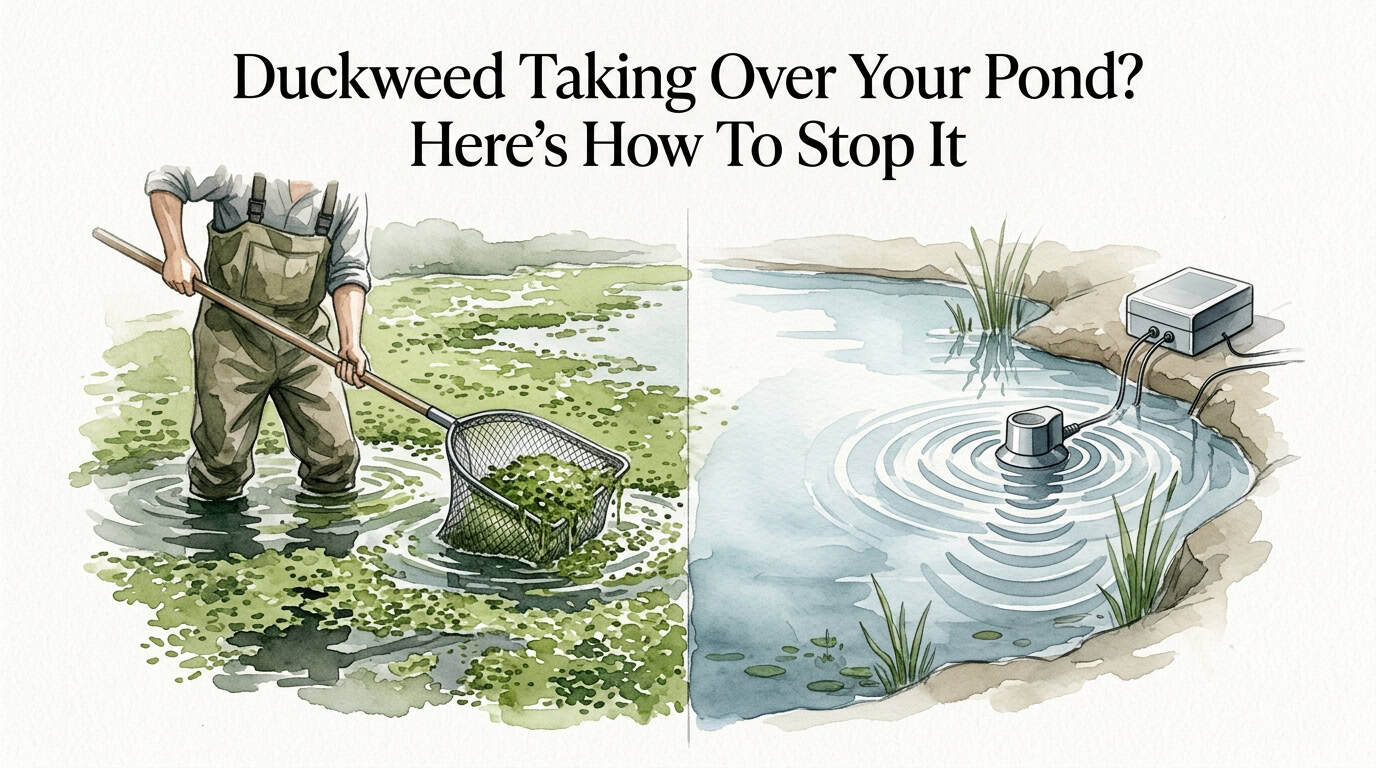
Is your pond-cleaning method stuck in the 1800s while your weeds grow at 21st-century speeds? Duckweed doubles its biomass every 48 hours. If you’re still using a hand net, you’ve already lost. Here is the modern strategy to reclaim your pond’s surface without breaking your back.
Managing a body of water requires an understanding of biological load and mechanical efficiency. When nitrogen and phosphorus levels peak, the surface of a pond can transform into a green carpet almost overnight. This growth is not merely an aesthetic issue; it represents a significant shift in the pond’s ecosystem that can lead to oxygen depletion and fish kills.
Modern aquatic management focuses on disrupting the growth cycle of invasive floating plants using physics and chemistry rather than just manual labor. While Traditional Hand-Skimming remains a common entry-point, Modern Ultrasonic Control represents the current technical standard for industrial and large-scale residential applications. This guide breaks down the mechanics of these systems and how to implement them effectively.
Duckweed Taking Over Your Pond? Here’s How To Stop It
Duckweed, or Lemna minor, is a small floating flowering plant that thrives in still or slow-moving water. It is one of the fastest-growing plants in the world. Under ideal conditions, a single acre of duckweed can expand to cover two acres in less than two days. This exponential growth rate is powered by its ability to absorb dissolved nutrients directly through its leaves and roots.

The presence of duckweed is an indicator of high nutrient loading, often referred to as eutrophication. Runoff from fertilized lawns, agricultural fields, or septic systems provides the nitrogen and phosphorus that fuel these blooms. Once the surface is covered, the plants block sunlight from reaching deeper water, halting the photosynthesis of submerged beneficial plants and reducing dissolved oxygen levels.
Stopping this progression requires a two-pronged approach: immediate biomass reduction and long-term nutrient management. Without addressing the underlying water chemistry, any removal method will only provide temporary relief. However, the choice of removal technology dictates the labor costs and the long-term success of the management plan.
How Ultrasonic Control Works
Ultrasonic control systems utilize sound waves at specific frequencies to disrupt the cellular structure of aquatic plants. Unlike chemical treatments, this is a mechanical process that occurs at a microscopic level. The core component is a transducer submerged in the water that emits ultrasonic pulses, typically in the range of 20 kHz to 50 kHz.
Most floating plants, including duckweed and certain types of algae, contain internal gas vacuoles or vesicles. These tiny pockets of air provide the buoyancy that keeps the plant on the water’s surface. When the ultrasonic waves hit these vacuoles, they cause them to resonate. This resonance creates mechanical stress on the cell walls until the vacuole collapses.
Once the gas vacuoles are destroyed, the plant loses its ability to float. It sinks to the bottom of the pond, where it can no longer access the sunlight required for photosynthesis. Deprived of light, the plant dies. This method is highly targeted, as different species respond to different frequencies, allowing for the suppression of specific weeds without harming fish or beneficial microorganisms.
Implementation of Control Strategies
Implementing a control strategy begins with a site assessment. For manual removal, this involves identifying access points for machinery or hand crews. For ultrasonic systems, it requires mapping the “line of sight” for the sound waves, as underwater obstacles like large rocks or dense pilings can create “shadows” where the waves cannot reach.

Mechanical harvesting involves the use of specialized boats equipped with conveyor belts. These machines physically lift the duckweed out of the water and store it on board for disposal on land. This is effective for immediate clearance but requires significant fuel and maintenance. It is often used as a “reset” for heavily infested ponds before installing a permanent electronic system.
Chemical control involves the application of herbicides such as Fluridone or Diquat. These chemicals interfere with the plant’s ability to produce chlorophyll. While effective, they require strict adherence to safety protocols and may have water-use restrictions for irrigation or swimming following application. Technical practitioners often prefer non-chemical methods to avoid altering the water’s chemical profile for downstream users.
Benefits of Modern Control Systems
The primary advantage of modern ultrasonic systems is the reduction in long-term operational expenditure (OpEx). While the initial capital expenditure (CapEx) for hardware and installation is higher than buying a hand net, the system operates autonomously with minimal power consumption, often less than 40 watts per transducer.
Another benefit is the lack of chemical residuals. In sensitive ecosystems or ponds used for livestock watering, the absence of synthetic herbicides is a critical metric for safety and compliance. Ultrasonic waves do not introduce foreign substances into the water, maintaining the existing biological balance while suppressing target species.
Efficiency is also measured in “kill-rate consistency.” Manual skimming is periodic, meaning the duckweed population fluctuates between “cleared” and “overgrown.” Ultrasonic systems provide 24/7 suppression, preventing the population from ever reaching a critical mass. This constant pressure on the plant population ensures the water surface remains clear year-round.
Challenges and Technical Pitfalls
The most common failure in duckweed management is ignoring the “Nutrient Bank” in the pond’s sediment. Even if the surface is cleared, the bottom of the pond contains years of accumulated organic matter. As this matter decomposes, it releases nutrients back into the water column, fueling the next generation of growth. Failure to address this leads to a cycle of constant re-infestation.
In ultrasonic applications, improper transducer placement is a frequent mistake. Sound waves travel in straight lines and can be blocked by thick underwater vegetation or dock structures. If the transducer is not positioned to maximize coverage, “dead zones” will occur where duckweed will continue to thrive and eventually spread back over the cleared areas.
Power supply stability is another technical challenge. Remote ponds may require solar-powered units with battery backups. If the battery bank is undersized, the system may shut down during extended cloudy periods, allowing the duckweed’s 48-hour doubling cycle to gain a foothold. Consistency of signal is mandatory for effective cellular disruption.
Limitations and Environmental Constraints
Ultrasonic control is less effective in moving water. In streams or high-flow canals, the contact time between the sound waves and the plant cells is often insufficient to cause vacuole collapse. These systems are designed for static or low-flow environments like ponds, reservoirs, and lagoons.
Water depth also plays a role. In very shallow water (less than two feet), the sound waves can reflect off the bottom and the surface, creating interference patterns that reduce the system’s effectiveness. Optimal results are typically achieved in depths of four feet or more, where the transducer can be suspended at the correct depth to project waves across the surface layer.
Temperature affects the metabolic rate of the plants and the speed of sound in water. During extreme winter months, duckweed may go dormant and sink to the bottom on its own, making active suppression unnecessary. Managers must adjust their operational schedules based on seasonal water temperature data to maximize energy efficiency.
Comparative Analysis: Traditional vs. Modern
To determine the most efficient method, one must analyze the total cost of ownership (TCO) over a five-year period. The following table compares the metrics of manual removal versus ultrasonic integration for a standard one-acre pond.
| Feature | Hand-Skimming / Manual | Ultrasonic Control |
|---|---|---|
| Initial Cost (CapEx) | $100 – $500 | $2,500 – $5,000 |
| Labor Hours (Annual) | 150 – 300 hours | 2 – 5 hours |
| Power Consumption | N/A | ~350 kWh / year |
| Chemical Usage | None | None |
| Efficacy Consistency | Variable / Cyclical | High / Constant |
The data suggests that while manual methods have a lower barrier to entry, the labor requirements make them unsustainable for large-scale operations. Modern systems trade upfront capital for long-term automation and reliability.
Practical Tips for Pond Management
Effective management begins with reducing nutrient inflow. Establishing a “buffer zone” of native tall grasses around the pond perimeter can trap nitrogen-rich runoff before it reaches the water. This biological filter works in tandem with mechanical or electronic removal systems to lower the overall growth potential of the duckweed.
When using ultrasonic devices, ensure the transducer is cleaned monthly. Biofilm and calcium deposits can build up on the vibrating surface, dampening the sound waves and reducing the effective range. A simple wipe-down with a soft brush and mild descaling solution maintains peak performance.
For those using manual methods, the timing of the skim is critical. Removing the biomass early in the morning when the plants are less buoyant and more clumped can increase the volume of material removed per man-hour. Always compost the removed duckweed far from the pond to prevent the nutrients from leaching back into the water during the next rain event.
Advanced Considerations for Professionals
Professional pond managers often integrate ultrasonic systems with dissolved oxygen (DO) sensors and automated aeration. When duckweed dies and sinks, its decomposition consumes oxygen. In a heavy bloom, a sudden die-off can trigger a hypoxic event. Monitoring DO levels allows the manager to ramp up aeration during the clearing phase to protect aquatic life.
Frequency sweeping is another advanced technique. Some modern transducers do not emit a single frequency but rather “sweep” through a range of frequencies. This prevents the plants from developing any localized resistance and ensures that different subspecies of duckweed or algae are targeted simultaneously. This is particularly useful in complex ecosystems with high biodiversity.
Data logging and remote monitoring via cellular gateways allow for real-time system status updates. Technicians can monitor power draw and signal output from a central dashboard. Any drop in performance, which could indicate a hardware fault or power interruption, triggers an alert, ensuring that the 48-hour growth cycle of the duckweed is never left unchecked.
Scenario: Retention Pond Management
Consider a three-acre commercial retention pond located near a shopping center. The pond receives high levels of phosphorus from lawn fertilizers and asphalt runoff. A manual crew of two people is sent out every two weeks to skim the surface. This costs the property management company approximately $800 per month in labor and disposal fees.

By switching to a dual-transducer ultrasonic system, the initial investment is $7,000. The monthly power cost is approximately $15. Within the first year, the system has paid for itself in labor savings alone. Furthermore, the constant suppression prevents the “green soup” appearance that previously led to tenant complaints, providing a quantifiable increase in property value and aesthetic consistency.
In this scenario, the transition from 1800s-era manual labor to modern acoustic technology represents a clear mechanical and financial optimization. The system operates autonomously, allowing the maintenance staff to focus on higher-value tasks while the physics of ultrasound keeps the water surface clear.
Final Thoughts
Managing duckweed effectively requires moving beyond reactive, manual methods and adopting a systematic, data-driven approach. The exponential growth rate of Lemna minor demands a solution that operates with the same level of consistency. By utilizing ultrasonic technology, pond managers can achieve a state of continuous suppression that manual skimming simply cannot match.
Successful aquatic management is a balance of physics, biology, and consistent maintenance. Whether you choose to invest in modern electronic systems or optimize your manual labor cycles, the goal remains the same: reducing nutrient loading and disrupting the reproductive cycle of the weeds. Understanding the technical requirements of your specific water body is the first step toward reclaiming it.
Transitioning to modern strategies may require a higher initial investment, but the data on labor reduction and ecosystem stability supports the shift. As water quality standards become more stringent and labor costs continue to rise, automated solutions like ultrasonic control will become the baseline for professional pond management.