

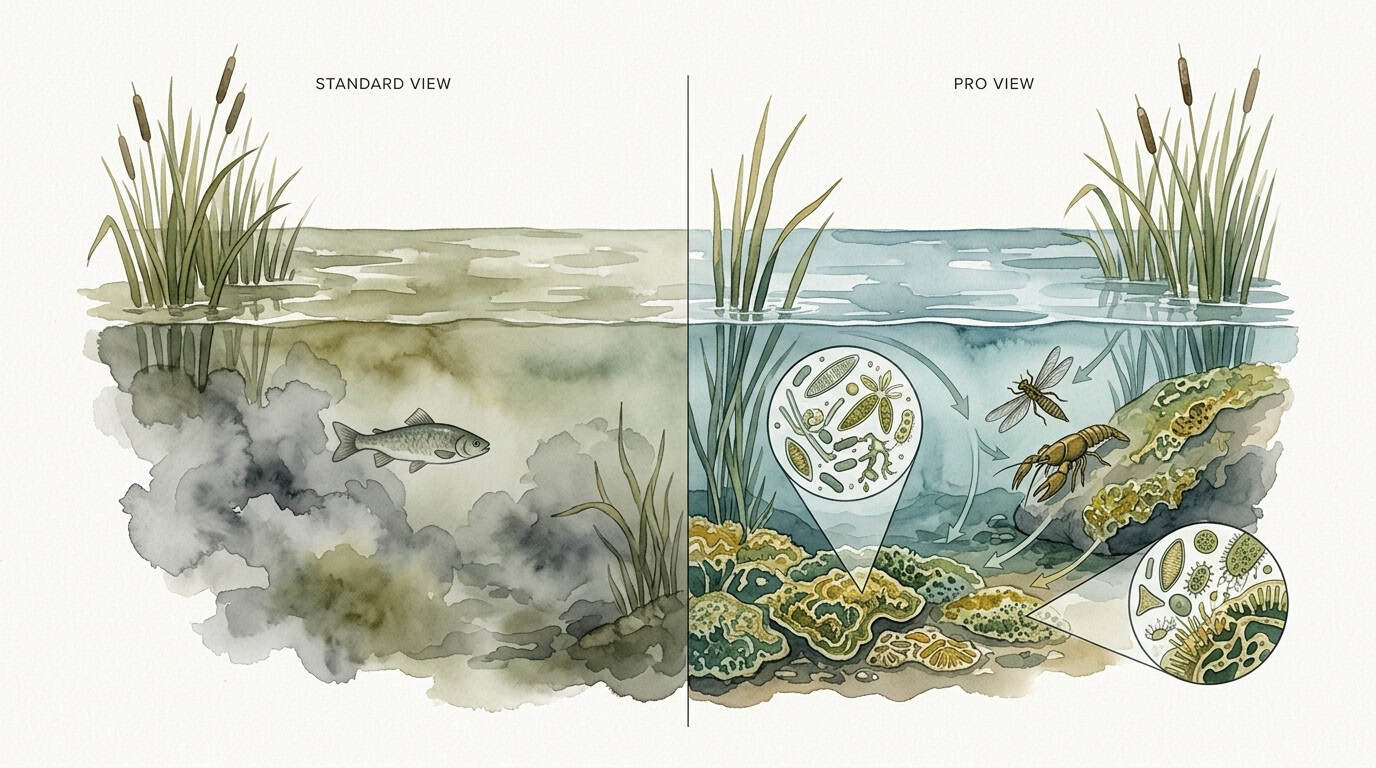
Is that slime a nuisance or your pond’s most important filter? The pros know the difference. Stop cleaning your pond rocks! That slippery coating isn’t just gunk—it’s a sophisticated biological powerhouse that keeps your fish alive. Learn why biofilm is the secret to a self-cleaning ecosystem.
Pond biofilm is a complex, structured community of microorganisms, primarily bacteria, fungi, and algae, embedded within a self-produced matrix of extracellular polymeric substances (EPS). It matters because it serves as the primary site for nutrient cycling, specifically the nitrification process that converts toxic ammonia into nitrate. This biological layer stabilizes water chemistry, provides a supplemental food source for aquatic life, and competes with opportunistic pathogens for resources, ensuring long-term ecosystem stability.
Ecological management of a pond requires a shift from aesthetic-only goals to functional biological goals. Most novice keepers view the slippery layer on rocks as a sign of a dirty pond. This is a fundamental misunderstanding of aquatic microbiology. In a closed system, surface area is the most valuable commodity because it hosts the microbial engines that process waste.
Biofilms are not accidental; they are highly organized architectures. They function like a city, with specialized zones for different chemical reactions. Understanding the mechanics of this “city” allows a pond owner to optimize water clarity and fish health without relying on expensive chemical interventions.

What Is Pond Biofilm and Why It Matters
Biofilm is a collective of microorganisms where cells stick to each other and often to a surface. These adherent cells become embedded within a slimy extracellular matrix. In a pond environment, this matrix is composed of extracellular DNA, proteins, and polysaccharides. This structure allows the microbial community to remain stable even in high-flow areas like waterfalls or pipe interiors.
The primary role of biofilm in an ornamental pond or water garden is biological filtration. While mechanical filters remove large debris, they do nothing for dissolved toxins. Ammonia, excreted by fish through their gills and waste, is lethal even in small concentrations. Biofilms house the nitrifying bacteria—Nitrosomonas and Nitrobacter—that oxidize ammonia into nitrite and then into relatively harmless nitrate.
Beyond nitrogen processing, biofilms act as a protective barrier. They coat every submerged surface, from the liner to the pump intake. This coating prevents the degradation of materials and provides a “living skin” for the pond. When you scrub this layer off, you aren’t just cleaning; you are effectively removing the pond’s liver, forcing the system to restart its chemical cycle from scratch.
Visualizing a biofilm helps in understanding its importance. Imagine a coral reef at a microscopic scale. Just as a reef provides habitat and processes nutrients for the ocean, the biofilm provides a home for the microbes that keep pond water “sweet” and clear. Without it, nutrients like phosphorus and nitrogen remain in the water column, fueling massive, unsightly algae blooms.
The Architecture of the Slime: How Biofilm Works
Biofilm development follows a specific chronological sequence. It begins with the adsorption of organic molecules onto a clean surface, creating a “conditioning film.” This film changes the surface’s charge, making it easier for pioneer bacteria to attach. These early colonizers use specialized structures like pili or flagella to anchor themselves permanently.
Once anchored, the bacteria begin producing EPS. This matrix is the “glue” that holds the colony together. It does more than just stick; it creates micro-channels that allow water, oxygen, and nutrients to circulate deep into the biofilm. This ensures that even bacteria at the bottom of the stack receive the resources they need to function.

As the biofilm matures, it becomes a multi-species environment. Different types of bacteria occupy different depths based on their oxygen requirements. Aerobic bacteria live on the outer edges where oxygen levels are highest, while anaerobic bacteria might live in the deeper, oxygen-poor zones. This stratification allows for complex chemical processes like denitrification—the conversion of nitrate into nitrogen gas—to occur in specific “pockets” of the pond.
Communication is the final piece of the puzzle. Microbes within a biofilm use a process called quorum sensing. They release signaling molecules that allow the colony to respond to environmental changes as a single unit. If nutrient levels drop, the biofilm can slow its metabolic rate. If a toxin enters the water, the EPS matrix can thicken to protect the underlying cells.
The Functional Benefits of a Healthy Biofilm
The most immediate benefit of a healthy biofilm is water detoxification. A pond with a high surface-area-to-volume ratio—such as one with a gravel bottom—has a massive “surface area for work.” This allows the pond to handle higher fish loads and heavier feedings without a corresponding spike in toxic ammonia levels.
Pathogen resistance is another critical advantage. Biofilms occupy the “ecological niches” that harmful bacteria like Aeromonas or Pseudomonas would otherwise exploit. When a rock is covered in beneficial biofilm, there is no “real estate” left for pathogenic colonies to take hold. This creates a competitive exclusion environment that naturally protects fish health.
Biofilms also serve as a foundational food source. Many pond inhabitants, including snails, tadpoles, and certain fish species, graze directly on the biofilm. This provides them with essential proteins and enzymes that are not found in commercial pelleted food. It turns the pond surfaces into a self-replenishing pasture for the aquatic inhabitants.
Carbon sequestration and nutrient trapping are less discussed but equally important. The EPS matrix is highly effective at trapping fine particulates and dissolved organic carbon from the water column. Over time, these trapped materials are broken down by the biofilm’s microbial inhabitants, effectively “polishing” the water and reducing turbidity.
Challenges and Common Biofilm Management Mistakes
The most frequent mistake made by pond owners is “over-cleaning.” Power washing pond rocks or using harsh algaecides destroys the biofilm architecture. Once the biofilm is gone, the nitrogen cycle is broken. This leads to the “New Pond Syndrome” where ammonia levels skyrocket, often resulting in fish mortality shortly after a major cleaning event.
Excessive biofilm thickness can also become a problem. In high-nutrient environments, the biofilm can grow too thick, leading to “sloughing.” Large chunks of the slime may break off and clog pumps or filters. Furthermore, if a biofilm becomes excessively thick (over several millimeters), the deep layers can become entirely anoxic, potentially producing hydrogen sulfide gas, which is toxic to fish.
Imbalanced water chemistry can hinder biofilm performance. Nitrifying bacteria require a specific pH range (typically 7.5 to 8.5) and sufficient alkalinity to process ammonia. If the KH (carbonate hardness) of the water drops too low, the biofilm “stalls.” The microbes remain present, but their metabolic activity drops to near zero, leading to a sudden crash in water quality.
Poor circulation is another common pitfall. Biofilms depend on the movement of water to deliver nutrients and remove metabolic waste. In “dead spots” where water is stagnant, the biofilm can die off, leading to localized rot and the accumulation of organic sludge. Ensuring high-flow rates across as much surface area as possible is key to maintaining a vibrant microbial community.
Limitations and Environmental Constraints
Biofilms are highly sensitive to temperature. The metabolic rate of nitrifying bacteria within the biofilm drops significantly as water temperatures fall. Below 40°F (4°C), the biofilm becomes largely dormant. This means that biological filtration is virtually non-existent in winter, requiring owners to stop feeding fish to prevent ammonia buildup during this period of microbial inactivity.
Chemical sensitivity is a major constraint. Common pond treatments, such as copper-based algaecides or high doses of potassium permanganate, are non-selective. They kill the beneficial biofilm just as effectively as they kill parasites or algae. Any chemical intervention must be weighed against the potential damage to the pond’s biological infrastructure.
Light exposure also dictates biofilm composition. In areas with high UV exposure, the biofilm will be dominated by phototrophic organisms like diatoms and short-string algae. While still functional, these biofilms can become unsightly. Conversely, biofilms in dark pipes or deep filters are purely heterotrophic or autotrophic bacteria, which are more efficient at filtration but do not provide the same oxygenation benefits as their light-exposed counterparts.
Physical space is a hard limit. A pond with smooth liner and no rocks or gravel has very little surface area for biofilm to grow. In these “sterile” designs, the biological load is entirely dependent on the external filter. If the filter fails or is cleaned too aggressively, the entire system has zero redundancy because there is no significant biofilm presence within the pond itself.
Biofilm Density: Standard Maintenance vs. Pro-Active Management
There is a distinct difference between letting a biofilm exist and actively managing it for maximum efficiency. Standard view maintenance often ignores the biofilm until it becomes a visible problem. Pro-active management, however, treats the biofilm as the primary asset of the pond.
| Feature | Passive Biofilm Growth | Optimized Pro-View Management |
|---|---|---|
| Primary Goal | Aesthetic cleanliness. | Maximized nutrient processing. |
| Surface Area | Limited to liner and filter pads. | Enhanced with gravel beds and bio-media. |
| Cleaning Routine | Scrubbing rocks and pressure washing. | Gentle rinsing of debris; biofilm remains intact. |
| System Stability | Frequent “crashes” and algae spikes. | Steady parameters with high redundancy. |
Practical Tips for Biofilm Optimization
To maximize the efficiency of your pond’s biofilm, increase the available surface area. Incorporating a gravel substrate (ranging from 1 to 3 inches in size) dramatically increases the “housing” available for bacteria. This substrate should be paired with an undergravel suction point or a high-flow pump to ensure oxygenated water reaches the deep biofilm layers.
Maintain consistent water parameters. Fluctuations in pH or temperature stress the microbial community. If you must perform a water change, always use a dechlorinator. Chlorine and chloramine are designed to kill biofilms in municipal pipes; they will do the same to your pond, neutralizing your biological filter in minutes.
Monitor your Carbonate Hardness (KH). Nitrifying bacteria consume inorganic carbon (alkalinity) as they process ammonia. For every part of ammonia oxidized, they consume roughly 7.1 parts of alkalinity. If your KH drops below 50 ppm, the biofilm cannot function properly. Aim to keep KH between 100 and 200 ppm for optimal microbial performance.
Introduce “beneficial bacteria” supplements during the spring and after any necessary chemical treatments. While these products do not replace a mature biofilm, they provide the pioneer species needed to jumpstart the colonization process. Look for “cold water” strains if the pond is still warming up from winter.
Advanced Considerations: Quorum Sensing and Nutrient Ratios
Serious practitioners should understand the role of the Redfield Ratio (the ratio of Carbon, Nitrogen, and Phosphorus) in biofilm health. Biofilms are highly adaptable, but if Phosphorus levels become too high relative to Nitrogen, the biofilm can be overtaken by cyanobacteria (blue-green algae). Maintaining a balanced nutrient load ensures the biofilm remains dominated by beneficial heterotrophic bacteria.

Quorum sensing inhibition is an emerging field in aquatic management. Certain organic compounds can “jam” the communication between bacteria in a biofilm. Excessive tannins from falling leaves or peat can sometimes interfere with microbial signaling. Regular removal of heavy leaf litter ensures that the organic load doesn’t interfere with the biofilm’s ability to self-regulate.
Oxygen saturation is the ultimate limiting factor for biofilm depth. In high-performance systems, such as koi ponds with heavy stocking, using aeration stones or oxygen injectors directly upstream of high-surface-area zones ensures the biofilm operates at peak metabolic efficiency. This prevents the inner layers of the biofilm from turning anaerobic and producing harmful byproducts.
Example Scenario: The “Clean” Pond vs. The “Healthy” Pond
Consider two identical 2,000-gallon ponds. Pond A is maintained by a “clean” enthusiast who pressure washes the rocks every month and uses algaecides to keep the liner white. Pond B is maintained with a “biofilm-first” approach, where the rocks are covered in a thin, brownish-green velvet and the water is circulated through a gravel bog filter.
When a large fish dies or a heavy rain washes lawn fertilizer into both ponds, the results are drastically different. In Pond A, the lack of biofilm means there is no microbial “buffer.” Ammonia levels spike to 2.0 ppm within 24 hours, causing the remaining fish to gasp at the surface. The water turns pea-green as planktonic algae take advantage of the sudden nutrient surge.
In Pond B, the mature biofilm reacts almost instantly. The quorum sensing molecules signal the bacteria to increase metabolic activity. The ammonia spike is absorbed by the massive surface area of the rocks and gravel, never rising above 0.25 ppm. The water remains clear because the biofilm outcompetes the algae for the incoming nutrients. Pond B demonstrates the mechanical reliability of biological systems.
Final Thoughts
Pond biofilm is not a sign of neglect; it is the hallmark of a functional ecosystem. By moving away from the “swimming pool” mentality and embracing the “biological engine” mentality, pond owners can achieve better water quality with significantly less manual labor. The slime on your rocks is a highly evolved protective layer that works 24/7 to keep the environment safe for your fish.
Maintaining this layer requires a gentle hand and an understanding of microbial needs. Focus on providing surface area, oxygen, and stable chemistry. When you protect the biofilm, the biofilm protects the pond. This shift in perspective is what separates frustrated hobbyists from successful water gardeners.
As you continue to refine your pond management skills, consider how other elements like plant roots and mechanical pre-filtration interact with your biofilm. Every component should serve the goal of supporting the microscopic workers that define the health of your aquatic world.
Frequently Asked Questions About What Is Pond Biofilm and Why It Matters
How can I tell the difference between healthy biofilm and harmful algae?
Healthy biofilm is typically a thin, slippery, or “velvety” coating that is brown, translucent, or dark green. It feels like a slick layer on the rocks but does not have long, flowing filaments. In contrast, harmful algae—specifically string algae—form long, hair-like strands that can be pulled out of the water in clumps. Planktonic algae turn the entire water column green like pea soup. A healthy biofilm stays attached to surfaces and does not cloud the water; instead, it helps clear the water by trapping particulates and processing dissolved waste. If you can see the texture of the rock through the coating, it is likely a healthy, thin biofilm. If the rock is hidden under a thick, “shaggy” carpet, you likely have an algae imbalance due to excess nutrients.
Can I have too much biofilm in my pond?
Yes, while biofilm is essential, an overabundance can indicate a system imbalance. Excessive biofilm growth, often appearing as thick, gelatinous mats, usually results from high levels of dissolved organic carbons and phosphates. If the biofilm becomes too thick (exceeding 3–5 millimeters), the deepest layers can become anaerobic because oxygen cannot penetrate the dense EPS matrix. This can lead to the production of hydrogen sulfide, which smells like rotten eggs and is highly toxic to fish. Furthermore, thick biofilm can “slough off” in large chunks, which may clog mechanical filters and pump impellers. Managing your fish feeding and ensuring robust aeration are the best ways to keep biofilm at an optimal, functional thickness rather than allowing it to become a nuisance.
Does biofilm die off in the winter, and will it hurt my fish?
Biofilm does not typically “die” in the winter, but it does become dormant. As water temperatures drop below 50°F (10°C), the metabolic rate of the nitrifying bacteria within the biofilm slows significantly. At temperatures near freezing, the microbes remain alive but are essentially “asleep.” This dormancy does not harm fish directly, but it does mean the pond’s ability to process ammonia is halted. This is why it is critical to stop feeding fish in the winter; without an active biofilm to process waste, ammonia can build up to toxic levels even in cold water. When spring arrives and temperatures rise, the biofilm “wakes up” and begins multiplying again, though this process can take several weeks to reach full capacity, a period known as “spring startup.”
Will UV clarifiers kill the beneficial biofilm on my pond rocks?
UV clarifiers do not kill the biofilm located on pond rocks, liners, or filter media. UV sterilization works by exposing water to intense ultraviolet light as it passes through a sealed chamber. This effectively kills planktonic (free-floating) algae, bacteria, and viruses that are suspended in the water column. However, because the beneficial biofilm is “sessile”—meaning it is firmly attached to submerged surfaces—it never passes through the UV chamber and remains unharmed. In fact, UV clarifiers can indirectly help biofilm by killing off competing planktonic algae, which frees up more nutrients for the beneficial bacteria in the biofilm to consume. You can safely use UV systems without worrying about damaging your pond’s biological “liver.”
Should I ever scrub the rocks in my pond to remove the slime?
Generally, you should avoid scrubbing the rocks in your pond. Removing that “slime” is equivalent to removing the biological filter that keeps your fish alive. When you scrub the rocks, you destroy the complex architecture of the biofilm and kill the nitrifying bacteria that manage ammonia levels. This often triggers a “re-cycling” of the pond, leading to dangerous ammonia spikes and subsequent algae blooms as the system struggles to find balance again. The only time you should consider cleaning rocks is if there is a massive accumulation of organic sludge (muck) that is suffocating the biofilm. In such cases, a gentle rinse with dechlorinated pond water is much safer than a vigorous scrub or power wash.