What Causes Sudden pH Swings in Ponds?

Photo of author
By Mark Washburn

Mark is a pond management specialist with over 20 years in the field. His wealth of experience will help you with your pond!

Sudden pH swings are silent killers. Do you have the order necessary to prevent a crash? Heavy rain and algae blooms can send your pH into a tailspin. Learn the ‘why’ behind the chaos and how to keep your water steady.
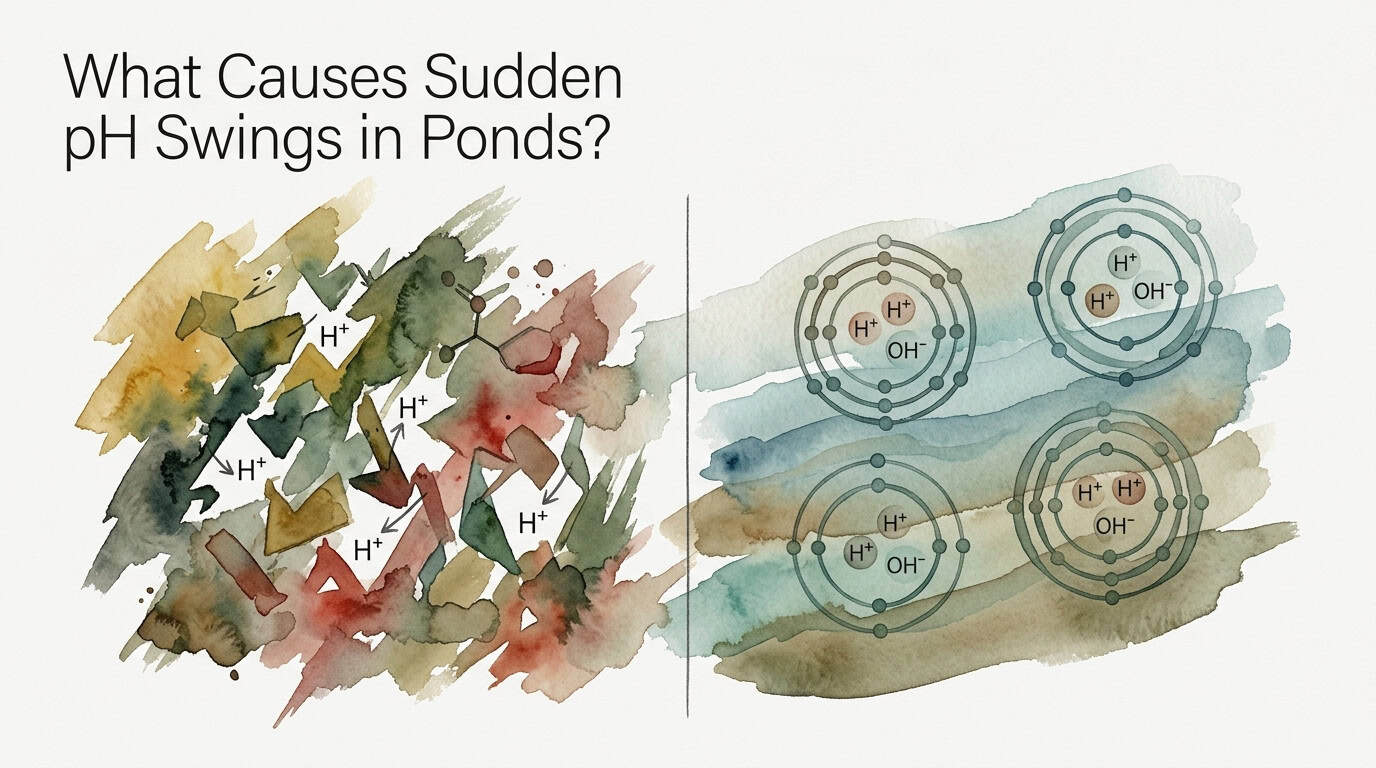
Sudden pH swings in ponds are primarily caused by a lack of carbonate hardness (KH), which functions as a chemical buffer. When alkalinity is low, typically below 50–100 ppm, the water cannot neutralize acids produced by biological processes like nitrification or environmental factors like acid rain. This instability is further driven by the diurnal cycle of photosynthesis and respiration, which causes carbon dioxide levels—and consequently pH—to fluctuate significantly between day and night.

What Causes Sudden pH Swings in Ponds?

Pond pH represents the negative logarithm of hydrogen ion concentration [H+]. Because the scale is logarithmic, a shift from pH 8.0 to pH 7.0 represents a tenfold increase in acidity. Sudden swings occur when the pond’s internal chemistry loses its equilibrium, moving from a state of buffered order to one of chemical chaos. This instability is rarely the result of a single event but rather a cumulative failure of the water’s buffering capacity to manage internal and external acid loads.

In a closed aquatic system, the pH is governed by the relationship between dissolved carbon dioxide (CO2), bicarbonate (HCO3-), and carbonate (CO3^2-) ions. This is known as the carbonate-bicarbonate buffer system. When this system is robust, it absorbs excess hydrogen ions, preventing rapid shifts. When it is depleted, even minor environmental changes can trigger a “pH crash,” where the pH drops precipitously, often resulting in mass mortality of nitrifying bacteria and fish.

Real-world situations where these swings are most prevalent include heavily stocked koi ponds, ponds with dense aquatic vegetation, and systems located in regions with soft, mineral-poor source water. Understanding the mechanical drivers of these shifts—specifically the interplay between gas exchange, mineral concentration, and biological activity—is essential for maintaining a stable environment.

The Diurnal Cycle: Photosynthesis and Respiration Mechanics

The most common cause of daily pH fluctuation is the metabolic activity of algae and aquatic plants. During daylight hours, these organisms perform photosynthesis, a process that consumes dissolved carbon dioxide (CO2) to produce glucose and oxygen. Since CO2 dissolves in water to form carbonic acid (H2CO3), its removal reduces the concentration of hydrogen ions, causing the pH to rise.

Conversely, during the night, photosynthesis ceases, but all aerobic organisms—including fish, plants, and bacteria—continue to respire. Cellular respiration releases CO2 back into the water column. As CO2 levels rise overnight, carbonic acid concentrations increase, leading to a higher concentration of hydrogen ions and a corresponding drop in pH. In ponds with low alkalinity, this daily oscillation can span from 6.5 at dawn to over 9.0 by late afternoon, causing severe osmoregulatory stress in fish.

To quantify this effect, practitioners should measure pH at two specific times: just before sunrise (the daily minimum) and in the late afternoon (the daily maximum). A deviation of more than 0.5 units within a 24-hour period indicates an insufficient buffering capacity or excessive biomass. Mechanical aeration can mitigate this by stripping excess CO2 from the water, but it cannot replace the need for chemical buffering.

The Role of Carbonate Hardness (KH)

Carbonate hardness, or KH, is the primary defense against pH instability. Often referred to as “total alkalinity,” it measures the concentration of carbonate and bicarbonate ions in the water. These ions act as chemical “sponges” that absorb hydrogen ions (acid) or release them as needed to maintain a stable pH. Without a minimum KH level—ideally 100 to 200 ppm (mg/L) for most koi and ornamental ponds—the pH is at the mercy of every environmental variable.

The biological filter is a significant consumer of KH. The nitrification process, where Nitrosomonas and Nitrobacter bacteria convert toxic ammonia into nitrate, releases hydrogen ions as a byproduct. Chemically, for every 1 mg of ammonia oxidized, approximately 7.14 mg of carbonate alkalinity is consumed. In a heavily fed pond, the biofilter can deplete the pond’s KH in a matter of weeks if it is not regularly replenished through water changes or chemical supplementation.

When KH falls below 20–30 ppm, the buffering capacity is essentially zero. At this point, the pH can crash suddenly from 8.0 to below 6.0. This drop not only stresses fish but also inhibits the nitrifying bacteria themselves, which begin to shut down below pH 6.8 and stop functioning entirely near pH 5.5. This leads to a secondary crisis: a rapid spike in ammonia levels.

Environmental and External Triggers

Environmental factors frequently act as the tipping point for a pH crash. Heavy rainfall is a primary concern. Rainwater is naturally acidic, often with a pH between 5.0 and 5.6, and it contains virtually no dissolved minerals or KH. A significant storm event can dilute the pond’s existing alkalinity while simultaneously introducing a large acid load. If the pond’s KH is already borderline, this influx can trigger an immediate and catastrophic pH drop.

Organic decomposition also contributes to acidification. As leaves, fish waste, and uneaten food decay, heterotrophic bacteria break down the organic matter, releasing CO2 and organic acids. In ponds with inadequate maintenance or poor mechanical filtration, the accumulation of “sludge” at the bottom creates an acidic environment that slowly eats away at the water’s buffering capacity. This is particularly dangerous in winter when biological activity slows, and homeowners may test their water less frequently.

Chemical Chaos vs Buffered Order is most visible during these events. A pond with “Buffered Order” maintains a steady pH despite the rain, while a system in “Chemical Chaos” suffers a rapid decline. Runoff from surrounding landscapes can also introduce fertilizers or acidic soil components that further destabilize the equilibrium.

Challenges and Common Pitfalls

One of the most frequent mistakes made by pond owners is chasing the pH value while ignoring the KH value. Attempting to “fix” a low pH by adding a pH-up chemical without addressing the lack of alkalinity is a temporary measure. The pH will likely rise briefly and then crash again because the underlying cause—the lack of a buffer—has not been resolved. This “yo-yo” effect is often more stressful to fish than a consistently low pH.

Another pitfall is over-reliance on “automated” buffers like crushed coral or oyster shells in high-bioload systems. While these materials dissolve and release carbonates when the pH drops, they often dissolve too slowly to counteract a rapid acidification event caused by heavy rain or intense nitrification. They are excellent for long-term stability in low-demand systems but may fail to prevent a crash in a heavily stocked koi pond during a crisis.

Inaccurate testing is a technical hurdle. Many hobbyists rely on dip strips, which are notoriously imprecise for measuring KH. For serious practitioners, liquid titration test kits or calibrated electronic meters are mandatory for obtaining the data necessary to make informed management decisions. Failure to calibrate electronic probes regularly is a common source of data error, leading to incorrect chemical dosing.

Benefits of Maintaining Stable pH

Stability in water chemistry provides measurable improvements in fish health and system efficiency. When the pH remains steady, fish experience less osmoregulatory stress. This allows them to allocate more energy toward growth and immune function rather than maintaining internal ion balance. Furthermore, a stable pH between 7.5 and 8.5 optimizes the performance of the biological filter, ensuring that ammonia and nitrite are processed as efficiently as possible.

Maintaining high alkalinity (KH) also provides a safety margin against ammonia toxicity. While it is true that ammonia is more toxic at higher pH levels, a stable, high-KH environment prevents the sudden “crashes” that stop nitrification. A system that stays at pH 8.0 with 0 ppm ammonia is far safer than a system that swings from 6.0 to 8.0, risking both ammonia spikes and chemical shock.

Practical Tips and Best Practices

To maintain a stable pond environment, adhere to the following technical protocols:

  • Monitor KH Weekly: Never assume your source water is providing enough minerals. Test KH weekly and aim for a minimum of 100 ppm, or higher if you have a high fish load.
  • Use Sodium Bicarbonate for Rapid Adjustment: Baking soda (pure sodium bicarbonate) is an efficient and safe way to raise KH. It has a natural ceiling of approximately pH 8.2–8.4, making it difficult to over-dose to dangerous levels.
  • Implement Regular Water Changes: Water changes not only remove nitrates and organic acids but also replenish essential trace minerals and carbonates.
  • Increase Aeration During Algae Blooms: If you have high algae density, run additional air stones or waterfalls at night to help strip the CO2 produced by plant respiration, limiting the overnight pH drop.
  • Manage Organic Load: Regularly remove leaves and debris from the pond bottom. Reducing the volume of decaying organic matter lowers the production of organic acids.

Advanced Considerations: The Ammonia-pH Relationship

For advanced practitioners, understanding the speciation of ammonia is critical. Total Ammonia Nitrogen (TAN) exists in two forms: ionized ammonium (NH4+) and unionized ammonia (NH3). NH3 is the highly toxic form. The ratio between these two is determined primarily by pH and temperature. As pH increases, a larger percentage of TAN is converted into the toxic NH3 form.

pH Level Percentage of Toxic Ammonia (NH3) at 25°C Risk Assessment
7.0 0.5% Low – Ammonia is mostly in ionized (safer) form.
8.0 5.0% Moderate – Toxicity increases tenfold from pH 7.0.
9.0 35.0% Critical – Small amounts of TAN become lethal.

This data highlights why a “pH crash” followed by a sudden rise in pH (perhaps due to a large water change) can be so deadly. If the crash stopped the biofilter, ammonia levels would have risen. When the owner raises the pH back to “normal,” the accumulated ammonium suddenly converts to toxic ammonia, killing the fish. In these scenarios, ammonia binders must be used before correcting the pH.

Example Scenario: The Post-Storm Crash

Consider a 2,000-gallon pond with a KH of 40 ppm and a stable pH of 7.8. Following a heavy three-day rain event, the pond receives 4 inches of rain (pH 5.4). The rainwater dilutes the already low KH to approximately 15 ppm. Simultaneously, the influx of acidic water consumes the remaining bicarbonates. By the fourth morning, the owner finds the fish gasping at the surface. A test reveals the pH has dropped to 5.8. Because the low pH has inhibited the nitrifying bacteria, ammonia has spiked to 2.0 ppm. To resolve this, the owner must first neutralize the ammonia with a chemical binder and then slowly raise the KH using sodium bicarbonate to restore the buffer and restart the biofiltration cycle.

Final Thoughts

Sudden pH swings are a mechanical failure of the water’s buffering capacity. They are driven by biological respiration, nitrification, and environmental dilution. By focusing on maintaining a robust level of carbonate hardness (KH), pond owners can create a stable environment that resists these fluctuations. Chemical stability is not a one-time setup but an ongoing process of monitoring and replenishment.

The goal is to move beyond reacting to crises and toward a proactive management style where data drives decisions. Regular testing of KH and pH, combined with an understanding of the underlying nitrogen and carbon cycles, ensures that your pond remains a healthy ecosystem. Precision in water chemistry is the foundation of successful pond keeping, allowing the biological components to thrive without the stress of constant chemical volatility.

Frequently Asked Questions About What Causes Sudden pH Swings in Ponds?

How often should I test my pond’s KH to prevent pH swings?

For most established ponds, testing KH once a week is sufficient. However, if you have a high fish bioload, a heavy feeding schedule, or live in an area with very soft source water, twice-weekly testing is recommended. You should also test KH immediately following heavy or prolonged rain events, as rainwater dilution is a major cause of sudden alkalinity drops. Maintaining a record of these measurements allows you to identify trends where the biological filter is consuming the buffer faster than your water changes are replenishing it, enabling proactive dosing before a crash occurs.

Can too many plants cause pH problems in a pond?

Yes, excessive aquatic vegetation or heavy algae blooms can lead to significant diurnal pH swings. While plants produce oxygen during the day, they consume it and release large amounts of carbon dioxide (CO2) at night. This CO2 reacts with water to form carbonic acid, which lowers the pH. If the pond’s carbonate hardness (KH) is low, the water cannot buffer this acid, resulting in a dramatic pH drop overnight followed by a sharp rise during the day as photosynthesis resumes. Managing plant density and ensuring high KH levels are the primary ways to stabilize these plant-induced fluctuations.

Is baking soda safe to use for stabilizing pond pH?

Pure sodium bicarbonate (baking soda) is one of the safest and most effective ways to increase carbonate hardness (KH) and stabilize pH. It has a natural chemical limit; even in high concentrations, it rarely raises the pH above 8.4, which is within the safe range for most pond fish. When adding baking soda, it is best to dissolve it in a bucket of pond water first and distribute it evenly. However, you should avoid raising the KH by more than 20 ppm per day to allow the fish to acclimate to the changing mineral content and prevent osmotic shock.

Why does my pH drop during the winter?

pH often drops in winter due to a combination of factors. First, many pond owners reduce water changes, which are the primary source of mineral replenishment. Second, organic matter like fallen leaves and dead algae accumulate at the bottom and decompose, releasing organic acids and CO2. Third, in some regions, winter rainfall and snowmelt are significantly more acidic and mineral-poor than summer water sources. Even though the biological filter slows down in cold weather, these other acid-producing factors can still deplete a low buffer over several months, leading to a “late winter” pH crash.

Can a pH swing kill my pond’s beneficial bacteria?

Sudden pH swings, specifically pH crashes where the level drops below 6.0, can be catastrophic for nitrifying bacteria. The bacteria responsible for converting ammonia to nitrate (Nitrosomonas and Nitrobacter) prefer a slightly alkaline environment, typically between pH 7.2 and 8.5. Once the pH falls below 6.8, their activity begins to slow, and at pH 5.5, they can become dormant or die. This results in a total failure of the biological filter, leading to toxic ammonia spikes. Restoring the pH is necessary to restart the cycle, but it may take several days or weeks for the bacterial colony to fully recover.

We're Not All Talk

Sign up for the best pond tips you'll find anywhere online.  We'll send them out during the summer months and you won't want to miss a single one!

Invalid email address
We promise - no spam. You can unsubscribe at any time.