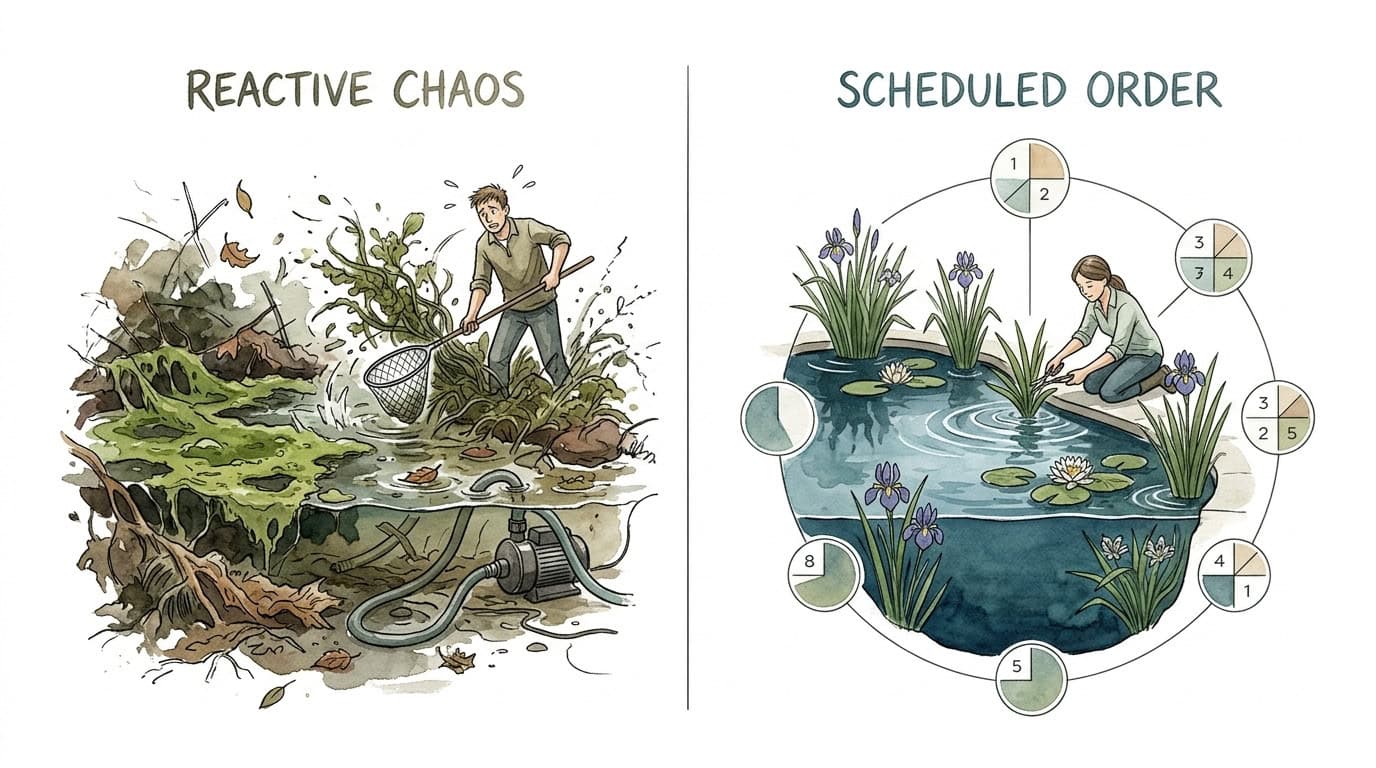
Chaos happens when you wait; order happens when you plan. Stop reacting to disasters. Follow this simple calendar of order to keep your pond beautiful all year round.
The Complete Annual Pond Maintenance Calendar is a systematic protocol designed to manage water chemistry, mechanical equipment, and biological loads across four seasonal phases. By aligning filtration maintenance, feeding schedules, and organic waste removal with ambient water temperatures, pond owners can maintain dissolved oxygen levels above 6 mg/L and prevent ammonia spikes. This schedule ensures peak system efficiency, mechanical longevity, and the biological stability of the aquatic ecosystem throughout the year.
The Complete Annual Pond Maintenance Calendar
The Complete Annual Pond Maintenance Calendar serves as a technical roadmap for maintaining the equilibrium of an artificial aquatic ecosystem. Unlike natural bodies of water, backyard ponds are closed systems with high biomass-to-volume ratios, making them susceptible to rapid chemical fluctuations. This calendar exists to provide a predictable maintenance cadence that accounts for the metabolic changes in fish and the efficiency variations of nitrifying bacteria as temperatures fluctuate.
In real-world applications, this calendar is used by professional pond managers and advanced hobbyists to transition from reactive troubleshooting to proactive optimization. It focuses on the mechanical, chemical, and biological aspects of the pond. For instance, mechanical maintenance ensures pumps maintain the required flow rates for gas exchange, while biological maintenance manages the nitrogen cycle, preventing the accumulation of toxic nitrogenous wastes like ammonia and nitrite.
Seasonal Implementation: A Technical Step-by-Step Guide
Effective pond management requires adjusting operational parameters based on water temperature, which directly influences biological activity and oxygen solubility.
Spring: Biological and Mechanical Re-Initialization (Water Temp: 40°F – 60°F)
Spring is the most critical phase for re-establishing the nitrogen cycle. As water temperatures rise above 50°F, nitrifying bacteria such as Nitrosomonas and Nitrobacter begin to proliferate, though their metabolic rate is initially slow. The following technical steps are mandatory:
- System Cleanout: Remove accumulated organic debris from the pond floor to reduce the biological oxygen demand (BOD).
- Equipment Verification: Inspect pump impellers for calcification and replace UV-C clarifier bulbs, which typically lose effective germicidal output after 8,000 to 9,000 hours of operation.
- Biological Seeding: Introduce cold-water bacterial strains to jump-start nitrification before the fish metabolism fully accelerates.
- Feeding Protocol: Begin feeding only when temperatures consistently exceed 50°F, using low-protein, wheat-germ-based diets to accommodate slow digestion.
Summer: Peak Loading and Aeration Management (Water Temp: 60°F – 85°F)
During the summer, high water temperatures reduce the solubility of dissolved oxygen (DO). A pond at 80°F holds significantly less oxygen than at 50°F, while the oxygen demand of fish and bacteria is at its peak. Maintenance focuses on mechanical cooling and oxygenation:
- Oxygen Monitoring: Ensure DO levels remain above 6 mg/L. Deploy supplemental aeration (air stones or venturi injectors) if saturation drops.
- Evaporation Management: Monitor water levels daily. Top off with dechlorinated water to maintain head pressure for skimmers and pumps.
- Algae Control: Manage nutrient loading (phosphates and nitrates) through partial water changes (10-15% weekly) to prevent cyanobacteria blooms.
Autumn: Organic Load Mitigation (Water Temp: 60°F – 40°F)
Autumn maintenance is defined by the management of external organic inputs, specifically leaf litter, which can crash the pH and deplete oxygen during decomposition:
- Debris Exclusion: Install pond netting with a mesh size of 1/4 inch to intercept falling foliage.
- Metabolic Tapering: Transition back to wheat-germ diets as temperatures drop below 60°F. Cease all feeding once water temperatures stabilize below 50°F.
- Sludge Digestion: Apply cellulase-heavy bacterial treatments to assist in the breakdown of remaining organic matter before the winter freeze.
Winter: Gas Exchange and Dormancy (Water Temp: < 40°F)
The primary objective in winter is to prevent “winter kill” caused by the trapping of hydrogen sulfide and carbon dioxide under ice:
- Ventilation Maintenance: Use a pond de-icer or a high-flow aerator positioned near the surface to maintain a 12-inch opening in the ice for gas exchange.
- Equipment Protection: In extreme climates, pull external pumps and store them in water-filled containers in non-freezing environments to prevent seal desiccation and cracking.
The Benefits of Scheduled Maintenance
Implementing a rigorous annual calendar provides measurable improvements in system performance and aquatic health.
Increased Mechanical Lifespan: Regular inspection of pump intake screens and filter media prevents cavitation and motor strain. By adhering to a cleaning schedule, the operational life of a submersible pump can be extended from 2–3 years to 5+ years. Biological Stability: A scheduled approach prevents “New Pond Syndrome” every spring. By seeding bacteria early and managing nutrient spikes in the summer, the nitrogen cycle remains stable, keeping ammonia and nitrite levels at 0 ppm. Reduced Operational Costs: Proactive maintenance is cheaper than emergency interventions. Preventing a single major algae bloom or fish disease outbreak through water quality management saves significant capital otherwise spent on expensive chemical treatments or livestock replacement.
Challenges and Common Pitfalls
Even with a plan, technical errors can compromise the system.
One of the most frequent errors is Early Season Overfeeding. Feeding fish before their metabolism can process the nutrients (below 50°F) leads to the food rotting in the gut, causing bacterial infections. Another technical failure is Inadequate Mechanical Filtration Cleaning. If mechanical media is not rinsed regularly, it becomes an anaerobic zone, producing toxic gases and reducing the efficiency of the biological stages. Finally, Poor UV-C Management often leads to “pea soup” water in mid-summer because owners forget that bulbs continue to light up long after they have lost the ability to disrupt the DNA of single-celled algae.
Limitations of a Standardized Calendar
While the annual calendar provides a baseline, it is limited by geographical and environmental variables.
Climate Variance: A maintenance calendar for a pond in Florida will differ significantly from one in Maine. In southern climates, winterization may be non-existent, requiring year-round high-protein feeding and continuous aeration. Biomass Density: Highly stocked Koi ponds require more frequent filter backwashing and more aggressive water changes than lightly stocked goldfish ponds or water gardens. The “complete” calendar must be adjusted based on the specific nitrate production rate of the resident livestock.
Scheduled Order vs. Reactive Chaos
The differences between a scheduled maintenance approach and a reactive “fix it when it breaks” strategy are quantifiable in terms of cost and system uptime.
| Factor | Scheduled Order | Reactive Chaos |
|---|---|---|
| Ammonia Levels | Consistent 0 ppm | Frequent spikes > 1.0 ppm |
| Pump Efficiency | 95% of rated GPH | 60-70% due to clogging |
| Water Clarity | High (5ft+ visibility) | Variable (Green/Murky) |
| Annual Cost | Fixed, predictable | High (Emergency visits) |
| Fish Stress | Minimal | High (Immune suppression) |
Practical Tips for Precision Maintenance
To optimize the execution of the annual calendar, utilize the following technical best practices:
- Digital Monitoring: Use smart thermometers and pH probes to receive real-time alerts. This allows for immediate adjustments to feeding or aeration before chemical shifts become lethal.
- Backwash Calibration: Do not over-clean biological media. Rinse with pond water, not chlorinated tap water, to preserve the biofilm of beneficial bacteria.
- Nitrate Dilution: Aim to keep nitrates below 40 ppm. If levels exceed this, increase the frequency of small (10%) water changes rather than performing one large (50%) change, which can cause osmotic shock to the fish.
- Shade Implementation: In high-intensity sun environments, use 50-70% shade sails or floating plants like Pistia stratiotes to reduce the thermal load and solar-driven algae growth.
Advanced Considerations: The Phosphorus Cycle and Redox Potential
For advanced practitioners, maintenance extends beyond the nitrogen cycle into managing phosphorus and Oxygen Reduction Potential (ORP).
Phosphorus is often the limiting nutrient for filamentous algae. Using lanthanum-based phosphate binders during the summer months can effectively starve string algae without the use of copper-based algaecides. Furthermore, monitoring ORP provides a snapshot of the pond’s “cleanliness.” A healthy pond typically maintains an ORP between 250mV and 400mV. If the ORP drops significantly, it indicates an accumulation of dissolved organic carbons (DOCs), signaling the need for an immediate filter cleaning or water change before water quality degrades.
Example Scenario: Managing a 5,000-Gallon Koi Pond
Consider a 5,000-gallon pond with 20 mature Koi. In the spring (April), the owner replaces the 40W UV bulb and cleans the bead filter. As the temperature hits 55°F, they introduce cold-water bacteria and begin feeding 100g of wheat-germ food daily. By July, water temps reach 82°F. The owner increases aeration flow to 60 LPM and performs 500-gallon weekly water changes to keep nitrates under 20 ppm. In October, they install a leaf net and switch back to wheat-germ food until the water hits 48°F, at which point all feeding stops and the de-icer is plugged in. This sequence prevents every major cause of fish mortality and equipment failure.
Final Thoughts
The Complete Annual Pond Maintenance Calendar is an essential framework for any serious pond owner. It replaces guesswork with a data-driven approach, ensuring that every mechanical and biological component is operating within its optimal parameters. By understanding the relationship between temperature, oxygen, and the nitrogen cycle, you move from being a “pond cleaner” to a steward of a complex ecosystem.
Consistency is the primary driver of success in aquatic management. While the tasks vary by season, the objective remains the same: the maintenance of environmental stability. Implementing this calendar will not only protect your investment in fish and equipment but also provide a predictable, clear, and healthy pond environment year-round.
Frequently Asked Questions About The Complete Annual Pond Maintenance Calendar
When should I stop feeding my fish for the winter?
Feeding should cease entirely when the water temperature consistently drops below 50°F (10°C). Below this threshold, a fish’s metabolism and digestive enzyme production slow down to the point where food cannot be efficiently processed. If food is ingested at these temperatures, it can remain in the digestive tract and rot, leading to fatal bacterial infections or internal blockages. It is vital to use a dedicated pond thermometer rather than relying on air temperature, as water retains heat longer than the atmosphere. Once the “no-feed” period begins, fish enter a state of torpor and will survive on their stored fat reserves until spring.
Do I need to change my UV bulb if it is still glowing?
Yes, UV-C bulbs must be replaced annually regardless of whether they are still emitting visible light. The blue or purple glow you see is just the visible spectrum; the germicidal UVC wavelength (254nm) responsible for destroying algae DNA degrades significantly over time. Most high-quality UV bulbs are rated for approximately 9,000 hours of continuous use, which equates to roughly one year. By the start of the second season, the output is usually insufficient to control single-celled algae blooms during the high-intensity sun of summer. Replacing the bulb in early spring ensures maximum protection during the peak growth season.
How often should I clean my pond filter?
Filter maintenance frequency depends on the filter type and the biological load. Mechanical filters (like skimmer mats or brushes) should be inspected and cleaned every 1–2 weeks during the active season (Spring through Autumn). Biological filters, such as pressurized bead filters or bog filters, typically require a “backwash” or gentle rinse every 2–4 weeks. It is crucial never to over-clean biological media with chlorinated tap water, as this will kill the beneficial nitrifying bacteria. Instead, always use pond water for rinsing. If you notice a decrease in water flow from your waterfall or return jets, it is a mechanical signal that the filter media is saturated and requires immediate cleaning.
Can I leave my pond pump running all winter?
Whether to leave a pump running depends on your local climate and pond design. In moderate climates where the water does not freeze solid, leaving the pump running can help maintain a hole in the ice for gas exchange. However, in colder regions, running a pump can cause “super-cooling” of the water by mixing the warmer, denser water at the bottom (usually around 39°F) with the freezing surface water. This can be lethal for fish. Furthermore, water can freeze on waterfalls and create “ice dams,” which divert water out of the pond and drain it. In many cases, it is safer to turn off the main pump, pull it out for storage, and use a small aerator or de-icer to keep an opening in the ice.
What is the most common cause of fish death in the spring?
The most common cause of spring mortality is a combination of “Spring Press” and a compromised immune system. As water temperatures rise into the “danger zone” of 40°F to 55°F, pathogenic bacteria and parasites (like Aeromonas or Ich) become active before the fish’s immune system has fully awakened. Additionally, if the biological filter has not been properly re-initialized, ammonia and nitrite spikes occur simultaneously with this biological threat. This creates a high-stress environment that fish cannot overcome. Following a strict spring maintenance calendar—including early water testing, cleaning debris, and adding cold-water bacteria—is the most effective way to prevent these losses.