
Stop buying ‘beta-glucan’ supplements in a bottle when your pond is capable of growing the world’s most potent version naturally. Paramylon is a unique carbohydrate found only in Euglena that acts as a powerful immune-booster for fish. Instead of paying for processed supplements that lose potency on the shelf, you can grow a living supply that stays fresh until the moment your fish eat it. It’s the difference between a synthetic pill and a superfood diet.
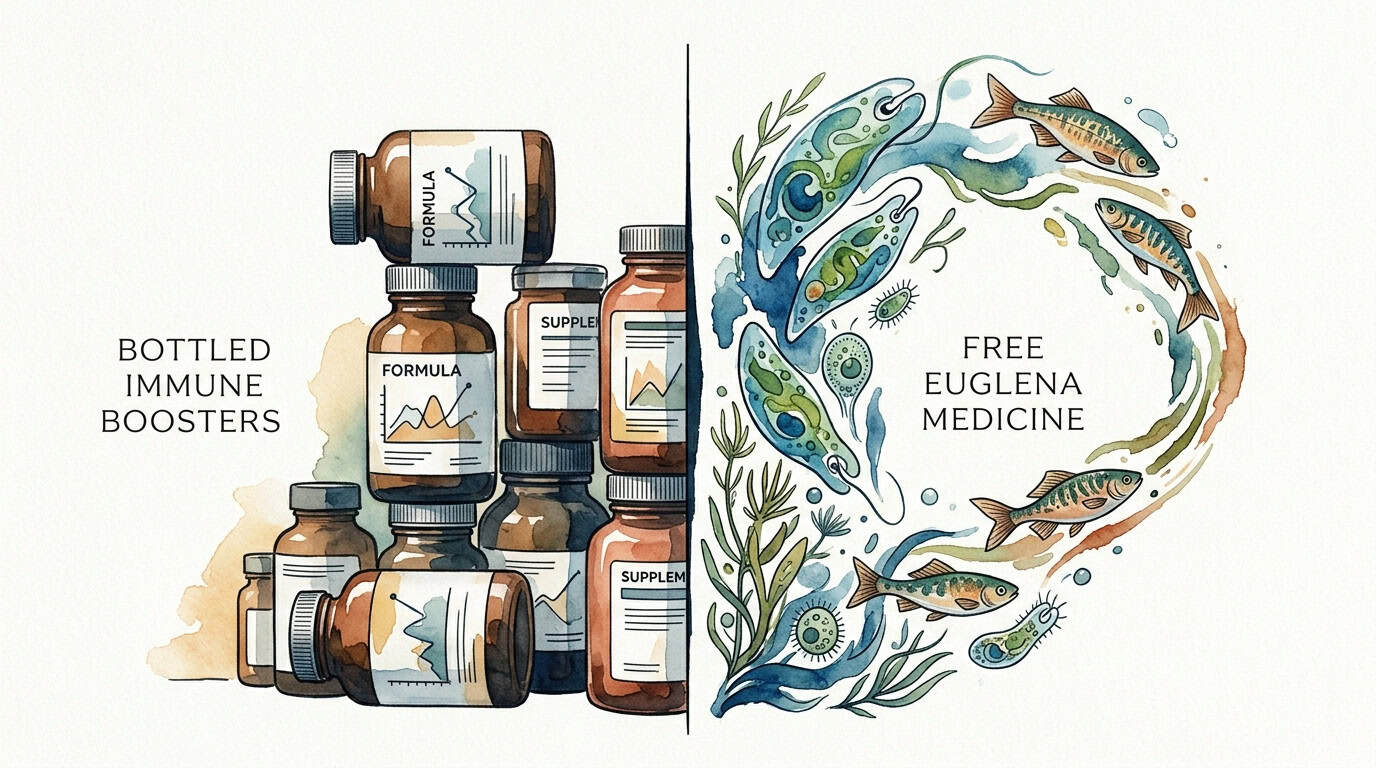
Natural fish immune system boosters are biological compounds, primarily beta-1,3-glucans like paramylon found in Euglena gracilis, that stimulate the innate immune response. These boosters activate macrophages, neutrophils, and natural killer cells through pattern recognition receptors, enhancing resistance to bacterial and viral pathogens. Unlike synthetic additives, live microalgae sources provide highly bioavailable nutrients and antioxidants that improve survival rates and growth performance in both intensive aquaculture and ornamental pond environments.
Natural Fish Immune System Boosters
Natural fish immune system boosters are substances derived from biological sources that enhance a fish’s ability to defend against pathogens without the use of pharmaceutical antibiotics. In the context of modern aquatic management, the most significant of these is paramylon, a specialized carbohydrate produced by the unicellular microalgae Euglena gracilis. While many organisms produce polysaccharides, Euglena is unique because it stores energy as pure, linear beta-1,3-glucan granules that float freely within its cytoplasm.
These boosters are critical in environments where fish face high-stress conditions, such as temperature fluctuations, poor water quality, or high stocking densities. In the wild, fish encounter a variety of micro-organisms that naturally stimulate their immune systems. In closed systems like ponds or tanks, these natural stimuli are often missing. Paramylon serves as a “biological response modifier,” essentially training the fish’s immune system to remain in a state of high alert.
Unlike cereal-based beta-glucans (found in oats or barley) which primarily serve as dietary fiber, or yeast-derived beta-glucans (found in Saccharomyces cerevisiae) which are often locked within complex cell walls, paramylon is 100% bioavailable. Because Euglena lacks a rigid cellulose cell wall, the fish can easily digest the algae and access the concentrated immune-stimulating granules immediately upon ingestion. This makes it an ideal natural “medicine” that can be cultivated on-site.
How the Immune Response Is Triggered
The efficacy of natural boosters like paramylon relies on the activation of the fish’s innate immune system. Unlike the adaptive immune system, which takes time to develop specific antibodies, the innate system provides an immediate, non-specific defense against invaders. When a fish consumes Euglena, its immune cells—specifically macrophages and neutrophils—identify the beta-1,3-glucan granules through Pattern Recognition Receptors (PRRs).
One of the primary receptors involved is Dectin-1, a C-type lectin receptor that specifically binds to beta-1,3-linked glucans. Once binding occurs, it triggers a cascade of intracellular signaling. This process stimulates phagocytosis, where immune cells actively engulf and destroy invading bacteria like Aeromonas hydrophila or Streptococcus iniae. Additionally, it increases the production of reactive oxygen species (ROS), which are used by the cells to neutralize pathogens during a “respiratory burst.”
Beyond cellular activation, these boosters modulate the production of cytokines—signaling proteins that coordinate the overall immune response. Studies have shown that paramylon can upregulate pro-inflammatory cytokines such as TNF-alpha and IL-1beta during an active infection, while also promoting anti-inflammatory cytokines like IL-10 to prevent tissue damage once the threat is neutralized. This balanced modulation is what separates a high-quality natural booster from a simple stimulant that might cause over-inflammation.
Benefits of Natural Immuno-Stimulation
The primary advantage of using live-grown Euglena over bottled supplements is the purity and concentration of the active ingredient. In optimized cultivation environments, paramylon can account for up to 90% of the dry weight of Euglena gracilis. This density ensures that even small amounts of the algae provide a therapeutic dose. Furthermore, live cultivation ensures the glucans remain in their most bioactive, unbranched state, which is often degraded during the drying and chemical extraction processes used for commercial supplements.
Another measurable benefit is the improvement in Growth Performance and Feed Conversion Ratio (FCR). Research indicates that fish fed a diet containing as little as 1% Euglena biomass show significant increases in weight gain compared to control groups. This is likely due to the combination of the immune-boosting effects and the high-quality protein and essential fatty acids (such as DHA and EPA) naturally present in the algae.
Finally, natural boosters provide a significant reduction in mortality rates during high-stress events. Whether it is a sudden drop in water temperature or the introduction of new fish into a system, an “active” immune system is more capable of preventing opportunistic infections. By maintaining a living culture of Euglena in the system, the fish receive a continuous, low-level dose of paramylon, keeping their baseline defenses optimized without the need for periodic “pulse feeding” of expensive bottled additives.
Challenges and Common Cultivation Mistakes
The most frequent mistake in utilizing natural boosters is failing to optimize the growth medium for the microalgae. While Euglena gracilis is highly adaptable, its paramylon content varies significantly depending on the available nutrients. Growing Euglena in a nutrient-poor environment might produce plenty of green cells, but those cells may lack the dense white granules of paramylon required for immune stimulation. Utilizing a mixotrophic approach—where the algae uses both light and organic carbon—is essential for maximum glucan accumulation.
Another challenge is culture contamination. In outdoor pond settings, other less beneficial algae species or predatory zooplankton (like rotifers) can quickly outcompete or consume a Euglena culture. Beginners often lose their entire “living medicine” supply because they do not maintain a high enough starting density or fail to monitor the pH. Euglena thrives in slightly acidic environments (pH 3.5 to 5.0) which naturally inhibits the growth of many competing bacteria and algae; failing to utilize this biological “niche” is a common error.
Lastly, some practitioners provide too much of the booster too quickly. While beta-glucans are generally safe, immune exhaustion is a theoretical risk if the system is hyper-stimulated for extended periods without a break. The most effective strategy is to provide a consistent, low-level supply rather than occasional massive doses. Understanding the balance between “training” the immune system and “overwhelming” it is a nuance that serious practitioners must master.
Limitations and Environmental Constraints
Despite its potency, Euglena gracilis is not a “silver bullet” for all fish health issues. One major limitation is temperature sensitivity. Most strains of Euglena grow best between 20°C and 30°C. In very cold winter climates, maintaining an active outdoor culture becomes difficult without supplemental heating. While the paramylon granules themselves remain stable, the growth rate of the algae drops significantly, meaning the “living supply” may not replenish fast enough to meet the needs of the fish.
Another constraint is the harvesting efficiency for small-scale operations. For those not using a continuous-flow system, separating the microscopic algae from the water can be labor-intensive. While fish will naturally graze on the algae if it is present in the water column, achieving a specific therapeutic dosage (e.g., 500mg per kg of body weight) is harder to control than with standardized pellets. In very large commercial ponds, the cost of establishing a high-density Euglena bloom might initially exceed the cost of buying bulk yeast-glucan, though the long-term health benefits often offset this initial investment.
It is also important to note that natural boosters do not replace water quality management. An immune system can only do so much if ammonia or nitrite levels are chronically high. In these situations, the fish’s metabolic energy is spent dealing with environmental toxicity rather than building immune resilience. Relying solely on boosters while neglecting filtration is a common tactical error in pond management.
Comparing Bottled Supplements to Live Euglena
When evaluating immune-boosting strategies, it is helpful to compare the technical specifications of commercial bottled products against a living Euglena culture.
| Feature | Bottled Immune Boosters (Yeast-Based) | Free Euglena Medicine (Live Culture) |
|---|---|---|
| Active Form | Beta-1,3/1,6-glucan (branched) | Paramylon (Pure Beta-1,3-glucan) |
| Bioavailability | Moderate (Requires cell wall breakdown) | Extreme (No cell wall, immediate access) |
| Shelf Life | 6–12 months (Potency degrades) | Indefinite (As long as culture grows) |
| Cost per Dose | High (Recurring purchase) | Low (Cost of nutrients/light) |
| Secondary Nutrients | Minimal (Usually purified) | High (Vitamins, Omega-3s, Minerals) |
Practical Tips for Cultivating Natural Boosters
To start growing your own natural fish immune system boosters, simplicity and consistency are key. You do not need a laboratory-grade bioreactor to produce effective quantities of Euglena.
- Use an Organic Starter: Instead of expensive laboratory media, you can use diluted tomato juice or a fermented compost tea as a nutrient source. Tomato juice provides the essential B-vitamins (especially B1 and B12) that Euglena requires to synthesize high levels of paramylon.
- Control the pH: Maintaining a pH of approximately 4.5 is a “pro-tip” for pond keepers. This acidity keeps the culture pure by preventing most other algae and bacteria from taking over, while Euglena continues to thrive.
- Maximize Light Exposure: While Euglena can grow in the dark (heterotrophically), light is the most efficient driver for biomass production. Use a shallow, wide-mouthed container to maximize the surface-area-to-volume ratio for gas exchange and light penetration.
- Harvest via Sedimentation: You don’t need a centrifuge. If you turn off aeration in your culture tank for a few hours, the Euglena cells will often settle to the bottom or form a dense layer that can be easily siphoned off and fed directly to your fish.
Advanced Considerations for Serious Practitioners
For those looking to optimize their system further, the concept of mixotrophic shifting is vital. By fluctuating the amount of organic carbon (like glucose or acetate) versus the amount of light, you can “force” the Euglena to prioritize the storage of paramylon granules over simple cell division. In a purely photosynthetic (autotrophic) environment, the algae uses its energy for growth and replication. In a carbon-rich environment with moderate light, the cells enter a storage phase where they pack themselves with immune-boosting granules.
Another advanced technique involves synergistic feeding. Combining Euglena with probiotics like Bacillus subtilis creates a multi-layered defense. While the paramylon granules activate the systemic immune cells, the probiotics colonize the gut lining, preventing pathogen attachment. This combination has been shown to be significantly more effective than using either component alone, as it addresses both the physical barrier (gut) and the internal response (macrophages).
Scaling your production also requires an understanding of dilution rates. In a continuous culture system, you should aim to harvest approximately 10-20% of your algae volume daily. Replacing this with fresh nutrient water keeps the culture in the “logarithmic growth phase,” where the cells are at their healthiest and most nutritionally dense.
Examples of Success in Practical Application
A notable example of this concept in action involves Red Drum (Sciaenops ocellatus) farming. In experimental trials, fish were fed a diet supplemented with Euglena gracilis powder versus a control diet. The Euglena-fed fish showed significantly higher bactericidal activity against Streptococcus iniae. Specifically, the phagocytes (immune cells) of the treated fish were more efficient at engulfing the bacteria, leading to a 30% increase in survival rates during a pathogen challenge.
In an ornamental pond scenario, a keeper struggling with recurring columnaris infections (Flavobacterium columnare) transitioned from using commercial medicated flakes to a daily “green water” pulse of live Euglena. Over a period of six weeks, the incidence of external lesions dropped to zero. The technical data suggested that the continuous low-level activation of the fish’s mucosal immunity (the slime coat) prevented the bacteria from establishing a foothold, a feat that periodic chemical treatments had failed to achieve.
Final Thoughts
Natural fish immune system boosters represent a shift away from reactive chemistry toward proactive biology. By understanding the mechanical and cellular pathways of compounds like paramylon, pond keepers and aquaculturists can create systems that are inherently resistant to disease. The transition from bottled, processed supplements to a living, self-replenishing supply of Euglena gracilis provides superior bioavailability and concentration of the world’s most potent beta-glucan.
The data is clear: an “educated” immune system is the most efficient tool for maintaining fish health in any aquatic environment. Investing the time to cultivate these natural boosters on-site reduces long-term costs, eliminates the shelf-life issues of synthetic products, and provides a broader spectrum of nutrition that benefits the entire ecosystem. Whether you are managing a high-density aquaculture facility or a backyard koi pond, the integration of live-grown immune stimulants is a hallmark of an advanced, technically optimized approach.
Frequently Asked Questions About Natural Fish Immune System Boosters
What is the difference between paramylon and the beta-glucan found in yeast?
Paramylon is a pure, linear beta-1,3-glucan stored as free-floating granules within the Euglena gracilis cell. Yeast-derived beta-glucan is a branched beta-1,3/1,6-glucan that forms a structural component of the yeast cell wall. Technically, paramylon is more bioavailable because it is not “locked” inside a rigid cell wall, allowing fish to digest it and access the immune-stimulating granules immediately. Furthermore, the linear structure of paramylon is specifically recognized by certain fish immune receptors more efficiently than the branched structures of other glucan sources.
How often should I feed live Euglena to my fish for maximum immune health?
For optimal results, a consistent, daily low-level inclusion is superior to high-dose “pulse” feeding. Aim for a 1% to 2% daily inclusion rate in their total diet. This constant presence of paramylon keeps the innate immune system in a state of “trained immunity,” where macrophages and neutrophils are primed for action but not over-stressed. If your fish are facing a known stress event like a major water change or temperature shift, you can temporarily increase the density of the Euglena for 7–10 days to provide additional support.
Can I grow Euglena in my existing fish pond, or do I need a separate tank?
While Euglena may naturally occur in your pond, it is highly recommended to cultivate it in a separate, dedicated “bioreactor” tank. In a main pond, Euglena will be quickly consumed by fish or outcompeted by other algae and zooplankton. By using a separate container, you can control the pH (keeping it around 4.5), optimize the nutrient profile (using tomato juice or specialized media), and prevent contamination. You can then siphon the concentrated “booster” into your main pond as needed, ensuring a controlled and therapeutic dosage.
Does heating or processing the Euglena destroy the immune-boosting properties?
Paramylon granules are remarkably stable and can withstand moderate heating; however, the secondary benefits of live Euglena—such as its high vitamin content, enzymes, and delicate omega-3 fatty acids—are significantly degraded by heat and oxidation. Processed, bottled supplements often lose these “superfood” qualities during the manufacturing and drying process. For the most technically efficient results, feeding the algae live or freshly harvested ensures the fish receive the full suite of antioxidants and bioactive compounds alongside the concentrated beta-glucans.
Are there any fish species that should not be given these natural boosters?
Extensive research across various teleost fish species, including Tilapia, Salmonids, Carp, and various ornamental species, shows no contraindications for beta-glucan or paramylon supplementation. It is a naturally occurring carbohydrate that mimics the molecular patterns of common pathogens, making it a safe and universal stimulant. The only limitation is the fish’s ability to ingest the algae; extremely small fry may require the Euglena to be broken down, though most fish can easily consume the whole cells due to their lack of a cell wall.